From Ad-Hoc Print Buying to a Repeatable Sourcing Workflow That Scales
Turn your next one-off print job into a repeatable procurement process. A practical playbook for print buyers who want consistency, speed and margin.
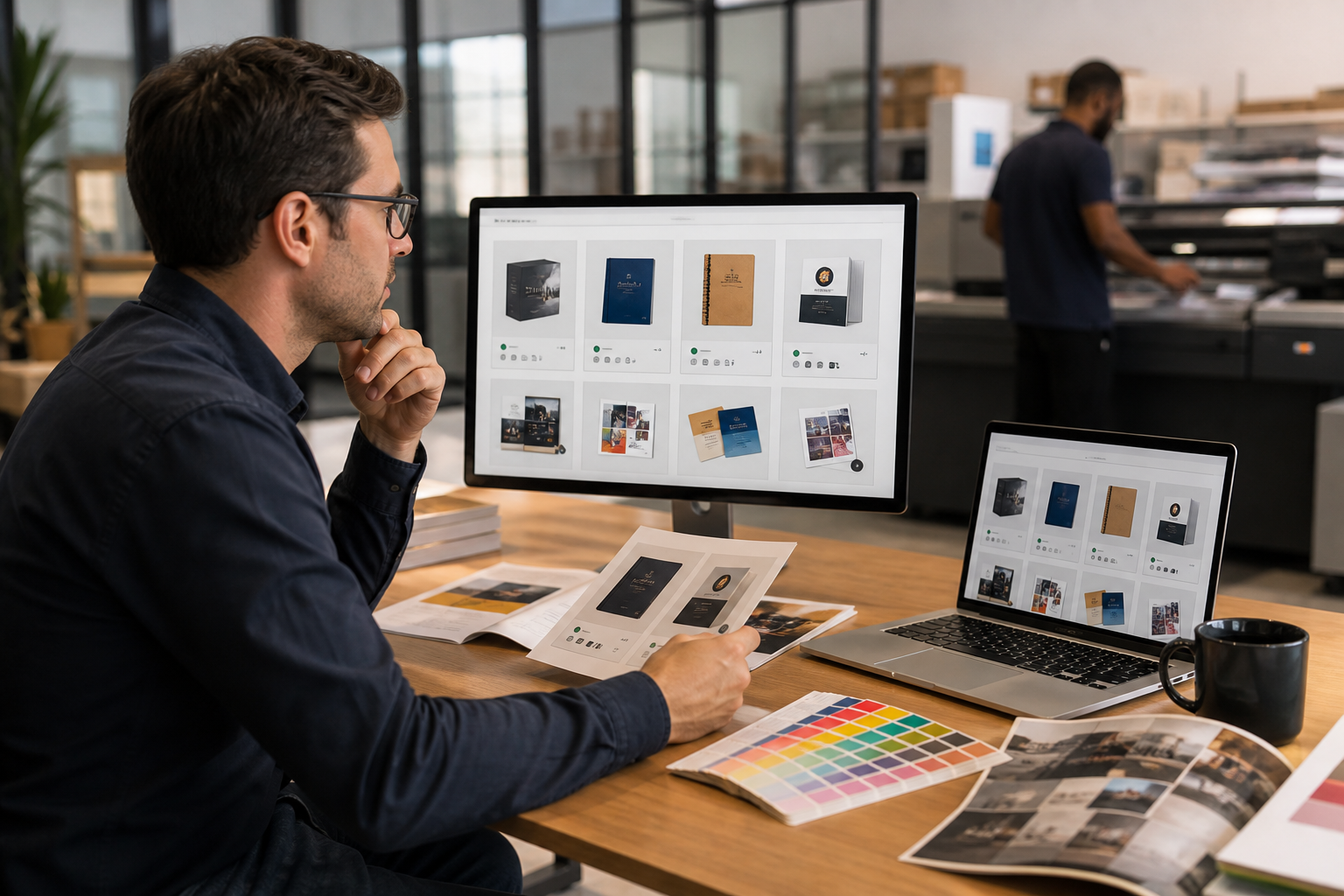
You needed a batch of business cards yesterday, then it was pull-up banners for an event, then a short-run booklet for a client. Each job started from scratch — new emails, new phone calls, new quotes chased across a working week. That's the trap most print buyers fall into, and it's exactly the pattern worth breaking.
Whether you're a marketing agency juggling a dozen client jobs, a startup founder ordering print for the first time, or an office manager who buys print twice a year, the fix is the same: treat that next one-off request as the first entry in a system, not a single transaction. Here's how to turn a scrappy, ad-hoc brief into a procurement workflow you can run again and again — without adding overhead or losing the flexibility that makes print buying interesting in the first place.
Why One-Off Print Buying Quietly Costs You Money
Every time you start from zero, you pay a hidden tax: time spent rewriting the brief, hunting for suppliers, chasing quotes, re-explaining bleed and GSM, and second-guessing whether the price you got is actually competitive. On a single job that's annoying. Across a year, it's a serious drag on margin — especially if you're marking print up for clients.
The deeper problem is that nothing you learn on job one carries forward to job two. You forget which printer nailed the Pantone match. You lose the email thread with the finisher who did the foiling. And when a rush job lands, you're back to phoning round.
Step One: Standardise the Brief Before You Standardise Anything Else
A repeatable workflow starts with a repeatable brief. If your RFQ is different every time, your quotes will be different every time — and you'll never be able to compare suppliers fairly.
Build a simple internal template that captures the essentials for any print job:
- Product: what it is (business cards, booklet, banner, packaging carton)
- Quantity and run length: single run, or splits
- Format and finished size
- Stock: GSM, coated/uncoated, recycled, or a named brand
- Colour: CMYK, Pantone specials, spot varnish
- Finishing: trimming, folding, binding, die-cutting, foiling, laminating
- Delivery: address, deadline, split shipments
- Artwork status: print-ready PDF, needs makeready check, or design still in progress
Once that template exists, every future job is a fill-in-the-blanks exercise. Posting it as a public RFQ on a marketplace like ZeozGig means multiple trade printers see the same clean spec and quote against it — no back-and-forth, no ambiguity.
Step Two: Build a Shortlist as You Go
The second habit that separates one-off buyers from procurement pros: keeping notes on suppliers. Not a CRM. Just a simple record.
After each job, jot down:
- Who quoted, and roughly where they sat on price
- Who won the job and why (price, capability, turnaround, gut feel)
- How the finished product actually landed — colour accuracy, finishing quality, on-time delivery
- Anything unusual: a particular printer who's brilliant at wide-format, a finisher who handles awkward die-cuts, a litho house with strong long-run pricing
After three or four jobs, you'll have a working shortlist. You won't need to re-source every category from scratch — you'll know who to invite when a similar brief lands, and you can use ZeozGig's direct connection to reopen a chat with a supplier you've already worked with for a fixed fee, rather than starting a fresh procurement cycle.
The Marketplace Advantage for Repeat Buyers
Here's where a zero-commission marketplace changes the maths. On traditional web-to-print aggregators, every repeat order carries a hidden mark-up baked into the price. On ZeozGig, you pay $1 to post an RFQ, $5 to open a direct connection with a supplier you like, and nothing on the deal itself. Your margin stays yours — job one, job ten, job one hundred.
And because RFQs that get zero responses are refunded automatically, there's no downside to testing a new category or an unusual spec.
Step Three: Separate "Known" Jobs From "Discovery" Jobs
Once you've run the workflow a few times, you'll notice your print requests split into two camps:
- Known jobs: repeat categories where you already have suppliers you trust (say, standard business cards or a recurring quarterly booklet). For these, go direct to a proven printer via a saved connection.
- Discovery jobs: new or unusual work — Pantone specials, packaging, wide-format, a substrate you've never bought before. For these, post a fresh public RFQ and let the market surface capable suppliers you'd never have found by phoning round.
That split is the whole workflow. You stop treating every job as either "who do I know?" or "who do I Google?" and start routing intelligently based on what you actually need.
Step Four: Review Quarterly, Not Never
Every three months, spend twenty minutes reviewing your supplier notes. Which printers consistently deliver? Which quoted well but disappointed on quality? Which new suppliers surfaced through recent RFQs and deserve a bigger job next time?
That single habit — reviewing rather than reacting — is what turns a pile of one-off transactions into genuine procurement leverage.
Start With the Next Job
You don't need to redesign your entire process today. You just need to treat your next print request as the first repeatable one. Write the brief in a template. Post it once. Capture what you learn. Then do the same thing next month.
Ready to run your next print job through a proper workflow? Post an RFQ on ZeozGig and let multiple trade printers quote against a single brief — no commission, no contracts, and the start of a supplier list you actually own. If you're a printer or finisher, list your capabilities and get in front of buyers who are building repeatable pipelines, not chasing one-shot deals.