Why Design Studios Are Quietly Moving Print Production Off Fiverr And 99designs
Design studios are routing print production direct to trade printers, skipping Fiverr and 99designs commissions. Here's how the workflow actually looks.
You've won the design job, the client has signed off the artwork, and now you need 2,000 saddle-stitched brochures on 170gsm silk — but the platform that connected you to the client wants another slice on top. Something isn't adding up.
The hidden cost of running print through a design marketplace
Fiverr, 99designs and their cousins were built for creative deliverables — logos, layouts, illustration. Print production was bolted on later, and it shows. When a designer arranges physical production through the same platform that handled the design brief, two things tend to happen: the platform takes its cut of the print spend as well as the design fee, and the actual trade printer sits two or three layers away from the person making the specification decisions.
That distance costs money and time. Every question about bleed, stock weight, Pantone matching or finishing lead time bounces through a messaging system designed for creative revisions, not press-side conversations. And every pound the platform skims off the print budget is a pound not going into paper, ink or your own margin.
Why the workflow was never designed for production
Design marketplaces optimise for one thing: keeping the transaction inside their walled garden. That's fine when the deliverable is a PDF. It's a problem when the deliverable is 2,000 physical brochures that need to be litho-printed, laminated, folded and delivered to a specific loading bay by Thursday. Production print is a supply-chain job, not a creative-brief job, and treating it like the latter is why so many studios end up chasing missed deadlines through a support ticket.
What a direct designer-to-printer connection actually looks like
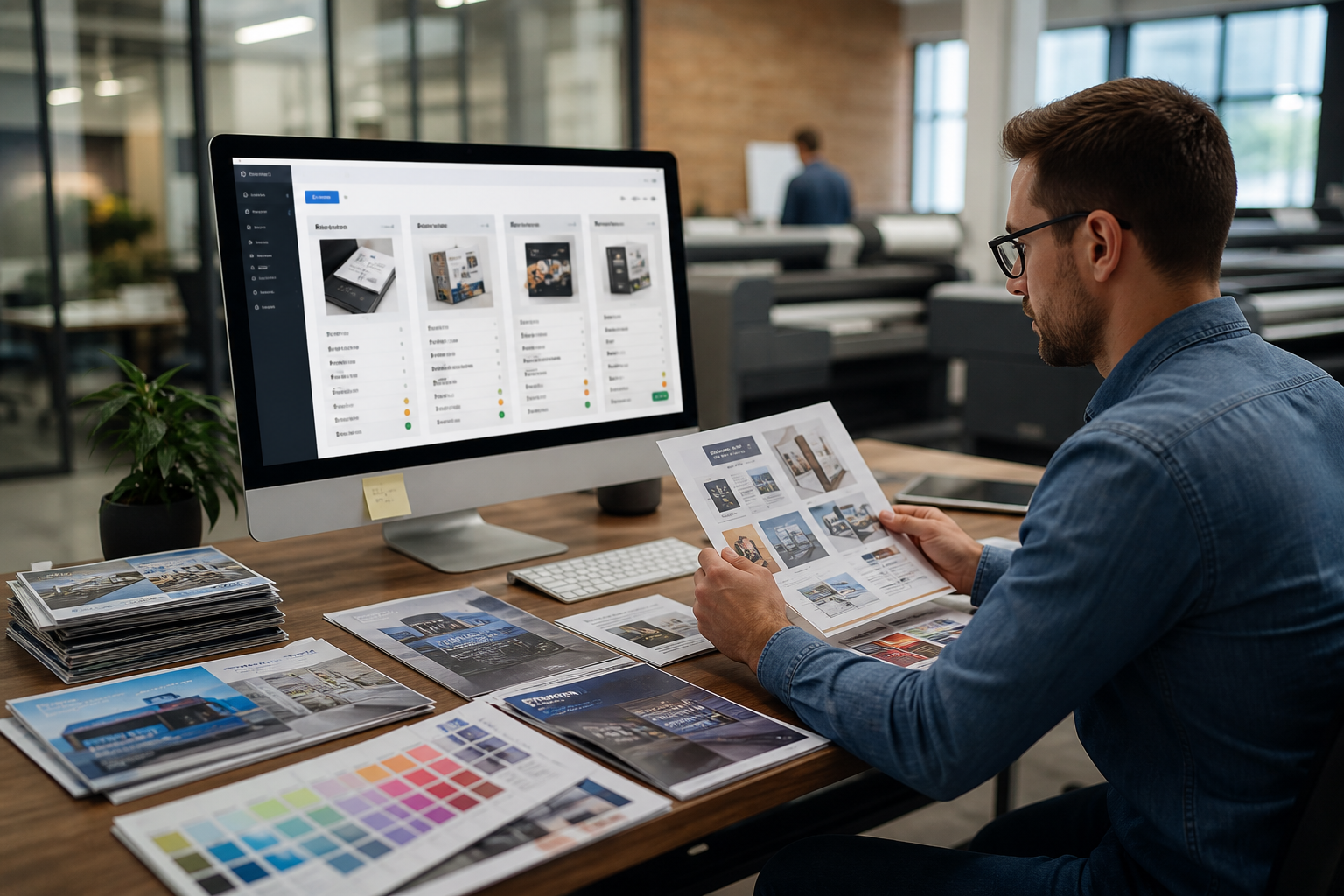
Strip away the middleman and the workflow becomes obvious. The designer specs the job, sends artwork directly to a trade printer, gets a quote, approves a proof, pays for production. No commission layer. No message-relay game. No platform deciding when you're allowed to swap phone numbers.
A typical direct-connection job might run like this:
- Designer posts an RFQ with specs: quantity, stock (e.g. 350gsm uncoated with soft-touch lam), finished size, bleed, finishing (die-cut, foil, spot UV), delivery postcode, deadline.
- Three or four trade printers respond within hours with quotes and turnaround times.
- Designer opens a direct chat with the best-fit supplier, shares the print-ready PDF, discusses makeready and Pantone tolerances.
- Proof approved, job runs, delivery confirmed. Designer invoices the end client at their own rate.
On ZeozGig that entire flow costs a fixed fee per action — £1 to post the RFQ, £5 to open the direct connection with the printer you actually want to work with — and nothing on the value of the job itself. If the RFQ gets no responses, the posting fee is refunded automatically. Compare that to a percentage of a four-figure print run disappearing into a marketplace's pocket.
Where the margin goes when you cut out the middle layer
Roughly speaking, commission-based platforms take somewhere between 10% and 20% of the transaction. On a £3,000 print run that's £300–£600 gone before anyone has touched a sheet. Route the same job direct and that money splits between the two parties who actually did the work: the designer keeps more of their production margin, and the printer isn't quoting artificially low to absorb the platform's cut.
What designers should look for in a trade printer
Cutting out the middleman only works if you can vet the printer directly. That means paying attention to the details that matter for production, not just the shiniest portfolio image.
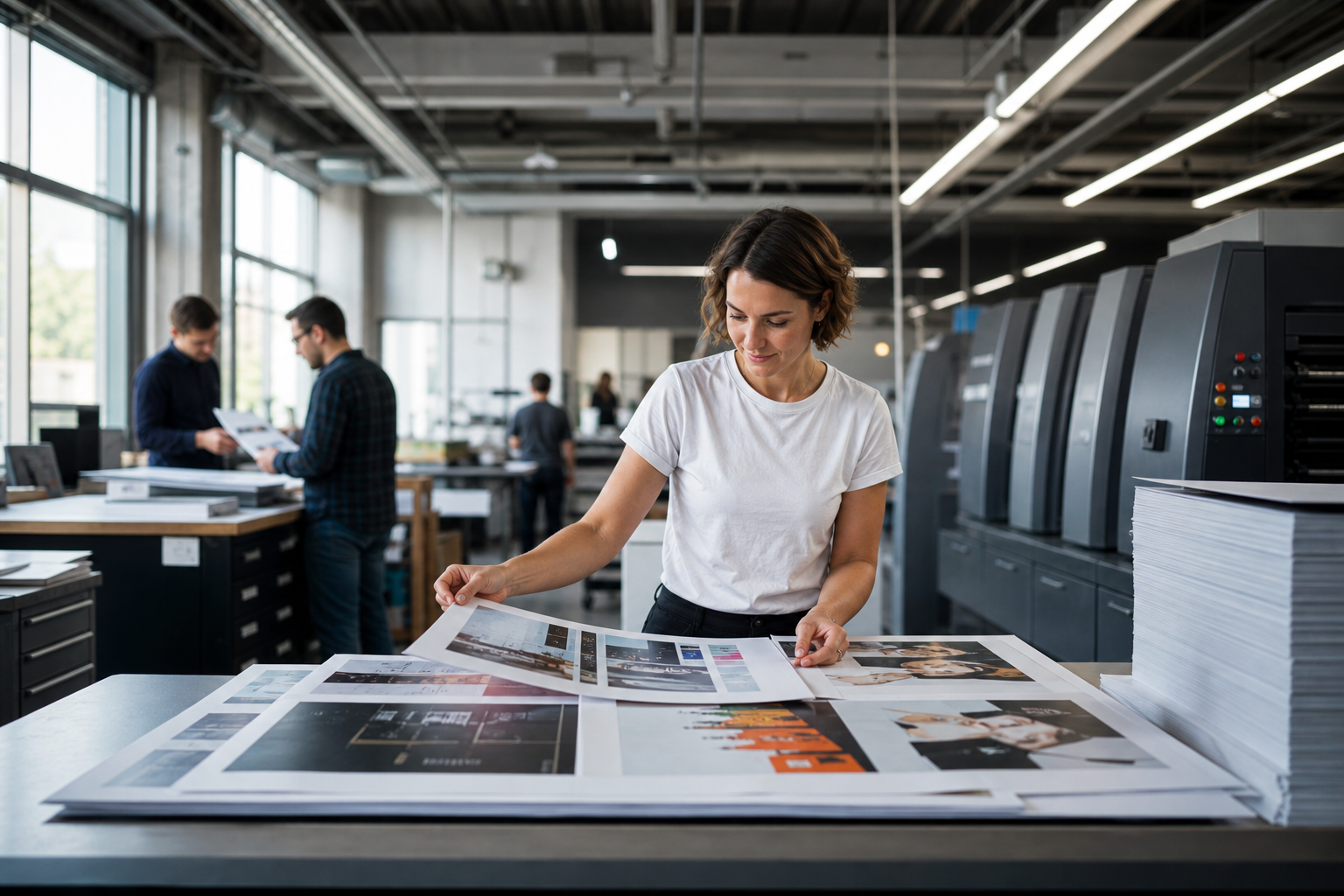
- Kit list: what presses are on the floor? A shop with an HP Indigo 12000 handles short-run digital very differently to one running a Komori GL-40.
- Finishing in-house vs. outsourced: foiling, die-cutting, perfect binding — is it done under one roof or subbed out (which adds days)?
- Stock range: do they hold your preferred sheets, or is everything a special order?
- Colour management: G7-certified? Fogra-compliant? Do they proof to Pantone with a spectrophotometer or eyeball it?
- Turnaround transparency: can they commit to a ship date in writing, and do they flag makeready delays honestly?
A five-minute direct chat with a production manager will tell you more than a week of platform-mediated messages.
Building a shortlist you can reuse
The real payoff from going direct is repeat relationships. Once you've found a trade litho printer who nails your brochure work, a wide-format shop who understands your event graphics, and a specialist finisher for your foil-and-emboss packaging jobs, you have a supply chain — not a lottery. Each subsequent job costs less to source because you already know who to call. That's the compounding benefit no commission-based marketplace wants you to notice.
Keep the design fee. Keep the production margin. Keep the client.
There's no rule that says design and production have to run through the same platform. Separating them lets you use each channel for what it's good at: creative marketplaces for finding clients, direct B2B connections for delivering the physical goods.
If you're a studio, freelance designer or agency procurement lead tired of watching print budgets get quietly clipped, post your next production RFQ on ZeozGig. £1 to post, £5 to connect direct with the printer you want, zero commission on the job itself — and a refund if no one bids. Your artwork deserves a proper press, not a percentage.