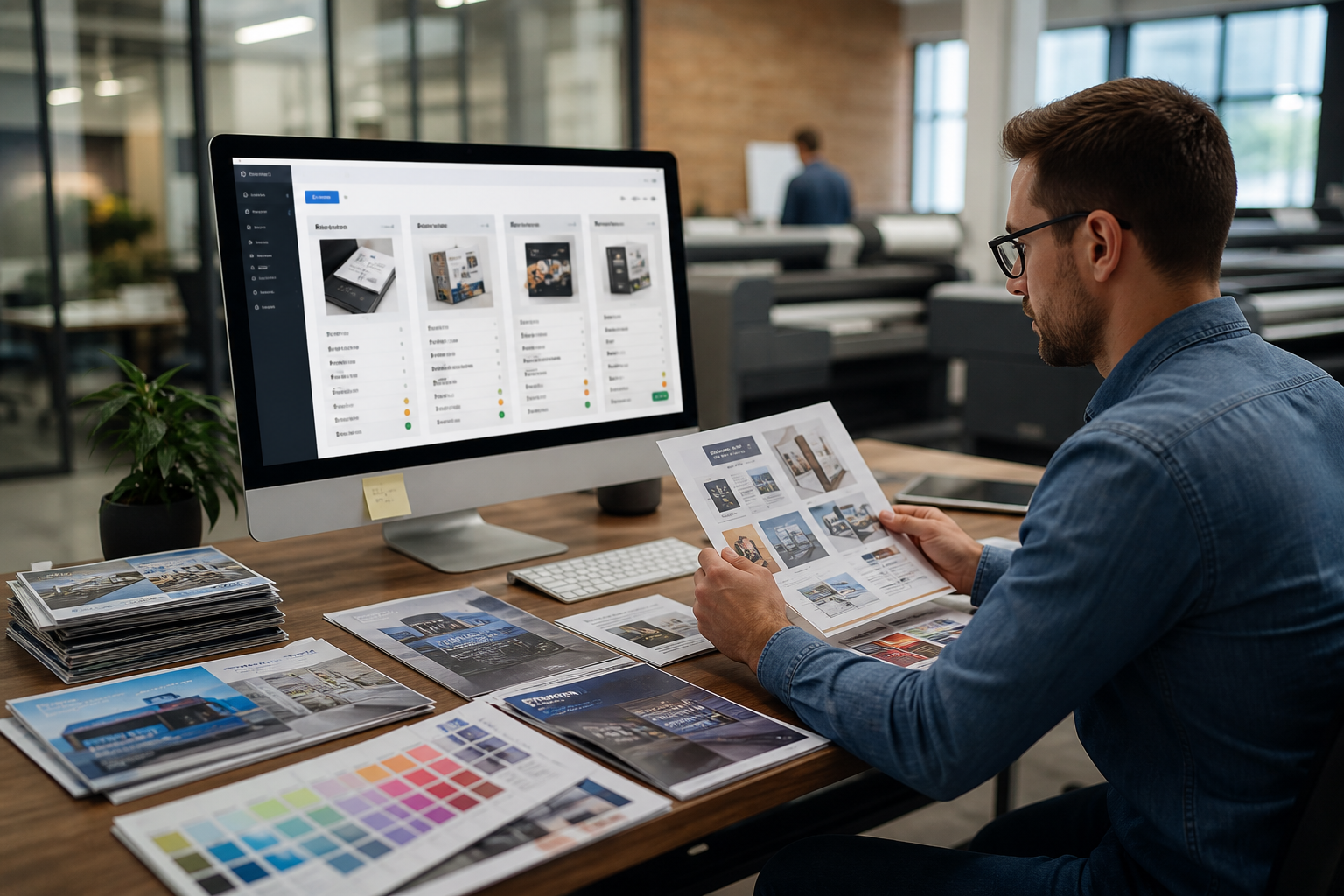
Designer-To-Printer Direct Connections: Why Production Work Shouldn't Run Through Fiverr
Designers lose margin and control when production briefs route through Fiverr or 99designs. Here's how direct printer connections protect quality and cash flow.
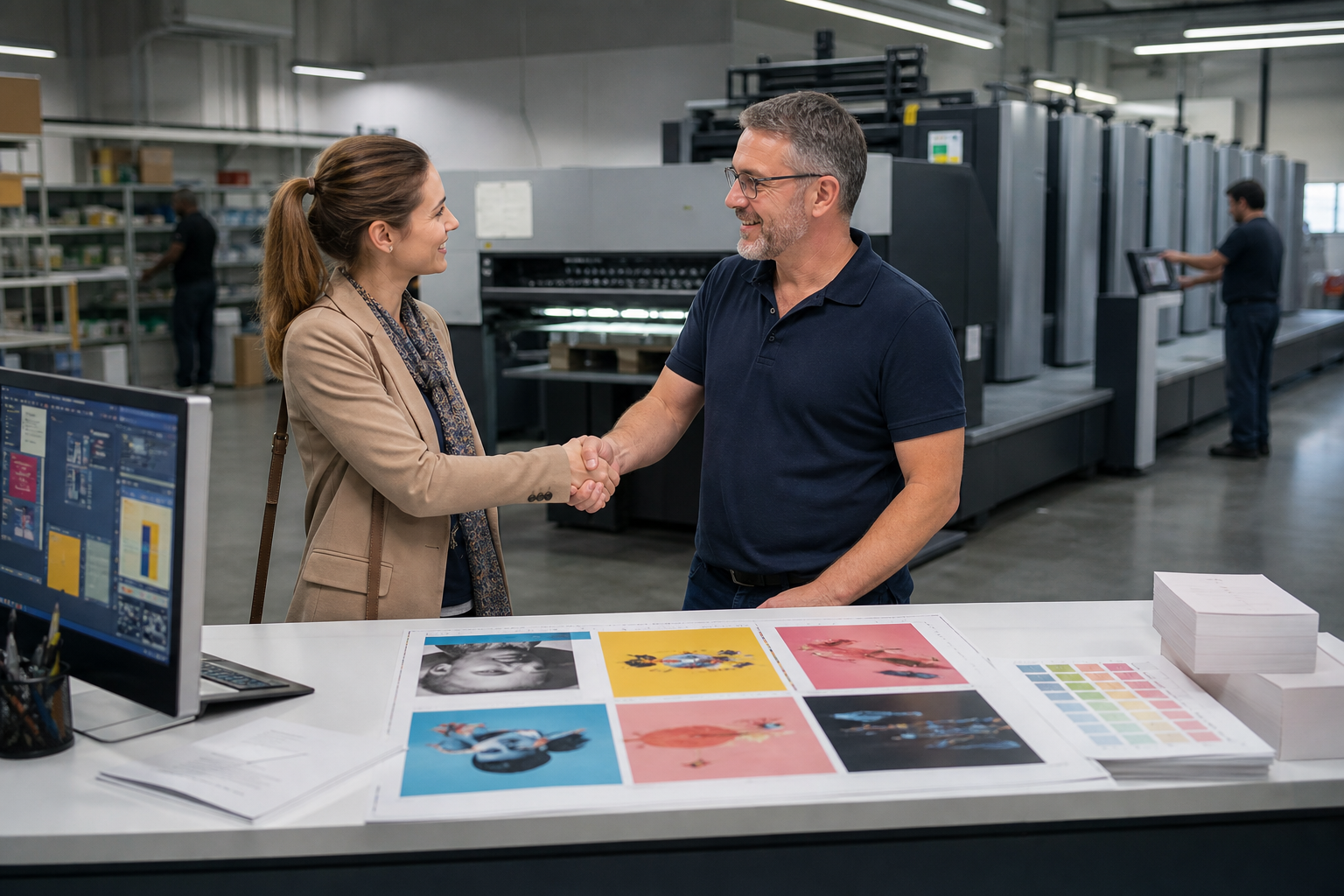
You've nailed the brand, the typography sings, and the client has signed off the artwork. Then comes the awkward bit: getting it physically printed without watching 20% of your production budget vanish into a platform fee or a brokered margin you can't see.
The hidden cost of routing production through creative marketplaces
Fiverr, 99designs, Upwork and the rest were built for creative gigs — logos, illustration, quick design tweaks. They work reasonably well for that. The problem starts the moment a designer tries to use the same platform (or its preferred suppliers) to handle the actual print production. Suddenly you're paying commission on a physical product where margins are already thin, communicating about CMYK builds and bleed through a generic chat box, and hoping the person on the other end actually understands what 350gsm uncoated with a soft-touch laminate means.
Worse, when something goes wrong — a Pantone drift, a trim out by 2mm, a delivery missing a finishing step — the platform sits in the middle as a referee rather than a partner. You can't pick up the phone to the press operator. You can't walk a proof through with the finisher. You're managing a print job through a ticketing system designed for logo revisions.
Why the maths gets ugly fast
Let's say you're producing 5,000 perfect-bound brochures at a trade cost of £1,800. Add a typical marketplace commission (anywhere from 10–20%) and you've either eaten £180–£360 of your own margin or passed it on to the client and made yourself less competitive. Do that on five jobs a quarter and you're funding someone else's marketing budget instead of your own.
What direct designer-to-printer relationships actually look like
The agencies and studios who consistently deliver good print work have one thing in common: they know their printers personally. Not just a name in a directory — actual conversations with the estimator, the press minder, the finishing lead. That relationship is what gets you:
- Honest advice on whether litho or digital makes sense for your run length
- A heads-up when a stock is on backorder before you've sent artwork
- Flexibility on makeready timing when your client signs off late (again)
- Sensible feedback on whether your 0.25pt hairlines will actually hold on uncoated
- A wet proof when it genuinely matters, not a generic PDF soft-proof
None of that happens through a creative marketplace. It happens when a designer and a printer talk directly, repeatedly, and build trust over real jobs.
The brief that prints well vs. the brief that just looks good
There's a particular kind of brief that only emerges from direct conversation: the one where the printer flags that your spot UV will register better if you move the artwork 3mm off the spine, or that your duplexed 540gsm board will save £400 versus a single 600gsm sheet with identical visual weight. Those conversations are worth more than any platform's "verified supplier" badge.
Five things to do before your next production brief goes out
- List your typical jobs honestly — run lengths, formats, finishes, turnaround. This is your sourcing profile.
- Identify the kit you actually need — HP Indigo for short-run colour-critical work, B1 litho for cost-effective volume, wide-format for POS, specialist finishers for foil/emboss/die-cut.
- Find printers who post their capabilities directly — not aggregators who resell to the cheapest bidder.
- Open a direct line — chat, voice or video with the estimator before you even send artwork.
- Build a stable of three or four trusted suppliers — overflow capacity matters when your client's deadline slips.
Where ZeozGig fits — without the commission tax
This is the gap ZeozGig was built to close for the printing industry. Designers and studios post an RFQ for £1, trade printers respond, and you open a direct connection with the ones whose capability matches the brief — for a fixed £5, once. No commission on the job. No percentage skim. No subscription. If your RFQ gets zero responses, the £1 is refunded automatically.
The practical effect for a design studio is straightforward:
- You keep 100% of your production margin (or pass full savings to the client)
- You talk to the actual printer — chat, voice or video — not a sales layer
- You build long-term supplier relationships you own, not ones rented from a platform
- You can source regionally (handy when delivery and press checks matter)
And because the platform grew out of Print MIS, the workflow assumptions actually match how printers think — stocks, finishes, run lengths, delivery windows — rather than forcing print jobs into a generic gig-economy mould.
The 80/20 rule for designer sourcing
Most studios will find that 80% of their production work fits a handful of repeatable specs: business cards, brochures, packaging mock-ups, large-format event graphics, branded merchandise. Lock in direct relationships for those, and you've removed the recurring tax. Reserve marketplaces for genuinely one-off or speciality jobs where you don't yet have a trusted supplier — and even then, open the connection directly rather than letting an intermediary manage it.
Take the middleman out of your next print job
If you're a designer, studio or agency producing print regularly, the cost of not having direct printer relationships compounds every quarter. Post your next RFQ on ZeozGig for £1, see who responds, and open a direct line to the printer who actually understands your brief. No commission, no contracts, no percentage of your job. Just the conversation you should have been having all along.