Why Studios And Freelance Designers Should Brief Printers Direct, Not Through Fiverr
Fiverr and 99designs skim margin from every print project. Here's how designers and studios can brief commercial printers direct — and keep the relationship.
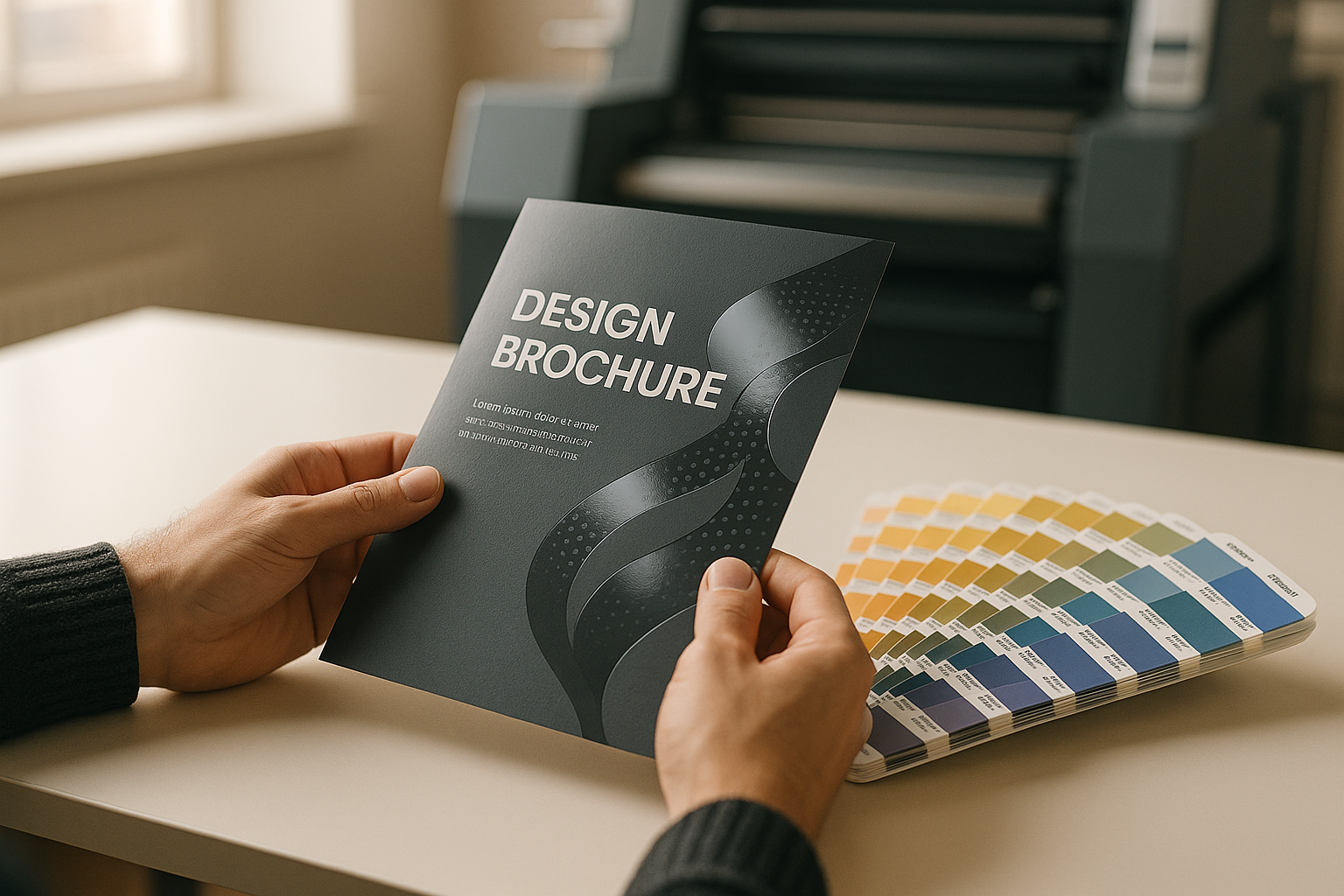
You've spent three weeks nailing a brand identity. The client signs off, the artwork's ready, and now you need it printed — properly. So why are you about to hand 20% of the production budget to a platform that doesn't know the difference between a 350gsm uncoated and a soft-touch laminate?
The hidden tax on every designer-sourced print job
Fiverr, 99designs, Upwork and the rest were built for digital deliverables. They work — sort of — when the output is a logo file or a Squarespace tweak. But the moment a job involves physical production, those platforms become an expensive postbox. The "printer" you find there is usually a reseller who's already marked up a trade printer's price, and the platform then takes its cut on top.
For a designer or small studio, that stacks up fast:
- Platform commission: 5–20% of project value
- Reseller margin baked into the quote: often another 15–30%
- Payment processing fees on the gross (including the commission you didn't want)
- Communication friction — no direct chat with the person actually running the press
By the time the job lands on a Heidelberg somewhere in the Midlands, the client has paid 40% more than necessary and you, the designer, have lost control of the spec.
Why this matters more for print than for digital
Digital work is forgiving. A logo can be revised. A misaligned trim, a wrong Pantone, or a 2mm bleed shortfall on 5,000 brochures cannot. Print needs a real conversation between the person who designed the artwork and the person who'll be hitting the start button on the makeready. Middlemen platforms structurally prevent that conversation.
What designers actually need from a print supplier
If you strip the procurement process back to first principles, a designer briefing a printer needs four things:
- A direct line to someone technical — to discuss stock, finishing, ink coverage, and whether that gorgeous double-hit fluoro is actually achievable on the press they're proposing.
- A fast quote on a real spec — not a calculator that doesn't understand spot UV or French folds.
- Transparent pricing — no surprise commissions, no opaque markup, no "convenience fee" at checkout.
- A relationship that survives the project — so the next job, and the one after that, gets easier and cheaper.
None of those are what generalist freelance marketplaces optimise for. They optimise for transaction volume and lock-in.
The trade printer's perspective
From the other side of the press, trade printers have the same complaint in reverse. They get briefs filtered through brokers and platforms, often missing critical detail (no artwork specs, no quantity bands, no delivery window). They'd happily quote direct — and quote sharper — if the designer could just talk to them.
How direct sourcing actually works on ZeozGig
ZeozGig was built by Print Management Information Systems (PMIS), so the platform was designed around how printing jobs actually get specified. A designer or agency posts an RFQ — say, "500 saddle-stitched A5 brochures, 32pp, 150gsm silk text, 250gsm silk cover with matt lam and spot UV, CMYK + one Pantone" — for £1. Trade printers respond. You pick the ones whose responses look credible and open a direct connection for £5.
That's it. No commission on the £2,400 print job. No 20% skim. If nobody responds, your £1 comes back automatically.
The pricing structure looks like this:
- Post an RFQ: £1 (refunded if zero responses)
- List a service or capability: £1
- Open a direct connection with a supplier: £5 one-off
- Voice call through the platform: £0.50
- Video call (handy for proofing conversations): £1
Compare that to handing over even 10% on a £5,000 job. The maths isn't subtle.
Practical workflow for a studio
A typical agency production lead might run it like this:
- Drop the spec into an RFQ — be specific about GSM, finish, bleed, trim, and quantity bands if you want options.
- Wait 24–48 hours for responses from litho houses, digital shops, and specialist finishers.
- Shortlist two or three based on relevance, not just price — does this printer actually run the kit you need?
- Open direct connections with your shortlist and have the real conversation about stock samples, proofs, and lead times.
- Place the job direct. Pay the printer. Keep the relationship for next time.
The second job with the same printer doesn't need a new RFQ — you've already got their contact. The platform fee was effectively a one-off introduction cost.
Keeping the client relationship clean
One quiet benefit of going direct: you control the markup. If you're a studio that bills print as a pass-through, you can show the client a clean printer invoice. If you mark print up as part of your project fee, you keep more of that margin because nothing's being skimmed off the top by an intermediary. Either way, the value you add — art direction, prepress, project management — stays visibly yours.
Try it on the next job
Next time a print spec lands on your desk, skip the freelance marketplace and post it as an RFQ on ZeozGig. Talk to the printers directly. Build a shortlist you can come back to. Keep the margin where it belongs — with you and the press operator who actually makes the work.
Post your first RFQ for £1, or list your studio's print requirements as a recurring brief, and see who responds.