How Garment Printers Can List DTG And Screen Capabilities To Win Fashion Brand Sourcing Work
How DTG and screen printers can list their garment capabilities to attract fashion brand buyers directly, without losing margin to commission-heavy marketplaces.
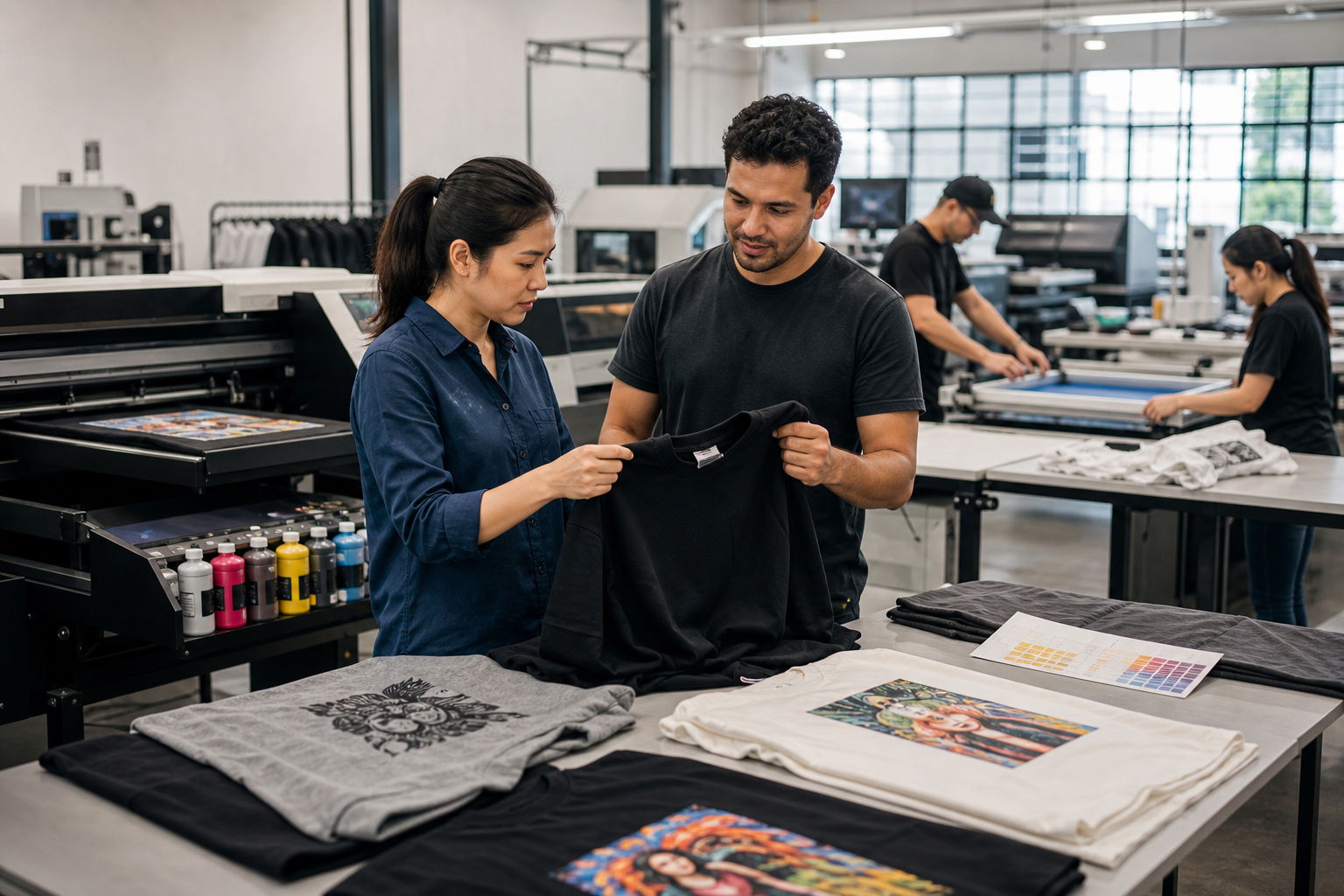
Fashion brands and independent labels are quietly rebuilding their supply chains — and if you run a DTG or screen printing shop, you're either on the shortlist or you're invisible. The problem isn't your kit or your quality; it's how your capabilities are described (or buried) when a brand goes looking.
Why Fashion Brand Buyers Struggle To Find The Right Garment Printer
A fashion sourcing manager isn't Googling "t-shirt printer near me". They're hunting for very specific combinations: 240 GSM organic cotton tees, water-based discharge inks, six-colour spot on dark garments, or short-run DTG samples for a lookbook drop next Thursday. Most directories and aggregators reduce all of that to "screen printing" or "custom apparel" — a useless bucket that forces buyers to email twenty shops just to find three who can actually do the job.
That vagueness costs you real work. When a brand can't tell from your listing whether you run a Kornit Atlas or a manual four-colour carousel, they default to the printer they've already used, or worse, a mass platform that skims commission from both sides. The fix isn't better SEO on your own site — it's writing capability listings where the buyers are already searching.
What Fashion Buyers Actually Want To See
Before you rewrite a single listing, understand what a serious buyer is scanning for. In our experience, garment procurement leads look for:
- Print method specifics — DTG (and which machine: Kornit, Brother, Epson), automatic vs manual screen, discharge, plastisol, water-based, DTF, sublimation
- Minimum and maximum run sizes — a lot of brands need 25 samples AND 2,000 units from the same supplier
- Blank sourcing — do you stock AS Colour, Stanley/Stella, Continental, Gildan, or will they supply?
- Colour capability — how many screens on the press, Pantone matching process, whether you can hit a specific TCX
- Finishing and fulfilment — relabelling, neck printing, hem tags, folding, poly-bagging, pick-and-pack
- Certifications — GOTS, OEKO-TEX, Soil Association, Fair Wear membership
- Turnaround windows — sample lead time separately from production lead time
If a listing answers those seven questions, it does 90% of the qualification work before the buyer even opens a chat.
Structuring A Capability Listing That Wins Direct RFQs
On ZeozGig, listing a product or service is a one-off $1 fee and it stays live in the marketplace — there's no monthly rent and no commission when a deal closes. That means you can afford to list your DTG service, your screen service, your DTF transfers and your finishing options as separate entries, each optimised for a different buyer intent, rather than cramming everything into one generic profile.
Here's a structure that consistently pulls serious enquiries:
- Lead with the method and machine — e.g. "Kornit Atlas MAX DTG printing, up to A3 print area, white and CMYK on darks".
- State minimums and sweet-spot volumes — "MOQ 10 units, optimised for 50–500 unit runs".
- List blanks you routinely print on — brand names and GSMs, not just "t-shirts".
- Explain colour handling — Pantone TPX/TCX matching, wash-fastness expectations, ink types available.
- Detail finishing add-ons — neck relabel, woven tab insertion, individual poly-bagging with barcode.
- Publish honest lead times — separate sample, bulk and rush windows.
- Add compliance and ethics — brands increasingly won't quote a supplier without GOTS or OEKO-TEX certified inks.
Screen Printers: Don't Undersell The Bits Fashion Brands Care About
Screen shops often list themselves as commodity suppliers, then wonder why they only get commodity enquiries. Fashion buyers pay a premium for water-based and discharge work with a soft hand, high-density puff, metallic and shimmer inks, oversized back prints, seam-to-seam placement, cut-and-sew integration, and simulated process on dark garments. If your shop can do any of that, say so explicitly — those are the phrases fashion sourcing teams paste into search bars.
DTG And DTF Shops: Compete On Sampling And Micro-Runs
DTG's genuine edge over screen is the sample and micro-run economics. A brand doing a 30-piece capsule drop or a pre-order test doesn't want to pay for screens. Position your DTG listing around sampling speed, per-unit price transparency at low quantities, and the ability to print full-colour photographic artwork with no setup. DTF is worth a separate listing again — different buyer, different use case (multi-fabric, small-batch merch, tour and event work).
Turning Listings Into Direct Conversations
Once a fashion buyer finds a listing that fits, the last thing they want is a form-filling gauntlet. On ZeozGig, opening a direct connection is a flat $5 — after that, you can chat, jump on a voice call ($0.50) or share a video call ($1) to walk through artwork and blanks in real time. No percentage of the order, no ongoing platform tax, no forced messaging templates. If you post an RFQ yourself as a broker or trade buyer and nobody responds, the $1 posting fee is refunded automatically.
That pricing model matters for garment work specifically, because fashion orders are often multi-drop relationships: a sample round, a bulk run, a top-up, a reorder six weeks later. On commission platforms you'd pay a slice of every one of those. Here, you pay once to connect and the relationship is yours.
Ready To Put Your Press In Front Of Fashion Brands?
If you run a DTG line, a screen carousel, a DTF setup or a full garment decoration operation, spend an afternoon rewriting your capabilities the way buyers actually search — then list each service on ZeozGig for a quid a pop. Or, if you're a brand or agency hunting for the right printer, post an RFQ with your artwork brief, GSM requirements and MOQ, and let qualified shops come to you. Head to ZeozGig, post your first request or list your first capability, and keep 100% of what you earn.