Garment Printers: Listing DTG And Screen Capabilities For Fashion Brand Sourcing
How DTG and screen print shops can list their capabilities to attract fashion brand buyers sourcing short runs, sampling and full production directly.
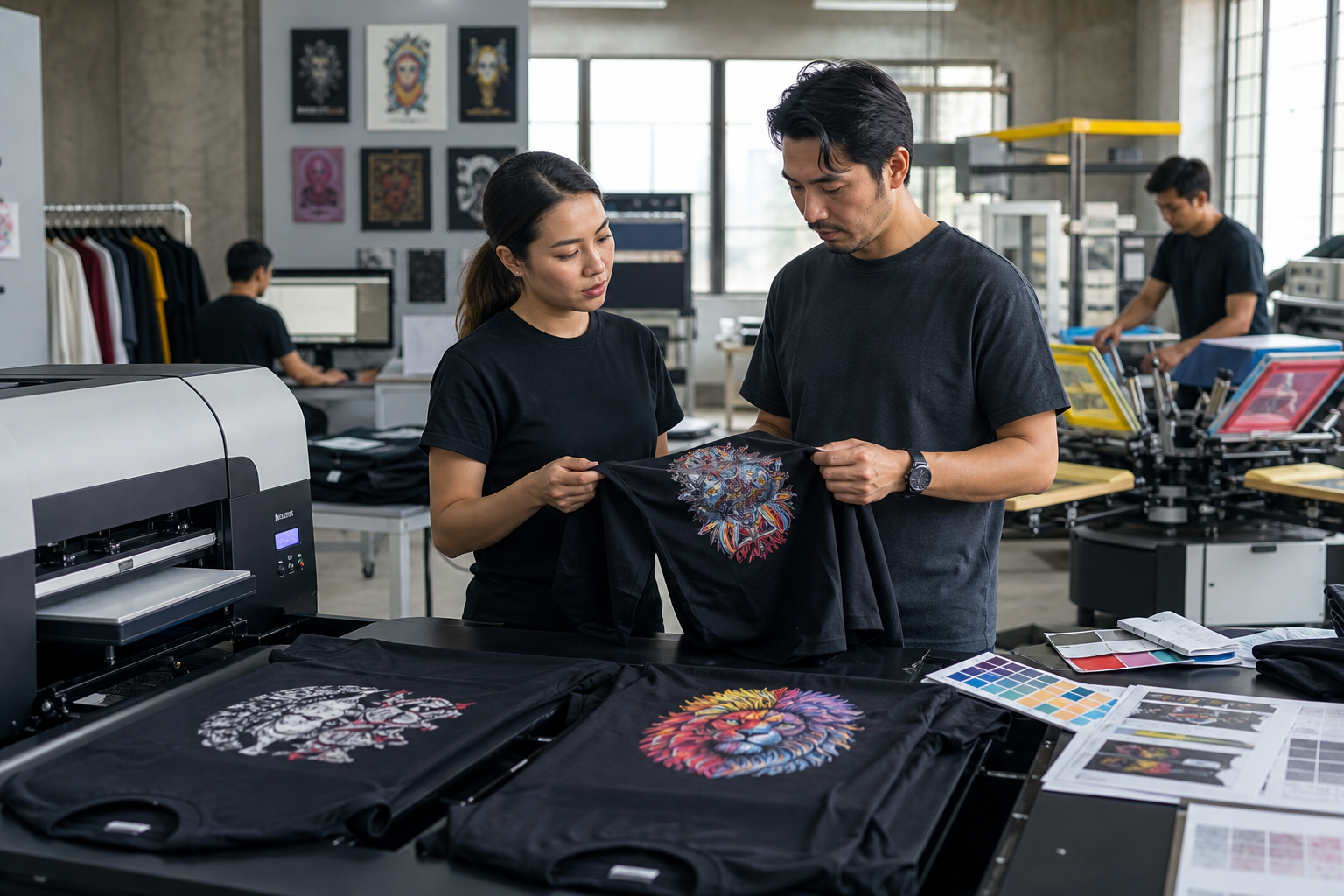
Fashion brands are sourcing decorated apparel constantly — sampling capsules, restocking bestsellers, printing merch drops — and yet most garment printers still rely on Instagram DMs and word-of-mouth to fill the press. The buyers are out there, but they can't find you if your capabilities aren't listed where they're actually looking.
Why Fashion Buyers Struggle To Find The Right Garment Printer
Sourcing decorated apparel is a mess. A brand designer wants a 60-piece sample run on 220gsm heavyweight tees with a discharge print and a woven neck label. Another wants 2,000 hoodies with a four-colour Pantone-matched chest print, plus sleeve hits and a puff underlay. The requirements look similar on the surface but they need completely different shops — and Google can't tell them apart.
Meanwhile, garment printers who can handle both jobs are invisible online because their websites list "screen printing services" without specifying:
- Minimum and maximum run sizes per technique
- Number of print heads / colour stations available
- Substrate compatibility (cotton, tri-blend, polyester, organic, hemp)
- Speciality inks (discharge, water-based, plastisol, puff, high-density, glitter, reflective)
- Pretreatment and cure options for DTG on dark garments
- Finishing extras: relabelling, folding, poly-bagging, hangtag application
- Turnaround times for sampling vs bulk
If a buyer can't see this at a glance, they move on.
The DTG vs Screen Confusion
Fashion brands often don't know which technique suits their job. A 30-piece drop with photographic artwork is a DTG job. A 500-piece run of a two-colour logo tee is screen. A gradient design on a black hoodie needs DTG or a very skilled screen printer with a halftone rip. Most brands guess wrong, which is why your listing should educate as it sells — describe what each technique is best for, not just what kit you own.
What A Strong Garment Printer Listing Actually Includes
On ZeozGig, listing a product or service costs $1 and stays live in the marketplace permanently. That means you can afford to build out separate listings for each capability instead of cramming everything into one confused page. Here's how to structure them:
- One listing per technique. DTG sampling, DTG production, screen printing (1–4 colour), screen printing (5+ colour), all-over sublimation, embroidery, DTF transfers. Each gets its own page.
- Lead with the buyer's job, not your kit. "Short-run photographic prints on organic cotton tees, 25-piece minimum" beats "Kornit Atlas MAX available."
- Publish real MOQs and price bands. Fashion buyers respect honesty. "From £8/unit at 50 pieces, £4.20/unit at 500" filters out tyre-kickers.
- Show substrate expertise. List the blank suppliers you work with (Stanley/Stella, AS Colour, Continental, Gildan) and any relabelling capability. Fashion brands almost always want their own neck labels.
- State turnaround honestly. "7-day standard, 3-day rush at +30%" is more useful than "fast turnaround."
- Include a sampling pathway. Fashion brands live on samples. If you offer paid strike-offs before bulk, say so.
Speciality Inks Are Your Differentiator
Everyone can print a black plastisol logo. Not everyone can lay down a soft-hand discharge print on a 100% cotton heavyweight, or a high-density puff with a metallic overlay. If you've invested in speciality inks and skilled squeegee operators, that's exactly what premium fashion buyers are willing to pay for — and exactly what generic marketplaces bury under "screen printing."
Call out specifics: water-based discharge on darks, PVC-free plastisols, GOTS-approved inks, tonal prints, oversized platens for jumbo prints, sleeve and hem prints. This is the vocabulary streetwear and premium brands search for.
Handling RFQs From Fashion Brands
Once your listings are live, RFQs will land. Fashion sourcing tends to arrive in bursts — a brand's production manager will spec out an entire drop in one afternoon and want quotes back by end of week. How you respond in the first hour matters more than your price.
On ZeozGig the flow is direct: buyer posts an RFQ, you respond, and if the conversation looks promising either side opens a direct connection for $5 to chat, call or video without the platform sitting in the middle. No commission on the resulting order — whether it's a £400 sampling job or a £40,000 bulk PO, the whole margin stays with you.
A few things that consistently win garment RFQs:
- Ask about the neck label first. It signals you understand fashion vs merch.
- Offer to quote two techniques when the artwork could go either way, with pros and cons of each.
- Confirm Pantone matching capability upfront if the brief mentions brand colours.
- Flag any artwork issues early — resolution, trapping, undercolour removal for DTG — before the buyer commits.
Why Fixed Fees Change The Maths On Small Fashion Runs
A 40-piece sampling job at £6 per garment is £240. On a commission marketplace charging 10–15%, you're handing over £24–£36 before you've even cured the first print. On ZeozGig you pay $5 to open the connection and keep the rest. For sampling work — where margins are already tight and the real prize is the follow-on bulk order — that difference is often the reason the job is worth taking at all.
And if you post your own RFQ (say, sourcing blanks or a specific ink) and get no responses, the $1 fee is refunded automatically.
Get Your Capabilities In Front Of Fashion Buyers
If you're running DTG or screen kit and you're tired of chasing sampling jobs one Instagram DM at a time, list your capabilities properly. Build out one listing per technique on ZeozGig for $1 each, keep them permanent, and let fashion brand sourcing find you. Post an RFQ when you need blanks or overflow, list your press when you have capacity — and keep 100% of every order you win.