Letterpress And Craft Printers: Winning The Niche RFQs Mass Platforms Quietly Ignore
Mass print marketplaces funnel every job through CMYK calculators. Here's how letterpress and craft printers can pick up the niche RFQs those platforms never surface.
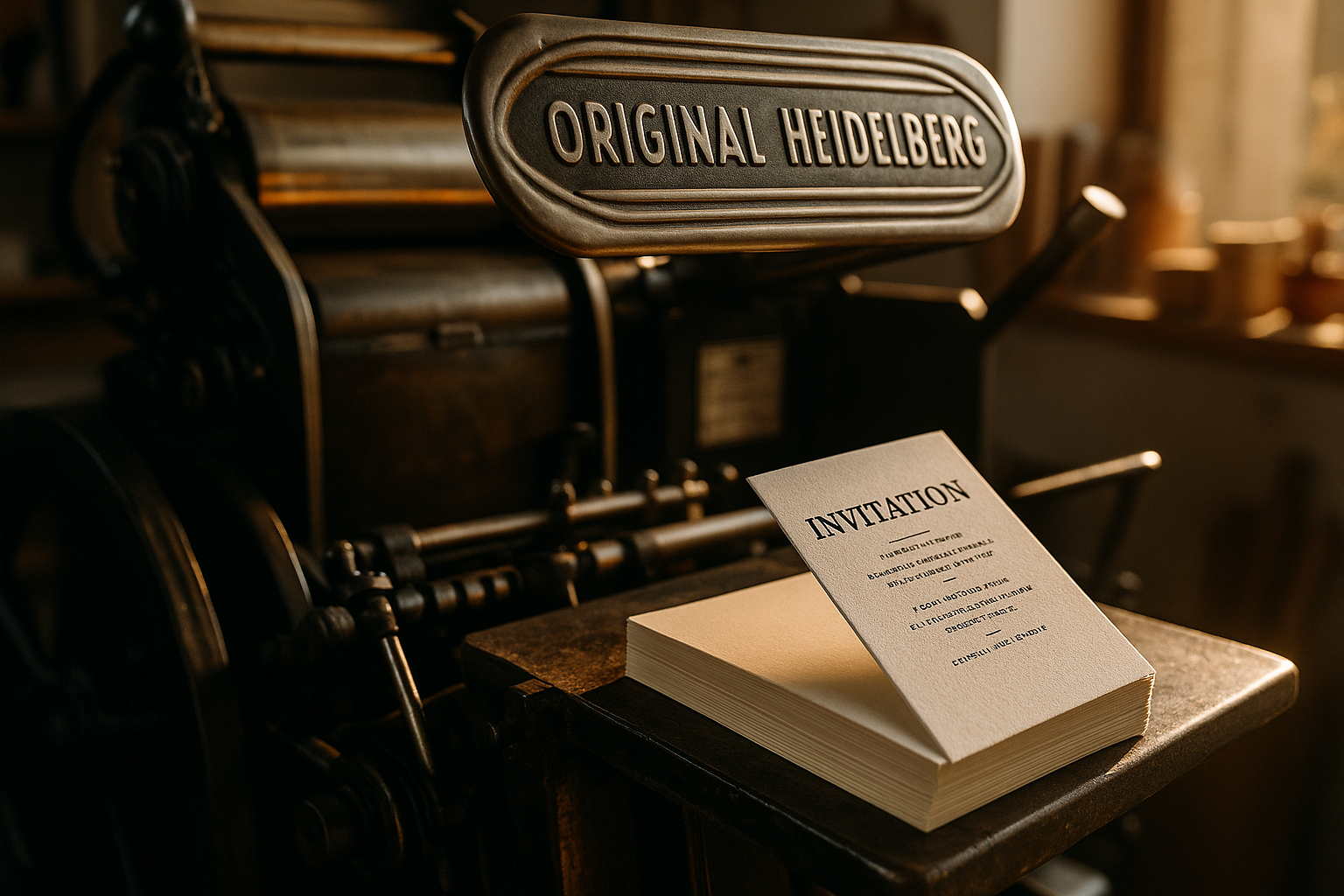
If you run a Heidelberg Windmill, a Vandercook proof press, or a small craft studio doing polymer-plate letterpress, you'll know the feeling: every online quote engine wants to push the buyer towards 350gsm silk and four-colour digital. The work you actually want — deep-impression cotton invitations, hand-mixed Pantone runs, blind deboss on Colorplan — never even reaches your inbox.
Why mass platforms can't price what you do
Instant-quote marketplaces are built around variables a calculator can handle: stock weight, page count, CMYK coverage, turnaround. The moment a job involves a polymer plate, a tight registration on a two-hit impression, or a Crane's Lettra 600gsm duplexed sheet, the calculator either refuses the spec or quotes a price that bears no relation to the actual makeready time.
That leaves a sizeable chunk of high-value work — wedding stationery, fine-press editions, luxury brand collateral, museum reproductions, artist editions — without a sensible home on the mainstream platforms. Buyers either give up, pay over the odds at a generalist, or spend hours googling "letterpress printer near me" and emailing studios one by one.
The kinds of jobs that fall through the cracks
A quick sample of RFQs that mass aggregators routinely mishandle:
- Cotton stock invitations with deep-impression letterpress and edge painting
- Two-colour Pantone runs with hand-mixed inks on uncoated 300gsm+
- Foil-blocked and letterpressed business cards duplexed to 600–800gsm
- Limited-edition art prints on a Vandercook with handmade paper
- Polymer plate work for packaging prototypes and short-run luxury labels
- Numbered, signed broadsides for galleries and poetry presses
- Blind deboss on Colorplan, Gmund or Fedrigoni stocks
- Wood-type posters and gig prints for venues and indie labels
None of these fit a dropdown menu. All of them have buyers willing to pay properly — they just need a way to reach the right press.
What a craft-friendly RFQ actually looks like
The printers who win this work consistently are the ones who make it easy for buyers to brief them without a 20-field form. On a platform like ZeozGig, a buyer can post a free-text RFQ describing the job — stock, ink, impression depth, quantity, deadline — for a flat £1. If no printer responds, the fee is refunded automatically. That's a meaningful difference for a bride-to-be or a small gallery who just wants to know if their job is feasible before committing to anything.
For the printer, the inbound side is just as straightforward. You see the RFQ, decide whether it suits your kit and calendar, and open a direct connection for a one-off £5 if you want to quote. No commission on the eventual job. No percentage skimmed off a £4,000 wedding suite. No monthly subscription waiting in the background whether you win work or not.
Pricing the connection, not the project
This is the part that genuinely changes the maths for craft studios. On a commission-heavy marketplace, a £4,000 invitation order might lose £400–£800 to the platform. On a fixed-fee model, the same lead costs £5 to open the conversation, plus 50p if you want a voice call to talk through impression depth, or £1 for a video call to show a paper sample on camera. The rest stays with the press.
For low-volume, high-margin work — which is exactly what letterpress is — keeping that margin intact is the difference between the press paying for itself and being a beloved liability.
How to list a craft studio so the right buyers find you
A few practical pointers when setting up your listing:
- Lead with the kit and the constraints. "Heidelberg 10x15 Windmill, max sheet 250x350mm, polymer and metal type, two-colour per pass" tells a buyer in one line whether you're a fit.
- Name the stocks you actually run. Lettra, Colorplan, Gmund Cotton, Fedrigoni Materica, handmade Khadi — these are search terms buyers genuinely use.
- Be honest about turnaround. Craft work is slow. Buyers who understand that are the ones you want; the rest will self-select out.
- Show finishing options. Edge painting, edge gilding, duplexing, deckle edges, hand-tearing, French folding — list them. They're often the reason a buyer chose letterpress in the first place.
- Set a sensible minimum. Nothing kills a craft studio faster than a steady drip of 50-piece jobs at unsustainable prices. Say so up front.
The buyers you're actually trying to reach
The buyer pool for craft print isn't enormous, but it's loyal and it spends. Wedding planners and stationers, independent brand designers, packaging studios working on launches, galleries and museums, small publishers, record labels, distilleries and perfumers commissioning labels. These are people who already know the difference between offset and letterpress and don't need persuading on price — they need a reliable press with the right kit and a sensible way to talk to them directly.
Direct chat, a quick voice call to clarify impression depth, maybe a video call to inspect a press sheet on camera — that's how craft work has always been quoted properly. Putting it through a calculator was always going to be a bad fit.
Ready to put your press in front of the right work?
If you're running a craft studio and you're tired of being invisible on platforms built for litho and digital volume, list your press on ZeozGig for a one-off £1 and let niche RFQs find you. Or if you're a buyer with a job no calculator can price, post the request for £1 — refunded automatically if nobody bites. Either way, the conversation stays direct, the margin stays yours, and the work stays craft.