Letterpress And Craft Printers: Winning Niche RFQs That Mass Platforms Always Miss
Letterpress and craft print buyers want deckle edges, cotton stock and hand-fed precision — not instant quote engines. Here's how to reach them directly.
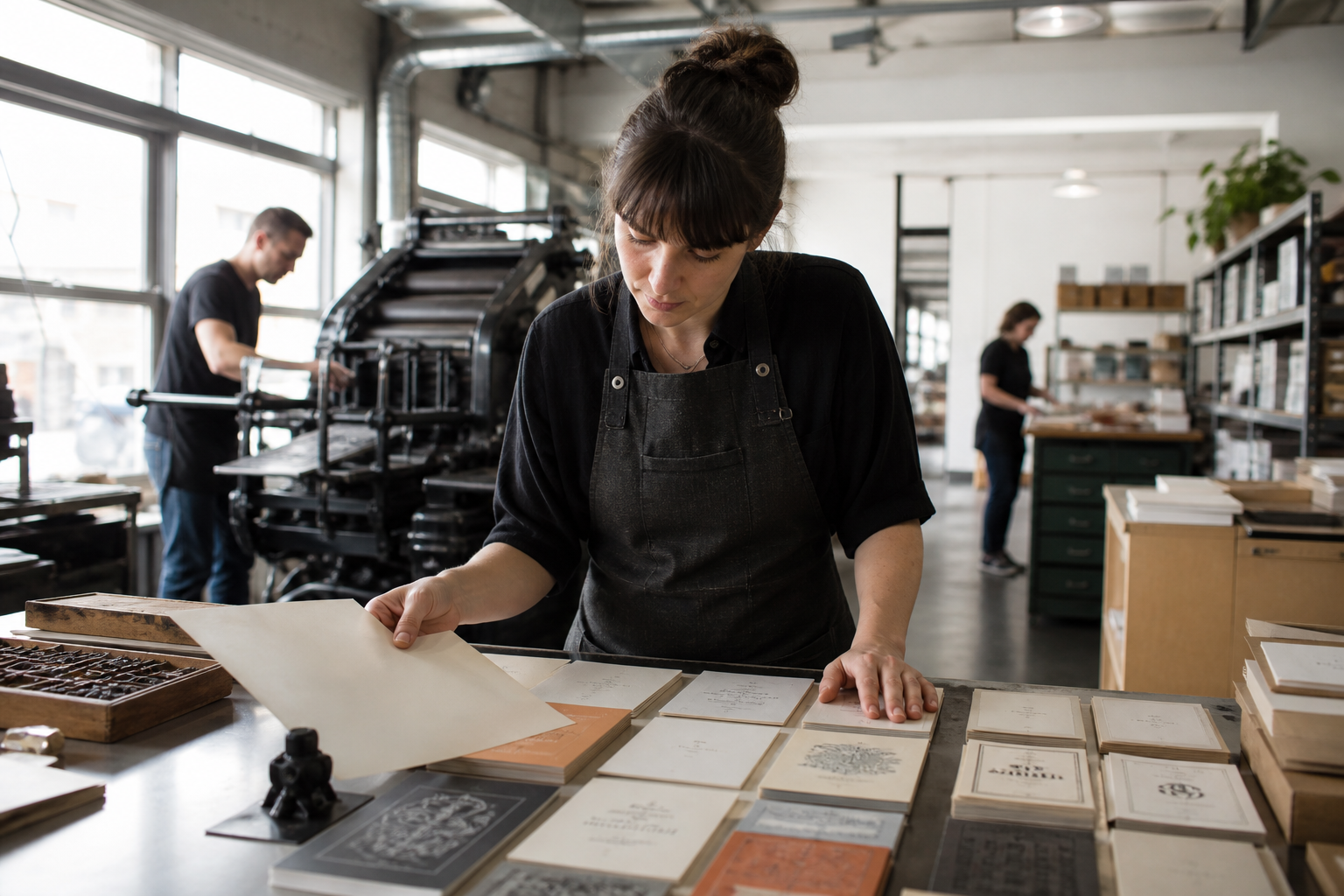
If you run a letterpress shop, a small Heidelberg windmill, or a craft studio doing hand-fed work on cotton stock, you already know the problem. The big online print platforms don't understand what you do — and their instant quote calculators actively send your ideal customers somewhere else.
Why Mass Platforms Fail Craft Print Buyers
A buyer searching for 500 letterpress wedding invitations on 600gsm Crane Lettra, edge-painted in copper, with a blind deboss on the reverse, isn't going to find a meaningful answer from a calculator built around 130gsm silk and four-colour litho. The platform either refuses the job, defaults to digital flat printing, or quotes a price that has nothing to do with the actual craft involved.
The result is predictable. The buyer either gives up and accepts inferior work, or they spend hours Googling individual letterpress studios, emailing five at a time, and waiting days for replies. Neither outcome is good for them — or for you, the printer who would have happily quoted within the hour.
The Jobs That Get Lost
These are the briefs mass platforms consistently mishandle:
- Letterpress business cards on duplexed or triplexed cotton stock
- Wedding suites with deckle edges, edge painting and wax seals
- Hand-bound notebooks and limited-edition art books
- Foil and letterpress combination work on coloured stocks
- Polymer plate jobs with tight Pantone matching on uncoated cotton
- Small-run packaging with hand-applied finishes
- Risograph and screen-printed posters in short, numbered editions
Every one of these is a paying job. Every one of them gets either rejected or badly mis-quoted by automated systems built for commodity print.
What Craft Buyers Actually Want
Talk to a stationer, a wedding planner, a luxury brand's packaging lead, or an indie publisher and you'll hear the same thing. They don't want an instant price. They want a printer who understands the difference between a kiss impression and a deep bite, who can talk through whether their artwork will hold up on a polymer plate, and who'll suggest a paper they hadn't considered.
That's a conversation, not a calculation. And it's exactly the kind of conversation that direct RFQ platforms enable and instant quote engines kill.
The Conversation Premium
Craft work commands a premium precisely because it's specified, not configured. A buyer who has spent twenty minutes on the phone with you discussing impression depth, ink mixing and lay-up isn't going to disappear to compare three pence per card with a competitor. They've already bought into your expertise.
How To Position A Craft Studio On A Direct RFQ Platform
If you're listing your studio on ZeozGig — or anywhere buyers post real briefs — the goal is to be findable for the specific things you do brilliantly, not to compete on volume keywords like "business cards" where you'll get buried under digital flatbed shops.
Here's a practical approach:
- List capabilities by process, not by product. "Letterpress on 600gsm cotton, up to 2 colours, max sheet 350×500mm" tells buyers exactly what fits your press.
- Name your kit explicitly. Heidelberg windmill, Vandercook proof press, Adana 8x5, Original Heidelberg cylinder — buyers searching for hand-fed work use these terms.
- Specify finishes you offer in-house. Edge painting, deckling, gilding, hand-numbering, wax sealing, French folding.
- Flag minimums and lead times honestly. Craft buyers respect a four-week lead time far more than they respect a missed deadline.
- Show stock partnerships. If you keep Crane Lettra, GF Smith Colorplan or Gmund in-house, say so.
Responding To RFQs The Right Way
When a relevant RFQ lands, respond like a craftsperson, not a quote engine. Ask about the impression depth they want. Suggest a stock weight if theirs won't take a deep bite. Mention that two passes of opaque white on a dark cotton might be needed for full coverage. That single message is worth more than ten generic "thanks for your enquiry" replies.
The Economics Actually Work For Small Studios
Craft print runs on tight margins relative to the time invested. Giving away 10–15% to a marketplace commission on a £600 invitation suite is genuinely painful — that's most of your day's profit gone.
A platform with fixed per-action fees changes the maths. A pound to post a listing, five pounds to open a direct connection with a serious buyer, and the job's revenue stays entirely with you. If you post an RFQ yourself — say you're a letterpress studio looking for a trade finisher to do edge gilding — and nobody responds, the fee refunds automatically. No subscription, no contract, no percentage skimmed off every invoice you ever raise.
For a two-person studio doing maybe forty jobs a year, the difference between commission-based and fixed-fee sourcing can be the difference between hobby and viable business.
Finding The Briefs Worth Bidding On
Not every RFQ is a fit, and that's fine. The platforms that work for craft printers are the ones where you can filter, watch and respond selectively — picking the briefs that match your press, your stock and your aesthetic. One well-matched £1,200 wedding suite is worth ten badly-fit £80 business card jobs you shouldn't have quoted in the first place.
---
Ready to put your craft studio in front of buyers who actually value hand-fed work? List your press, your finishes and your stock partnerships on ZeozGig — or post an RFQ for the trade finishing you need — and connect direct, with no commission on the job itself. Fixed fees, refunds on zero-response posts, and 100% of your revenue stays where it belongs: with the maker.