How To List Komori, HP Indigo And Roland Presses So Serious Print Buyers Actually Enquire
A practical guide for commercial printers on listing speciality presses like Komori, HP Indigo and Roland so the right trade buyers find and enquire.
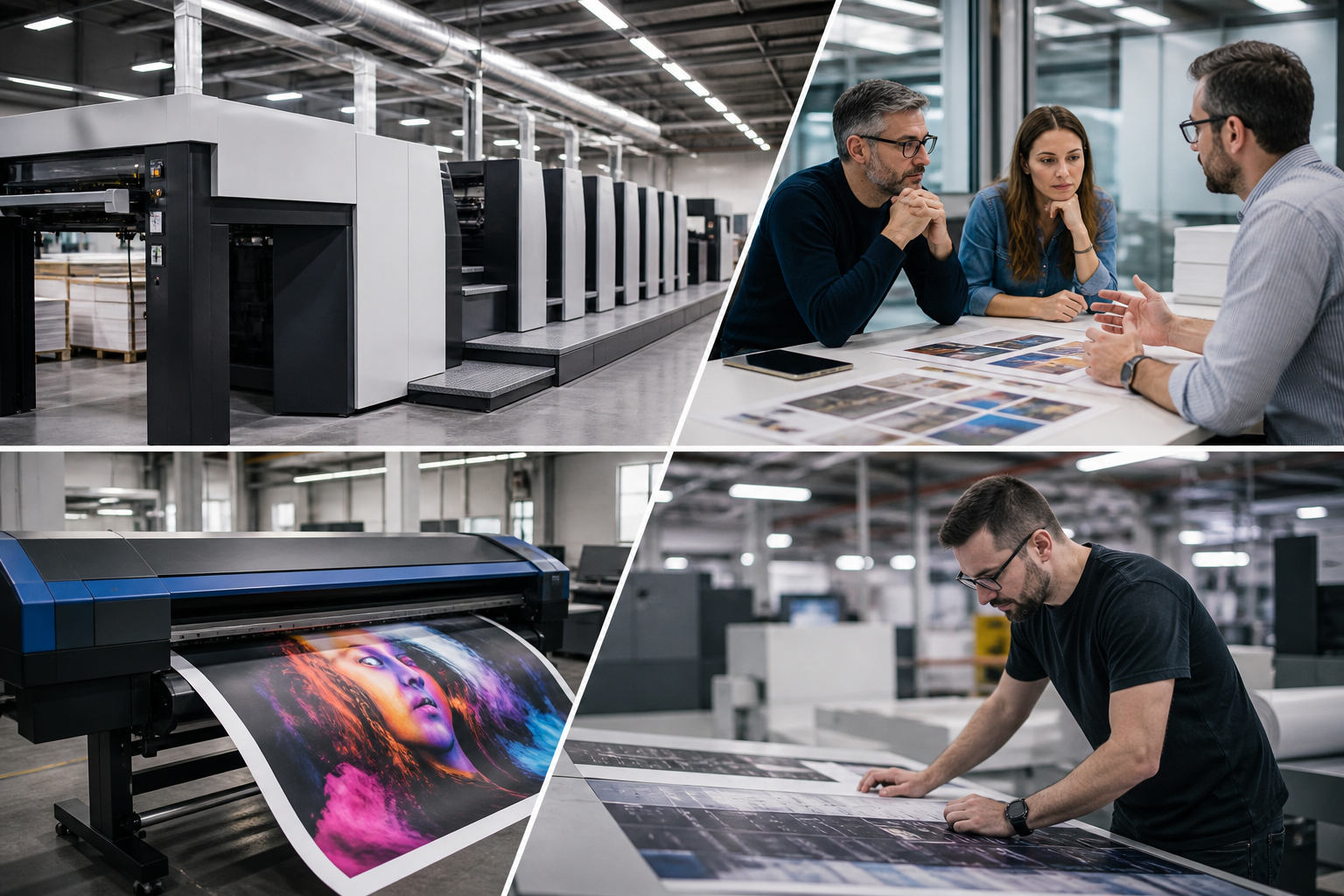
You've got a Komori GL-540 sitting in the pressroom, an HP Indigo 7900 humming away next door, and a Roland VG3-640 in the wide-format bay. So why are the enquiries landing in your inbox still for £80 business card runs and pull-up banners? The problem usually isn't demand — it's how (and where) your kit is described online.
Why Generic Listings Kill Speciality Enquiries
Most print directories and aggregator sites treat a Heidelberg Speedmaster and a desktop toner box as the same thing: "printer." Buyers searching for a specific capability — a 7-colour litho run with a Pantone hexachrome build, or 1,200 dpi ElectroInk output on synthetic stock — can't filter for it, so they default to whoever ranks first or bids lowest. Your speciality kit becomes invisible.
The fix is boring but powerful: describe the press, the substrates, the finishing inline, and the buyer you want. Vague listings attract vague enquiries. Specific listings attract briefs that match what your machine was built to do.
What Buyers Actually Search For
Trade print buyers, packaging brand managers and design studios don't type "printing company near me." They search things like:
- "HP Indigo 7-colour digital printer UK"
- "Komori H-UV low-migration food packaging"
- "Roland TrueVIS eco-solvent wide-format"
- "B1 litho printer with inline coater"
- "Short-run digital with white ink on clear"
If your listing doesn't contain those phrases, you don't exist to those buyers. It really is that mechanical.
Building A Listing That Filters In The Right Work
A strong speciality press listing on a direct marketplace like ZeozGig should read less like a brochure and more like a spec sheet a production manager would nod along to. Here's the structure that consistently pulls better-quality RFQs.
1. Lead With The Press, Not The Company
Open the listing title with the machine. "HP Indigo 7900 Digital Press — 7 Colours + White, B2 Sheet, Synthetic & Board Stocks" tells a buyer everything in one line. Compare that to "Quality Digital Print Services" — one of those titles wins searches, the other doesn't.
2. Spell Out Substrates, Sizes And Finishing
List exactly what the press can and can't do:
- Max sheet size (e.g. 750 x 530 mm on the Indigo 7900, 720 x 1030 on a B1 Komori)
- GSM range — from 60gsm bible paper to 400gsm board
- Stocks approved — coated, uncoated, synthetics, self-adhesive, board, foils
- Colour capability — CMYK, extended gamut, Pantone matching, white, clear, fluorescent
- Inline or offline finishing — UV coater, perfector, aqueous, spot varnish, laminating, die-cutting, foiling
- Turnaround — realistic makeready and run times for typical jobs
This reads dry, but it's the exact information a print broker or packaging buyer copies into their sourcing shortlist.
3. Name The Buyer You Want
Add a sentence that explicitly targets who should enquire. Something like: "Ideal for trade printers needing overflow B1 litho, packaging agencies sourcing short-run cartons, or design studios producing Pantone-matched brand collateral." You've just told three different buyer personas they're in the right place.
Using RFQs To Reverse The Flow
Listings pull buyers in — but on a direct marketplace you can also push outward by responding to open RFQs. On ZeozGig, posting a request costs a pound, and if a request gets no responses the fee is refunded automatically, so buyers post more speculatively and in more detail. That's a gift for speciality printers: the briefs that come through are often for jobs mass platforms can't route, like white-ink-on-clear labels or hexachrome brand books.
When you respond, quote the press by name. "We'd run this on our HP Indigo 7900 with white underprint, 5-day turnaround, Pantone-matched to your brand guide" beats "we can do this, please call for a quote" every time.
The Economics Of Direct Vs Commission
On commission-based print marketplaces, a £4,000 packaging job can lose £400–£600 to platform fees before you've even bought ink. On a fixed-fee model — £1 to list, £5 to open a direct connection with a buyer, small charges for voice or video calls — that same job keeps its margin intact. For speciality kit that runs on tighter margins per sheet but higher value per job, the difference over a year is not trivial.
Keeping Listings Alive
A listing isn't a set-and-forget asset. Refresh it whenever:
- You add a new stock or ink capability (white, neon, metallic)
- Finishing changes — new die-cutter, foiler, or inline coater
- Capacity opens up on specific shifts
- You want to target a new sector (packaging, publishing, POS)
Treat each speciality press as its own listing rather than lumping everything under "our equipment." A buyer looking for Roland eco-solvent wide-format doesn't want to scroll past your saddle-stitcher to find it.
Ready To Put Your Presses In Front Of The Right Buyers?
If your Komori, Indigo or Roland is doing better work than your website is describing, the fix takes an afternoon. List each press individually on ZeozGig for £1, respond to live trade RFQs, and connect directly with the buyer — no commission, no contract, no percentage skimmed off the job. Post a listing or browse open requests today at ZeozGig and let the right work find your pressroom.