How To List Speciality Presses So The Right Print Buyers Actually Find You
A practical guide for commercial printers on listing Komori, HP Indigo and Roland kit in a way that pulls in qualified trade buyers, not tyre-kickers.
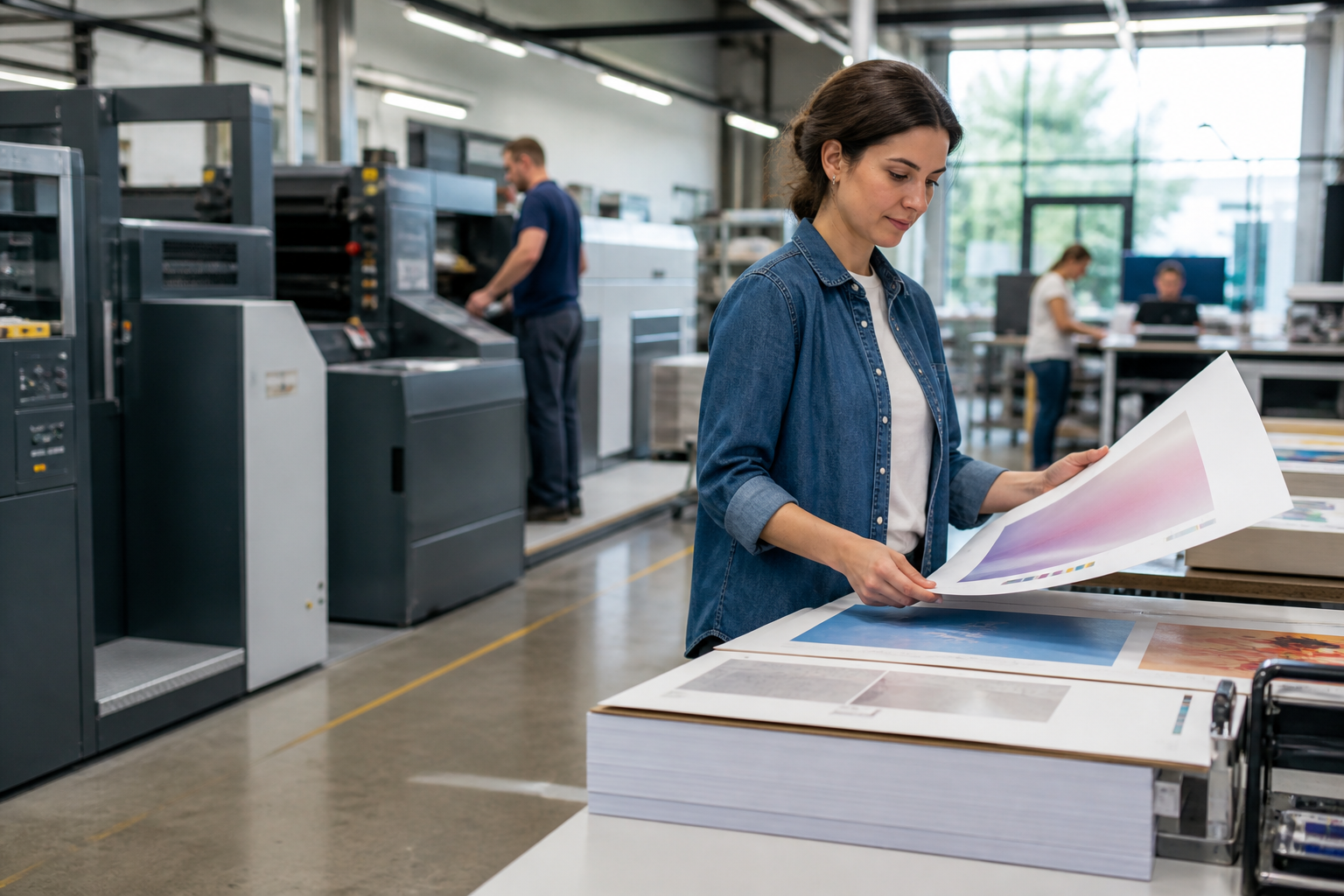
You've got a press worth six or seven figures sitting on your shop floor, and yet the enquiries hitting your inbox are for 250 business cards on 300gsm silk. Something's broken in how buyers are discovering what your kit can actually do — and it usually starts with the way that kit is (or isn't) listed.
Why Generic Listings Attract The Wrong Work
Most printer directories and quote engines lump everyone into buckets like "digital printer" or "litho printer". That's fine if you want to fight on price against every jobbing shop in a 50-mile radius. It's a disaster if you've invested in a Komori GL-40 with H-UV, an HP Indigo 12000 with white ink, or a Roland TrueVIS with orange and green channels. Those machines exist to do work that ordinary kit can't touch — and buyers looking for that work will scroll past a listing that says "we print brochures".
The fix isn't clever copywriting. It's making your listing precise enough that the right buyer recognises themselves in it within about three seconds.
The Buyer You're Actually Trying To Reach
Before you write a word, think about who genuinely needs your specific press:
- A packaging designer who needs a 7th-colour Pantone match on folding carton
- A photo book publisher who wants HP Indigo ElectroInk quality on uncoated stocks
- A signage reseller who needs true white ink on clear vinyl for retail windows
- A luxury brand agency that specs H-UV for instant-dry work on uncoated cover boards
- A trade printer overflowing and looking for a subcontractor with matched capability
Each of those buyers uses different search language. Your listing has to speak all of it.
Structuring A Speciality Press Listing That Converts
When you list a product or service on ZeozGig (it's a flat £1 to list, and it stays live in the marketplace — no monthly fee eating into margin), treat the listing like a spec sheet, not an advert. Buyers of speciality print are technical. They want numbers.
A strong listing for, say, an HP Indigo 7900 should include:
- Exact model and configuration — not "HP Indigo" but "HP Indigo 7900, 7-colour including white and Indichrome orange, violet, green"
- Sheet size and substrate range — max sheet, min/max GSM, synthetic stocks, metallics, textured
- Finishing in-line or near-line — spot UV, foiling, die-cutting, saddle-stitching, perfect binding
- Turnaround windows you can genuinely hit for trade work
- Minimum and maximum run lengths — critical for filtering out the wrong enquiries
- Colour management credentials — G7, Fogra, ISO 12647, Pantone Plus library support
- Sample availability — offer to send a printed sample pack on request
Do the same discipline for a Komori litho listing (perfector? coater? UV? IR? plate size?) or a Roland wide-format listing (roll width, ink set, print-and-cut, resolution modes, media handled).
Language Your Buyers Actually Search
Trade buyers rarely type "high quality printing". They type things like "HP Indigo white ink short run", "H-UV litho uncoated", "Roland TrueVIS orange green ink", "perfector B1 litho trade". Bake those exact phrases into your listing title and first paragraph. Search engines index them, and — just as importantly — the buyer scanning a results page recognises the vocabulary as their own.
Backing Listings Up With RFQ Activity
A static listing is only half the play. The other half is being present when buyers post live requests. On ZeozGig, an RFQ costs the buyer £1 to post, and if it gets zero responses their fee is refunded — which means the buyers using the platform are serious and the requests are real. For you as a seller, the cost to open a direct connection with a buyer whose RFQ matches your kit is a one-off £5. No percentage of the job. No commission on the reorder. No commission on the next five years of that client's work.
Compare that to a print aggregator taking 8–15% of every invoice, forever, and the maths on speciality kit gets very interesting very quickly. A single £12,000 folding carton job that would have cost you £1,200+ in commission now costs £5 to connect and quote.
Keep The Listing Alive
A few habits that separate listings that win work from listings that gather dust:
- Refresh the copy every quarter with any new substrates, inks or finishing added
- Add sample photos of real jobs (with client permission) showing the effects only your kit produces — white ink on kraft, foil-on-litho, gradient wide-format on backlit film
- Note any calibration or certification renewals (Fogra recert, Pantone library updates)
- Mention overflow/trade rates separately from end-client rates so brokers know you're set up for them
- Respond fast when connections open — speciality buyers are usually working to a deadline and remember who replied within the hour
The Point Of All This
Speciality presses were bought to earn speciality margins. If your listings describe the machine the way the manufacturer's brochure does, and if you're routing enquiries through platforms that skim commission on every job, you're leaving money on the makeready table. Precise listings plus direct, commission-free buyer connections is how you get the Indigo, the Komori or the Roland earning what it was financed to earn.
---
Ready to put your kit in front of buyers who actually need it? List your speciality press on ZeozGig for a one-off £1, keep 100% of every job you win, and only pay £5 when a real buyer wants to talk. Post a listing or browse live print RFQs today.