Turning Idle Shifts Into Trade Work: Listing Press Downtime As Bookable Capacity
Your press doesn't earn when it's parked. Here's how to list quiet shifts as bookable trade capacity and get RFQs landing when the plates are cold.
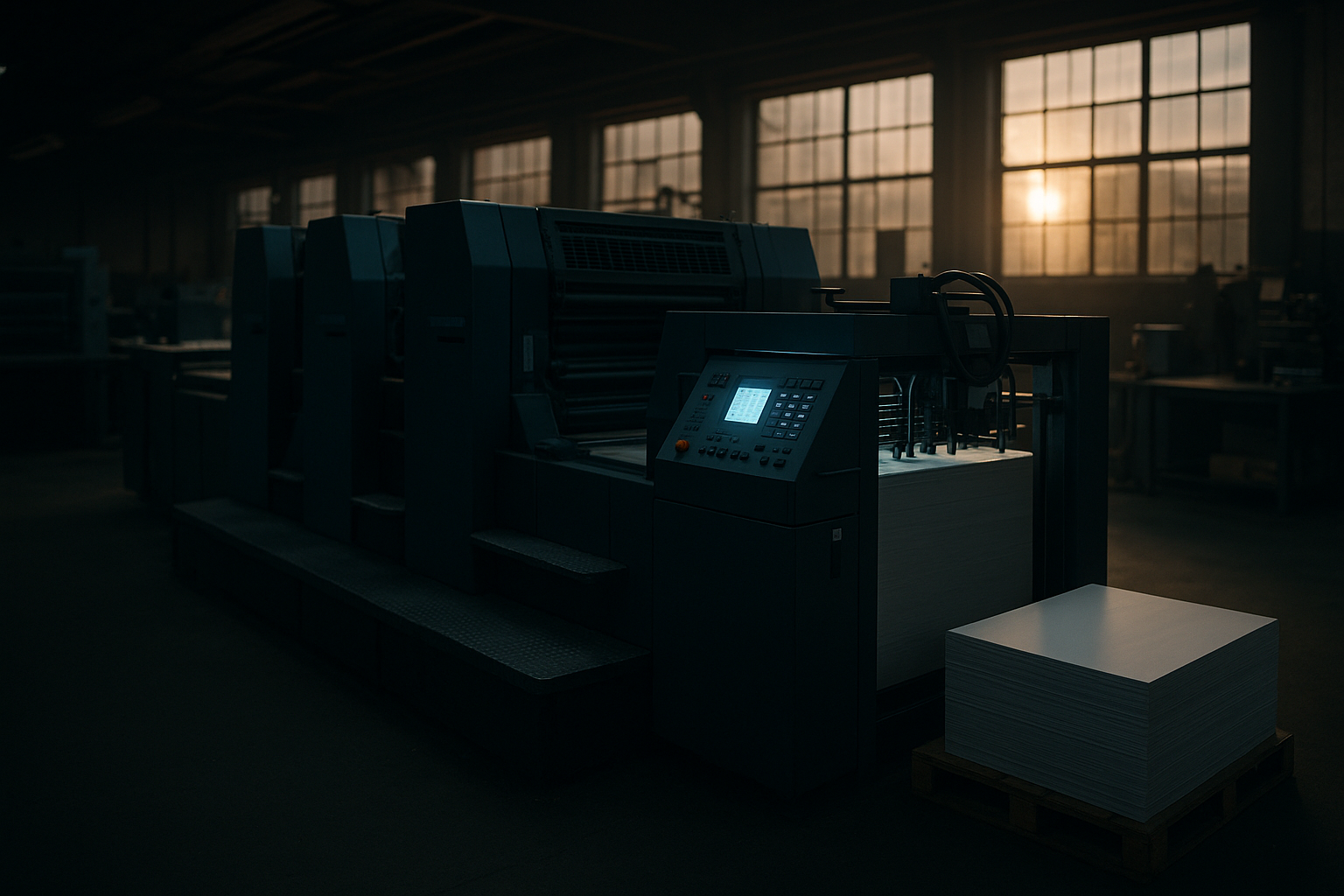
Every commercial printer knows the maths: a B2 litho press sitting idle on a Thursday afternoon isn't neutral — it's actively costing you money in depreciation, rent, and salaried operator time. The problem isn't usually a lack of work in the market; it's that the buyers who need those exact idle hours have no clean way to find you.
The Real Cost Of A Quiet Press
Most print MIS dashboards will tell you your utilisation rate — 62%, 71%, whatever the number happens to be that week. What they don't tell you is that closing even a fraction of that gap with trade or overflow work is often more profitable than chasing new retail clients, because the fixed costs are already paid. The marginal job on a Wednesday night shift is nearly all margin, minus consumables and plate costs.
And yet, most printers still treat downtime as a private problem — something to be solved by the sales team eventually, or absorbed into the quarterly numbers. The reason is simple: there hasn't been an easy, low-friction way to broadcast "I have 8 hours of SRA2 four-colour capacity on Thursday, who needs it?" to the right audience without either paying a commission-heavy platform or cold-calling brokers.
Why Traditional Overflow Networks Fall Short
The old model — a handful of trusted printer-mates you ring when you're stuck, and who ring you back when they are — still works, but it's narrow. It relies on:
- A small, static network of contacts
- Everyone being available at the same moment
- Reciprocal favours that eventually get uneven
- Zero visibility to buyers outside the printer club
Meanwhile, the online aggregators that promised to solve this took 10–20% of every job and buried your listing behind their own branded quote engines. The revenue leak just moved.
Treating Capacity As A Listable Product
Here's the mental shift worth making: your available press hours are a product. They have a spec sheet (format, GSM range, colours, finishing options), a shelf life (this Thursday, next Monday), and a price. If you can list a 500-sheet stack of GF Smith Colorplan as a product, you can list press time the same way.
On ZeozGig, listing a product or service costs $1 — flat. That means you can post something like "Overflow B2 litho capacity, 4-colour + coating, up to 350gsm, available Tuesdays and Wednesdays" as a permanent listing that trade buyers, brokers and agencies can search. No commission on the work that follows. No monthly fee. If someone opens a direct connection to discuss a job, it's $5 — once — and then you're chatting, quoting, and closing without a middleman skimming the margin.
What A Good Capacity Listing Actually Contains
Buyers looking for overflow don't want vague. They want to know within 30 seconds whether you can run their job. A tight listing includes:
- Kit and format — e.g. Komori Lithrone GL-540, max sheet 720×1030mm
- Substrate range — GSM from/to, coated/uncoated, board handling
- Colour capability — CMYK + spot, Pantone matching, coating unit
- In-line and off-line finishing — folding, saddle-stitch, perfect bind, die-cut, foil
- Typical turnaround — makeready time, standard run speeds, dispatch cut-offs
- Trade terms — whether you'll white-label, ship direct, hold neutral packaging
The more specific, the better the RFQ quality. Vague listings attract tyre-kickers; precise ones attract print buyers who already know exactly what they need.
Using RFQs To Fill Specific Gaps
Listings are the passive side. The active side is watching inbound RFQs and responding to the ones that fit your quiet slots. Post-a-request is $1 for buyers, and if a request gets zero responses the fee is refunded automatically — which means buyers actually use it, so the request feed stays busy.
For a printer with a genuine gap on Thursday, the workflow looks like this:
- Scan open RFQs filtered by your capability tags
- Spot a 5,000-run brochure job needing dispatch Friday
- Open a direct connection ($5), send a keen price because your press is already sitting cold
- Close on chat, voice or a quick video walk-through of proofs
No percentage taken. No "platform fee" on the invoice. The buyer pays you directly; you keep 100%.
A Note On Pricing Downtime Work
One trap worth flagging: pricing overflow at full retail rates defeats the purpose. The point is to fill hours that would otherwise be zero-revenue. Many trade printers run a tiered sheet where standard lead-time jobs sit at normal margin and "fill-in" slots go out 15–25% keener, with a strict cut-off on artwork receipt. Because you're not paying commission, that keener price still nets more than the same job would through a percentage-based marketplace.
Making Downtime Visible, Not Hidden
The printers who consistently run at 85%+ utilisation aren't necessarily better at sales — they're better at being findable at the moment a buyer is searching. Listing your kit, your quiet windows, and your trade terms in a place buyers already look is the whole game. Add SMS or WhatsApp alerts on relevant RFQs (a few pence each) and you're the first quote in when a matching job drops.
Ready To Turn Quiet Shifts Into Booked Work?
List your press, your finishing kit, or your overflow capacity on ZeozGig for a flat $1 and start getting seen by the trade buyers, brokers and agencies who need exactly what you've got sitting idle. Or scan the open RFQs today and quote on a job that fits Thursday's gap. No commissions, no contracts — just direct work, direct pay.