Listing Speciality Presses So Trade Buyers Search, Find And Book You
How to list Komori, HP Indigo, Roland and other speciality presses so the right trade buyers actually find your capacity and book it.
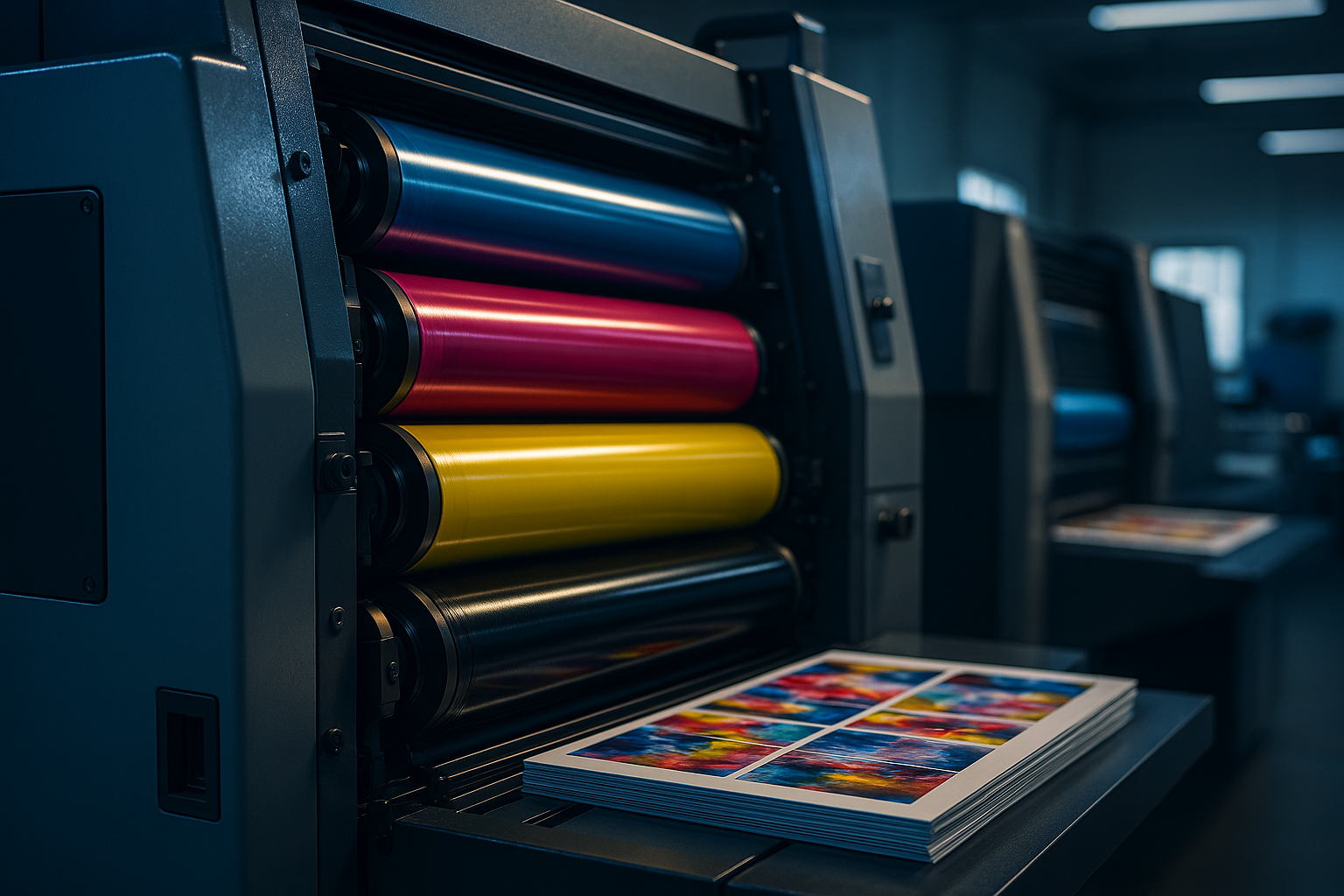
Your pressroom is full of capability that most buyers will never see — a B2 Komori sitting next to an HP Indigo 7900, a Roland VersaUV humming in the corner — and yet the enquiries you get still ask for "a flyer, glossy, ASAP". The disconnect isn't your kit; it's how your kit is described where buyers go looking.
Why generic listings lose the work that pays best
Trade buyers — print managers, brokers, agencies, packaging designers — don't search for "printer near me". They search for specific outcomes: short-run metallic stocks on Indigo, white ink on clear vinyl, 70x100 litho with inline coating, variable data with MICR. If your listing says "commercial and digital printing services", the algorithm has nothing to match against and neither does the human reading it.
The printers winning the best margins right now are the ones treating their press list the way a manufacturer treats a spec sheet. Make, model, configuration, substrates, sheet sizes, special inks, finishing inline — all of it searchable, all of it specific.
What a buyer is actually trying to confirm
Before a trade buyer sends an RFQ, they're mentally ticking off a checklist:
- Can this shop physically produce my job (sheet size, substrate, ink system)?
- Have they done something similar before?
- Will the finishing be in-house or sub-contracted (and does that affect lead time)?
- Are they geographically sensible for delivery or collection?
- Can I talk to a human quickly without filling in a form and waiting 48 hours?
A good listing answers items 1–4 before they even click. ZeozGig handles item 5 by letting buyers open a direct chat, voice or video connection for a fixed one-off fee — no gatekeeping, no commission on the eventual job.
How to write a press listing that surfaces in the right searches
Think keywords, but think like a printer, not a marketer. Here's a structure that consistently performs:
- Make and model, in full. "HP Indigo 7900" not "digital press". "Komori Lithrone GL-540 + LX" not "5-colour litho".
- Max sheet size and substrate range. B1, B2, SRA3; 80gsm bible paper up to 450gsm board; synthetics, magnetics, label stocks.
- Ink and colour capability. CMYK + White + Clear + Silver; Pantone matching; HP ElectroInks; UV-cure; eco-solvent for Roland.
- Special configurations. Perfecting unit, inline coater, fifth station, double-hit white, variable data, MICR, security inks.
- Finishing on the same floor. Die-cutting, foiling, embossing, perfect binding, saddle-stitch, lamination — whatever you actually own.
- Typical turnaround and minimum/maximum run lengths. Be honest. "500–25,000 sheets, 3–5 working days" tells a broker more than "fast turnaround".
- Certifications and accreditations. FSC, ISO 12647, G7, Sedex — these are filter keywords for serious procurement.
Three example listings, before and after
Before: "Digital printing on our HP Indigo. Great quality, fast turnaround."
After: "HP Indigo 7900 — CMYK + White + Clear, up to 350gsm, SRA3 sheet. Strong on short-run packaging mock-ups, metallic stocks, variable data direct mail. In-house die-cutting and foiling. 1,000–10,000 sheet runs, 48–72 hour turnaround. FSC certified."
Before: "Large format and signage."
After: "Roland TrueVIS VG3-640 eco-solvent, 1,625mm wide, CMYK + White. Vehicle wraps, backlit, window graphics, floor vinyl. Matched with 1.6m laminator and CNC contour cutter. Mon–Sat production, North West UK collection or palletised UK delivery."
Before: "Litho and finishing."
After: "Komori Lithrone GL-540 B2 perfector, five colours plus aqueous coater. 80–400gsm, Pantone matching to ISO 12647-2. Typical work: brochures, point-of-sale, premium packaging shells. Perfect binding, saddle-stitch and case-binding in-house."
The "after" versions don't just read better — they contain the exact phrases trade buyers type into search bars.
Pricing your listing for visibility, not vanity
On commission-based marketplaces, the temptation is to list every press as a separate "product" because it costs nothing upfront — and then you give away 10–20% of every job that lands. On ZeozGig the maths flips. A listing costs £/\$1 to publish, a direct connection from a serious buyer is a fixed fee, and that's it. No percentage of the eventual order, ever.
That means you can afford to:
- List each press separately with its own spec sheet.
- List specific configurations (e.g. "Indigo 7900 with white ink" as its own service).
- List finishing lines as standalone capabilities for other printers to sub-contract.
- Refresh listings seasonally — push wide-format in spring, packaging in Q4.
And because posting an RFQ that gets zero responses refunds automatically, buyers are more willing to test the platform with niche briefs — which is exactly the work your speciality kit was built for.
Keep the conversation on your terms
Once a buyer opens a direct connection, you're talking printer-to-buyer without a platform sitting between you skimming margin or throttling messages. Share PDFs, do a quick video walk-around of the press, agree a makeready charge, settle bleed and trim queries in five minutes instead of five emails. The relationship is yours to keep.
Ready to be found?
If your Komori, Indigo, Roland, Mimaki or finishing line is currently hiding behind a vague "commercial print services" description, today is a good day to rewrite it. List your press on ZeozGig for a one-off fixed fee, or post an RFQ if you're the one looking for speciality capacity. Either way, you keep 100% of what the job is worth — and the right buyers finally find the right press.