Turning a One-Off Print Request Into a Repeatable Procurement Workflow
Learn how to turn a single successful print RFQ into a repeatable procurement workflow that saves hours on every future job — without adding overhead.
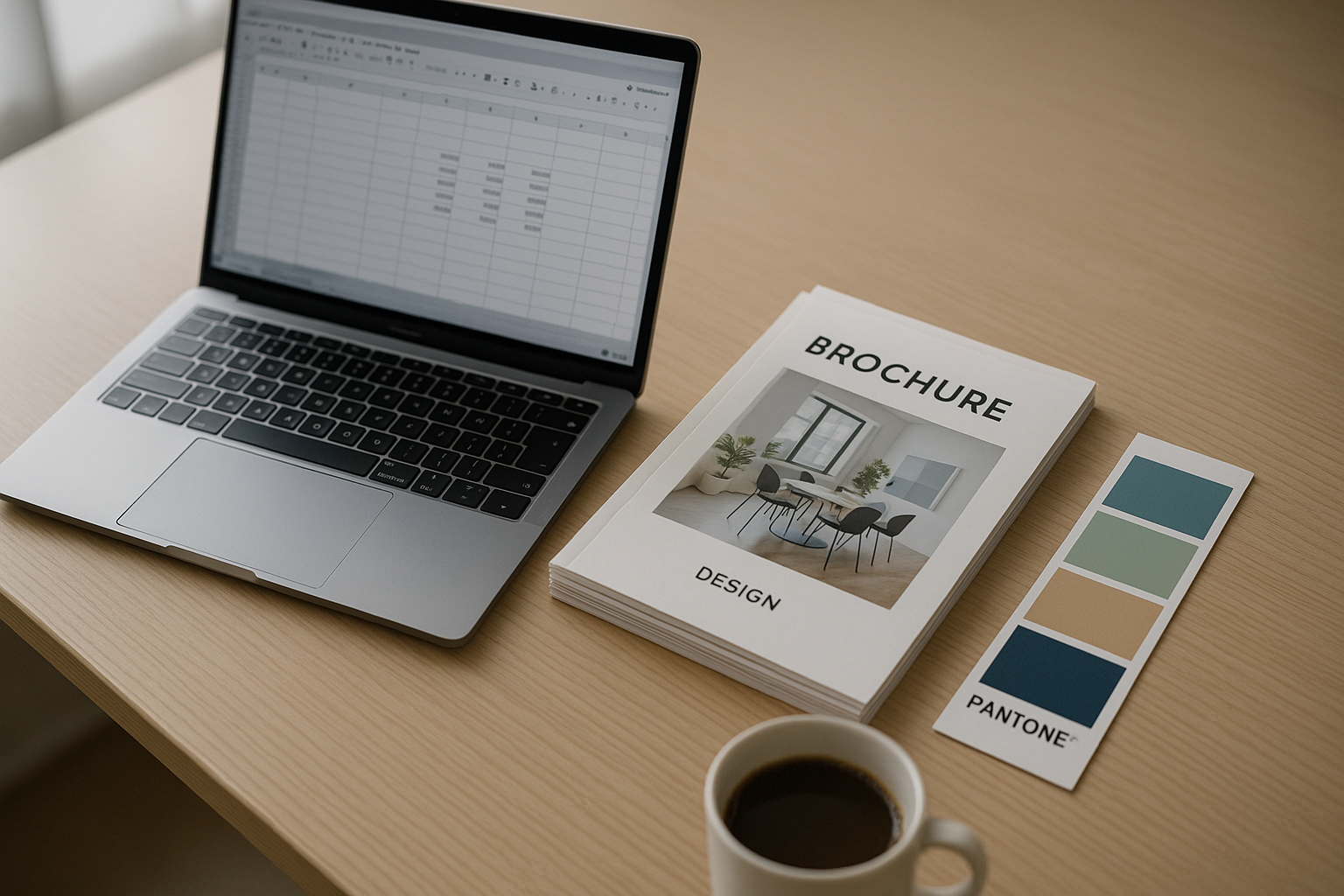
Most print buyers treat every job like it's the first time they've ever bought print. They rewrite the brief from scratch, phone round the same three printers, and cross their fingers on lead time. It doesn't have to be that way — a single well-run RFQ can become the template for every job that follows.
Why One-Off Print Buying Quietly Costs You Money
When a print request is handled as a one-off, the cost isn't just the invoice. It's the hours spent rebriefing, the missed opportunity to negotiate on repeat volume, and the risk of picking the wrong supplier because you didn't have time to compare properly.
Even experienced buyers fall into this trap. A marketing manager needs 500 brochures for a launch, sources them in a panic, files the invoice, and forgets the whole thing — until three months later when they need another 500 and start from zero. Meanwhile, the printer who delivered on time never hears from them again.
The fix isn't complicated software or a full procurement platform. It's a lightweight, repeatable workflow built around a few reusable assets: a clean RFQ, a shortlist of vetted suppliers, and a record of what actually worked.
Step One: Turn Your First RFQ Into a Reusable Template
The RFQ you write for a one-off job is 80% of the RFQ you'll need next time. The trick is to structure it so the reusable parts are obvious and the job-specific parts are easy to swap.
A good reusable print RFQ template covers:
- Product type and format (e.g. A5 saddle-stitched brochure, 16pp)
- Quantity and any tiered options (e.g. quote 500 / 1,000 / 2,500)
- Stock and finish (GSM, coated/uncoated, silk/matt, any Pantone specials)
- Print process (litho, digital, wide-format, DTG)
- Finishing requirements (folding, foiling, die-cutting, laminating)
- Bleed, colour profile and file supply notes (CMYK + spot, 3mm bleed)
- Delivery address, quantity split, and deadline
- Any brand-critical notes (colour matching to previous run, batch consistency)
Save the template somewhere you'll actually find it — a shared drive, Notion, even a pinned email. Next time a similar job comes in, you're editing, not writing.
Keep a "job specs" library
If you print similar items regularly — business cards, pull-up banners, event flyers, packaging sleeves — build a mini-library of finalised specs. Every time you close a job, spend two minutes copying the winning quote's spec sheet into that library. Future you will save an hour every time you dip into it.
Step Two: Build a Shortlist From the Suppliers Who Actually Delivered
The second reusable asset is your supplier list. On ZeozGig, every RFQ you post can pull in multiple printer and finisher responses, which means each job is effectively an audition. Track which suppliers quoted competitively, which came back fast, and which actually delivered on the promise.
A simple shortlist might look like this:
- Primary trade litho printer — for longer runs of books, brochures and folded work
- Digital short-run specialist — for sub-500 quantities and variable data
- Wide-format supplier — banners, exhibition graphics, POS
- Specialist finisher — foiling, embossing, die-cutting, unusual binding
- Local backup — someone nearby who can turn same-day if a job blows up
You don't need dozens of suppliers. You need five or six you trust, plus the ability to open the market up again when something unusual comes in.
When to re-tender vs when to go direct
Once you've built that shortlist, you'll face a recurring question: do I just message my usual printer, or do I open it up to the market again? A useful rule of thumb — go direct when the job is a near-clone of one you've run before and you're happy with the price. Open a fresh RFQ when the spec has changed materially, when volumes have jumped, or when it's been more than six months since you last tested the market.
On ZeozGig, opening a direct connection with a supplier you've already worked with is a small one-off fee, and posting a fresh RFQ costs a pound — with an automatic refund if nobody responds. That makes it genuinely cheap to keep testing the market without abandoning trusted suppliers.
Step Three: Close the Loop on Every Job
The difference between a workflow and a habit is the review step. After every print job — even a small one — take five minutes to note:
- Final quantity, spec and price paid
- Which supplier won and why
- Delivered lead time vs promised lead time
- Any quality issues on press or in finishing
- Whether you'd use this supplier again for this type of work
This is boring. It is also the single highest-ROI habit in print procurement. Six months in, you have a private database of who actually delivers on what — and quoting client work becomes a lookup instead of a guessing game.
Why This Matters Whether You're a Broker or a One-Off Buyer
For a print broker or agency, a repeatable workflow is the difference between scaling and drowning. For a startup founder or event organiser buying print twice a year, it means the next job takes twenty minutes instead of two days.
Either way, the underlying mechanics are the same: reusable RFQ, vetted shortlist, honest post-mortem. The marketplace is the connective tissue that lets you find suppliers, compare them fairly, and keep 100% of the margin because there's no commission clipped off every deal.
Ready to Build Your Workflow?
Post your next print request on ZeozGig — one RFQ, multiple trade quotes back, no commission and no monthly fees. Save the brief, keep the suppliers who deliver, and turn today's one-off into tomorrow's repeatable process. If you're a printer or finisher, list your capabilities and start responding to jobs that match your kit.