How Print Brokers Can Win Large-Volume Litho Book and Brochure Jobs With Direct RFQs
How print brokers can use direct RFQs to source large-volume litho book and brochure work, protect margin and lock in reliable trade printers fast.
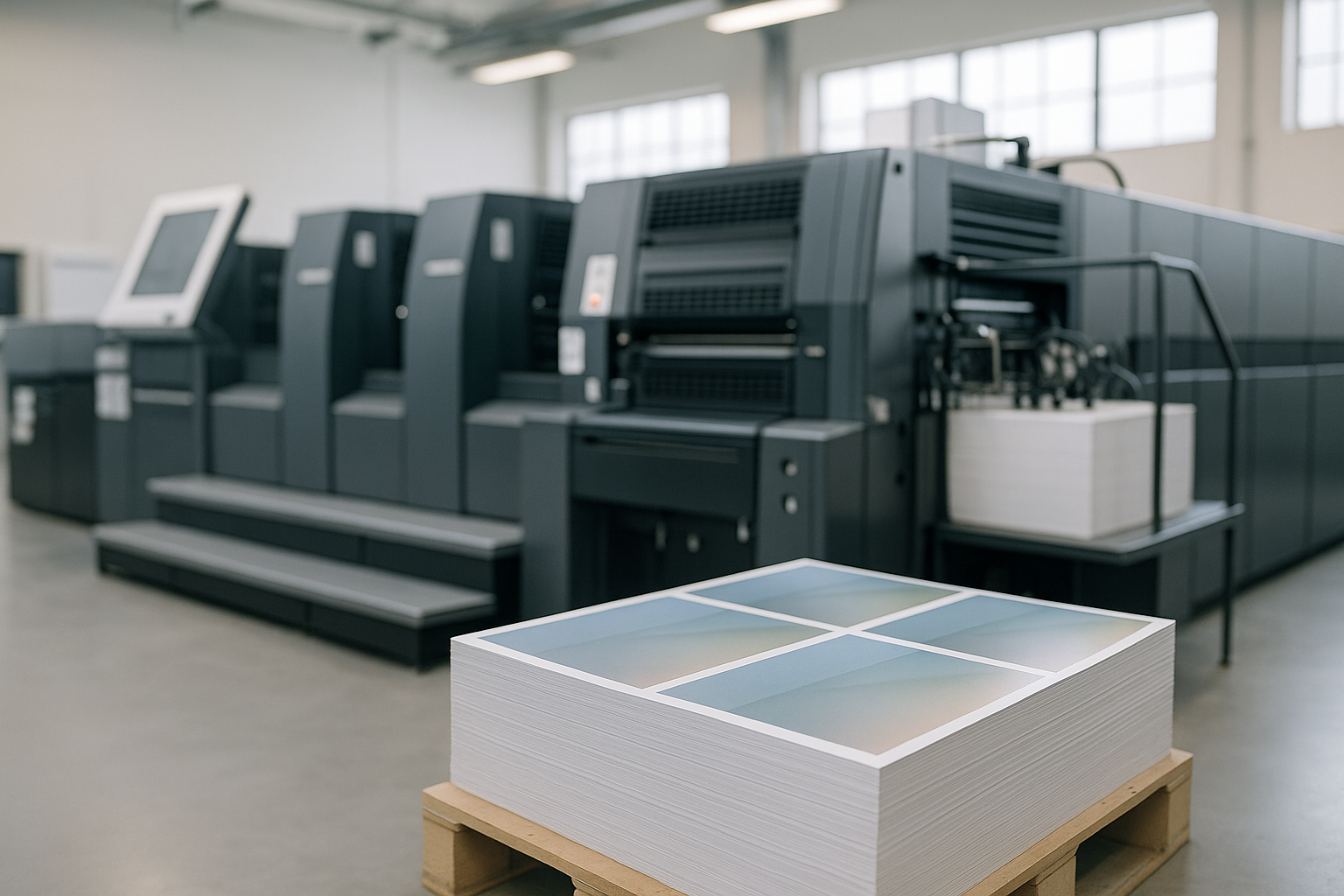
Long-run litho work — perfect-bound books, saddle-stitched brochures, 5,000-up catalogue runs — is still some of the most profitable work on a broker's desk. The trouble is, getting three solid trade quotes back in time to present to the client without burning two days on emails has become genuinely painful.
Why long-run litho is getting harder to quote
Ask any broker who's been in the game a decade and they'll tell you the same thing: the pool of trade litho printers running B1 and B2 kit has shrunk. Consolidation, kit being scrapped in favour of digital, and a handful of well-known names quietly closing has left fewer doors to knock on. At the same time, clients still expect three competitive quotes by Thursday.
The result is a familiar squeeze:
- Your usual two or three trade suppliers are increasingly booked out on makeready slots.
- New trade printers are hard to vet without a personal introduction.
- Paper merchants are quoting GSM and stock availability with shorter windows than they used to.
- Clients are pushing harder on price because they've seen web-to-print pricing online.
None of that changes the maths of being a broker. You still need competitive buy prices, you still need to mark up sensibly, and you still need fulfilment you can rely on. What has to change is how you source.
What a direct RFQ actually does for a broker
A direct RFQ — a request you post once and that gets seen by multiple trade printers who self-select to respond — flips the workflow. Instead of you chasing the market, the market comes to you. For a long-run litho job, that's a meaningful shift.
Here's what a well-structured book or brochure RFQ should contain before you post it:
- Format and extent — finished size, page count, cover plus text, or self-cover.
- Stocks — cover GSM and finish, text GSM, any uncoated or recycled requirements.
- Colour — 4/4 CMYK, any Pantone specials, spot UV or special finishes on cover.
- Binding — perfect-bound, PUR, saddle-stitched, section-sewn, wiro.
- Quantity and overruns policy — firm run, plus any allowance you want quoted.
- Delivery — single drop, multi-drop, palletised, shrink-wrapped in bundles of X.
- Lead time — proof date, on-press date, delivery date.
The tighter your brief, the tighter the quotes come back. Trade printers hate vague RFQs because they end up either no-quoting or padding the price to cover unknowns — neither of which helps your margin.
Posting it once, not twenty times
On ZeozGig, you post that RFQ a single time for a flat $1. Trade litho printers see it and respond. If you get zero responses, the fee is refunded automatically — so there's no risk in floating a slightly unusual spec to see who bites. Compare that to spending half a day finding email addresses and re-typing the same brief into seven different contact forms.
Protecting your margin on long runs
This is where brokers genuinely live or die. On a 10,000-run perfect-bound brochure, a £400 difference between two trade printers is the difference between a healthy mark-up and a job you'd rather not have taken. The classic problem is that on conventional marketplaces or directories, commission gets shaved off the top — sometimes 5–10% — which on a £6,000 buy price is real money out of your pocket.
ZeozGig works on fixed per-action fees instead. You pay to post the request ($1), and if you want to open a direct connection with a specific trade printer to negotiate properly, that's a one-off $5. A quick voice call to clarify stock substitution is $0.50, a video call to walk through a dummy is $1. Once the deal is done, the deal is done — no percentage of the job disappears to a middleman, and there's no monthly subscription sitting in the background whether you use the platform or not.
On a single 10,000-run brochure that's the difference between keeping your full margin and donating a chunk of it to a platform that didn't actually find you the client.
Building a wider bench of trade litho suppliers
The other quiet benefit of running long-run work through direct RFQs is that you start to discover trade printers you genuinely didn't know existed. Brokers tend to have two or three favourites and stop looking. That's fine until those favourites are booked, on holiday shutdown, or quote a number that doesn't fly with the client.
Use direct RFQs to:
- Identify two or three backup trade litho houses on every typical spec you sell.
- Test new suppliers on smaller, less critical jobs before trusting them with a flagship client title.
- Find specialists for the awkward edges — PUR binding at low quantities, uncoated text stocks, FSC-only chains, section-sewn case-bound books.
- Spot regional trade printers whose delivery costs make them more competitive than your usual go-to on certain postcodes.
Over six months, that's how you move from "two suppliers I rely on" to "a stable of eight or ten I can call on by job type."
Keeping the client relationship yours
One worry brokers always raise: won't the trade printer try to go around me to the end client? On ZeozGig, the trade printer never sees who your client is. You run the relationship, you present the quote on your letterhead, you mark up to whatever the market will bear, and the trade printer remains a white-label production partner. That's how it should be.
Try it on your next long-run job
Next time a 5,000-up brochure or a 3,000-copy perfect-bound book lands on your desk, write the brief properly and post it as a direct RFQ on ZeozGig. You'll get competing trade quotes back without the cold-calling, you'll keep 100% of your margin, and you'll pay nothing more than a few pounds in fixed fees. Post your first request, or list your brokerage as a service on the marketplace, and see how much faster long-run litho sourcing can be.