Why Print-Ready Artwork Deserves A Direct Line To The Press, Not A Freelance Marketplace
Freelance marketplaces sit between designers and printers, adding fees and friction. Here's how direct designer-to-printer connections produce better print outcomes.
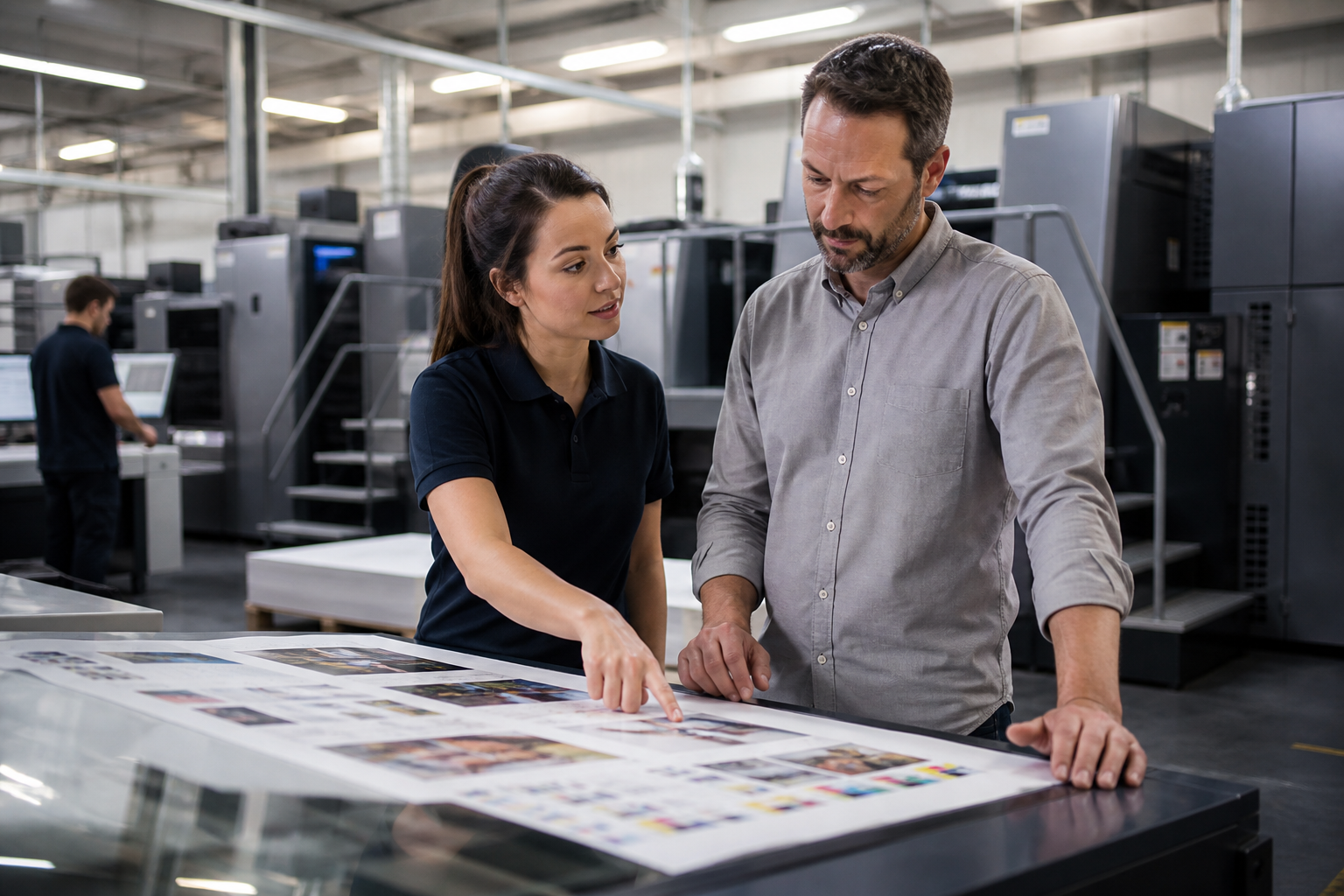
Every commercial printer has seen it: a PDF lands in prepress with hairline strokes at 0.1pt, RGB images, no bleed, and a Pantone spot colour the designer never converted. The designer got paid on a freelance platform weeks ago. The printer is left to fix it — or nudge the buyer for a revised file and lose a day of scheduling.
That gap between design and press is where freelance marketplaces quietly cost the whole industry money. Not because the designers are bad, but because the platforms are built for one-off transactions, not the collaborative back-and-forth that print actually needs.
The hidden cost of a marketplace middleman between designer and press
Fiverr, 99designs and their cousins are optimised for a clean handoff: brief in, file out, review, done. That works for a social media banner. It falls apart when the deliverable has to survive a Heidelberg, a Komori or an HP Indigo.
Here's what actually gets lost when a designer and a printer never speak directly:
- Substrate context. A logo that pops on a 350gsm silk board looks muddy on uncoated 120gsm. The designer doesn't know unless they ask the printer.
- Finishing knowledge. Spot UV needs a separate layer. Foil blocking needs vector art with proper trap. Die-cut jobs need a dieline supplied by the finisher, not guessed at.
- Colour management. Pantone matching, CMYK conversion, ink limits for digital vs litho — none of this is handled well when the designer is siloed on a gig platform.
- Bleed, trim and safe area. Marketplace templates almost never match the printer's imposition requirements.
And on top of all that: the platform takes a cut, usually 20% from the designer and a service fee from the buyer. Nobody involved is better off.
What a direct designer-to-printer relationship actually looks like
When a designer talks to the printer before artwork is finalised, the whole job changes shape. Prepress notes go into the design brief. The designer supplies a working file that already accounts for the press profile. Makeready is faster because the file is right first time.
The conversations that only happen when there's no middleman
Think about the questions a good print sales rep asks a designer on the first call:
- What's the run length, and is this best on digital or litho?
- Are there any spot colours, and do they need to be Pantone-matched or converted?
- Is there foiling, embossing, die-cutting or spot UV — and do you have a separate finishing layer?
- What weight and finish of stock are you specifying, and have you seen a sample?
- What's the final trim size, and does your artwork include 3mm bleed and a 3mm safe area?
None of that fits into a 500-character gig brief. All of it saves hours in prepress.
How ZeozGig connects designers and printers without taking a cut
ZeozGig was built by people who ran a print MIS company for decades, so the workflow is shaped around how print jobs actually move. A designer or agency posts an RFQ describing the job — quantities, stock, finishing, delivery — for $1. Printers who can genuinely handle it respond. Either side can open a direct connection for a one-off $5 fee and then chat, call or video-review artwork without anything sitting in the middle.
Crucially:
- There's no commission on the job value. A £4,000 packaging run costs the same to connect on as a £200 flyer job.
- If a request gets zero responses, the posting fee is refunded automatically.
- There are no monthly subscriptions and no contracts. You pay when you use it.
- The connection is permanent once opened — the designer and printer can keep working together on future jobs at no extra platform cost.
That last point matters most. Freelance marketplaces are designed to keep you inside their walls, because every new job = another commission. ZeozGig charges once to open the door; after that, the working relationship is yours.
For designers and agencies: what to put in your first RFQ
If you're a designer or agency procurement lead moving off gig platforms, the RFQ is where the relationship starts. A vague brief gets vague quotes.
Include at minimum:
- Quantity and any variable data requirements
- Flat and finished size, plus a note on bleed
- Stock: GSM, coated/uncoated, any specific brand preference
- Print method preference (or ask the printer to advise: litho vs digital)
- Colour: 4/4 CMYK, plus any Pantones or specials
- Finishing: lamination, foiling, embossing, die-cutting, folding, binding
- Delivery location and deadline
With that in an RFQ, three or four qualified trade printers can quote accurately within a day — no design revisions, no platform middleman, no percentage skimmed.
For printers: why designer-led RFQs are worth answering
Designers and agencies are among the stickiest print buyers in the market. Win one good agency relationship and you can be quoting monthly for years. The barrier has always been finding them without paying a marketplace 15–30% forever.
A fixed $5 connection fee to reach a designer who has ten clients pushing print through them each year is one of the better bits of maths in this industry.
Cut out the layer that doesn't belong
Design and print have always worked best when the two sides actually talk. The freelance-marketplace era pushed a wedge between them and charged both sides for the privilege. It doesn't have to stay that way.
If you're a designer or agency, post an RFQ on ZeozGig for $1 and let qualified trade printers come to you — no commission, no revisions lost in translation. If you're a printer, list your press capabilities and start connecting directly with the people commissioning the work. Keep 100% of what you earn, and keep the relationship for good.