Procuring Short-Run Digital Print Profitably Whether You're a Business or a One-Off Buyer
Short-run digital print can be brilliant value or a margin killer. Here's how buyers big and small procure it profitably without middleman mark-ups.
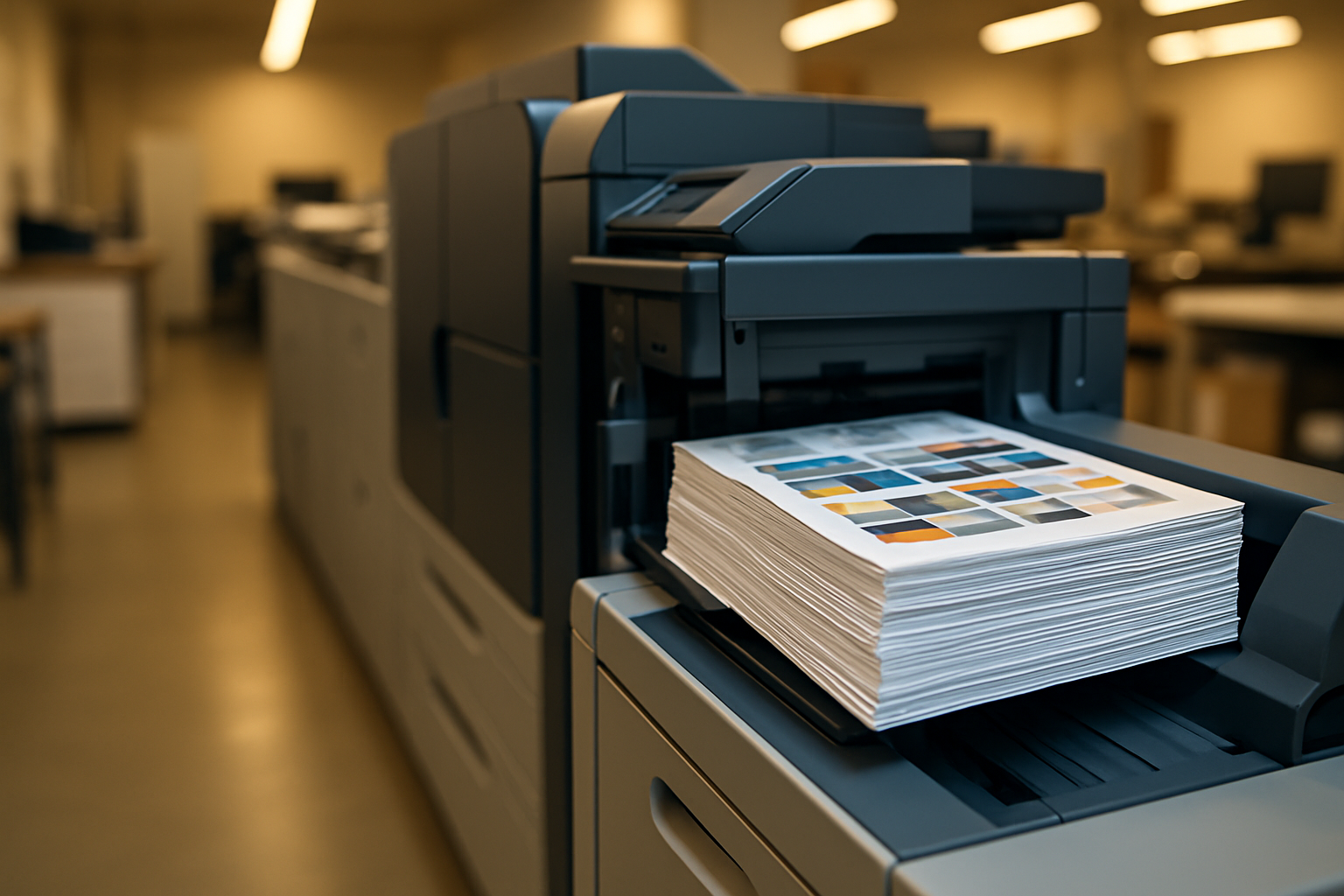
Short-run digital print sounds like the easy end of the market — a few hundred flyers, fifty booklets, a batch of business cards — but the pricing is anything but predictable. Two printers can quote wildly different numbers for the same job, and if you're a business trying to hold margin (or a consumer trying not to overpay), that spread matters.
This post walks through how buyers on both sides — B2B procurement teams and individual buyers commissioning a one-off — can procure short-run digital print without leaking money to middlemen or web-to-print aggregators.
Why short-run digital pricing is so inconsistent
Unlike litho, where plate costs and makeready dominate, digital print has almost no setup — the price is driven by click charges, stock, finishing, and how hungry the press is that week. A printer with spare capacity on a Tuesday afternoon will quote very differently to one running three shifts.
That's the opportunity. If you can put your job in front of several digital printers at once, you're effectively surfacing whoever has the best click rate, the right stock in the racks, and idle capacity right now.
What actually moves the price on a short run
- Quantity band — 250 vs 500 vs 1,000 often sits in totally different pricing tiers
- Stock — a house silk 170gsm will be a fraction of the cost of a specified uncoated or coloured stock
- Finishing — creasing, folding, laminating, perfect binding all add real money
- Turnaround — 24-hour vs 5-day changes the quote more than most buyers realise
- Colour management — CMYK build vs a chased Pantone match on digital
- File readiness — bleed, crops, and correct colour space save the printer time (and you money)
The B2B buyer's angle: protecting margin on client work
If you're a print broker, marketing agency, or in-house procurement lead, short-run digital is where margin quietly disappears. Clients expect fast turnaround and a sharp price, and if you're routing everything through one preferred supplier you're either eating the mark-up or passing it on and hoping the client doesn't shop around.
The smarter play is to run a single RFQ out to a handful of digital printers and let them compete. You keep the client relationship, you keep 100% of your margin, and you're not tied to whoever answered the phone first.
A quick B2B workflow
- Write the spec once — quantity, size, stock, GSM, CMYK or Pantone, finishing, delivery date, delivery postcode
- Post it as a single RFQ rather than emailing five suppliers individually
- Compare responses side by side — price, lead time, and what they've actually printed before
- Open a direct connection with the one or two that look strongest and confirm the fine detail
- Place the order directly — no commission clipped off the deal
On ZeozGig that whole loop costs you £1 to post the request and £5 to open a direct connection with the printer you pick. If nobody responds, the posting fee refunds automatically. Compare that to giving up 10–20% margin to an aggregator on every short-run job you push through.
The consumer angle: one-off jobs without the aggregator mark-up
If you're a sole trader, an artist printing a small run of prints, a wedding planner ordering stationery, or a startup founder needing 200 pitch decks by Thursday, the usual route is a web-to-print portal. Convenient, yes — but you're paying a retail price with a middleman baked in, and you rarely get to talk to the person actually running the press.
A marketplace RFQ flips that. You describe the job in plain English, printers who want the work respond, and you deal with them directly. For a one-off buyer this has three real advantages:
- You see the actual market price, not one portal's marked-up rate
- You can ask questions — is my file OK, will this stock work for that finish, can you deliver Friday — before you commit
- You can buy local if you want to collect, save on postage, or press-pass the job
When short-run digital is genuinely the right choice
- Quantities under roughly 500–1,000 (above that, litho often overtakes)
- Variable data — personalised names, numbers, addresses
- Fast turnaround where plate-making would blow the deadline
- Proofing runs before committing to a bigger litho print run
- Jobs where the stock is standard and Pantone-critical colour isn't essential
Getting genuinely comparable quotes
The single biggest mistake buyers make — business or consumer — is being vague. If one printer quotes on 150gsm silk and another on 170gsm uncoated, you're not comparing anything. Nail the spec first, then let price do the talking.
A good short-run digital brief includes: quantity (and maybe a second break for comparison), flat and finished size, stock name or GSM and finish, sides printed, colour (4/4, 4/0, or Pantone spec), finishing steps in order, delivery date, and delivery postcode. That's it. Printers can quote confidently off that, and you can line the numbers up like-for-like.
Post the job, keep the margin
Whether you're a broker protecting a client margin or an individual buying business cards for the first time, the principle is the same: put the job in front of multiple digital printers, deal directly with the one you pick, and don't pay a percentage to sit in the middle.
Post your short-run digital RFQ on ZeozGig for £1, compare the responses that come back, and open a direct line to the printer you like for a fixed £5. No commission, no contract, and if nobody quotes, your posting fee comes straight back. Post your request or list your press and start trading directly.