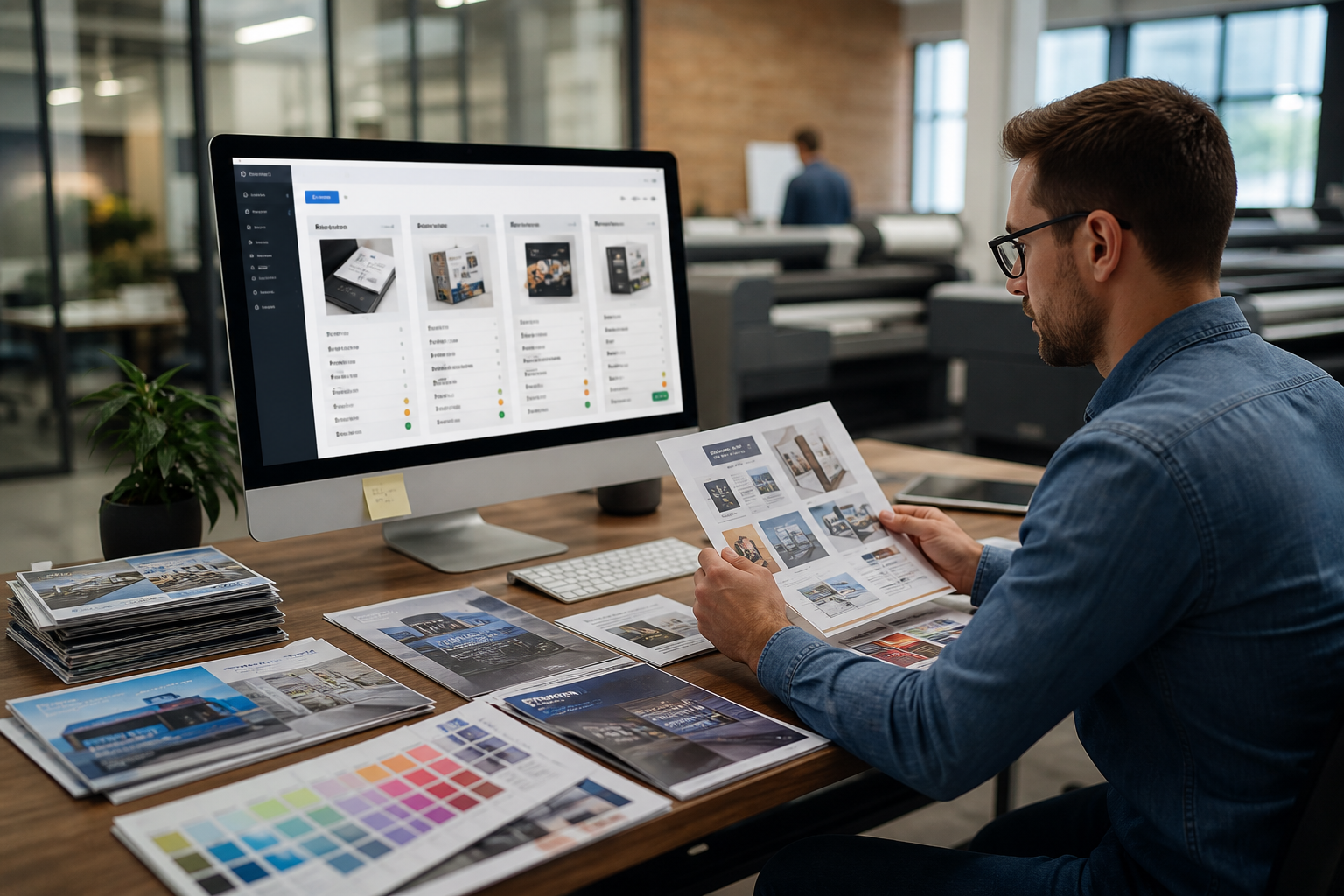
Promotional Product Fulfilment: Keeping Every Pound Of Margin On Branded Merch Runs
Branded merch is a margin business. Here's how print suppliers can fulfil promotional product orders directly, without commission middlemen eating the profit.

You've quoted a 500-unit branded tote job at a healthy margin, only to watch a promo aggregator skim 15–20% off the top before the money even hits your account. For a print shop already running tight on stock, ink and labour, that's not a fee — that's a full shift's profit walking out the door.
Why Promotional Product Fulfilment Is Especially Painful On Commission Platforms
Promo work is high-volume, low-ticket, and repeat-heavy. A single agency client might reorder polos, tote bags, mugs, pens, pop-up banners and stickers across a year — and every single line item gets its commission clipped if you're routing through a middleman platform. Compare that to a one-off litho brochure job where a 15% commission stings once and is done.
The maths gets worse when you factor in blended jobs. A typical promo run might combine:
- DTG or screen-printed apparel (garments sourced separately)
- Pad-printed or laser-etched drinkware
- Digitally printed collateral (flyers, business cards, lookbooks)
- Wide-format pull-up banners for the same event
- Sticker sheets, lanyards, ID cards
Each line gets marked up, then the platform takes its slice off the whole invoice — including your bought-in blank stock, which you're effectively paying commission on for the privilege of decorating it.
The hidden cost: you can't own the client
Most promo marketplaces deliberately obscure buyer details. You fulfil the order, ship the boxes, and never get a chance to introduce yourself. Next quarter, the same buyer runs an RFQ and it goes back into the auction — even though you've already proven you can deliver. That's not fulfilment, that's rented revenue.
What Direct Fulfilment Actually Looks Like
Direct fulfilment means you talk to the buyer, quote the buyer, invoice the buyer, and get paid by the buyer. No intermediary reads your emails, no algorithm decides who sees your capability, and no percentage disappears at settlement.
On a zero-commission RFQ platform like ZeozGig, the workflow flips:
- A marketing agency or in-house procurement lead posts a promo RFQ — say, "1,000 conference welcome packs: tote, notebook, pen, printed insert."
- You spot it in your feed, review the spec, and open a direct connection for a fixed $5 fee.
- You chat, voice-call or video-call the buyer to clarify garment brands, Pantone matches, GSM on the inserts, and delivery windows.
- You quote, they accept, you produce, they pay you — the full invoice, minus zero commission.
That $5 connection fee is the entire platform cost. Not $5 per unit. Not 15% of the invoice. Five dollars, one time, for that buyer relationship.
Fixed fees vs. percentage cuts on a real job
Let's put numbers on it. A £4,000 branded merch order via a 15% commission platform costs you £600 in fees. The same job sourced through a fixed-fee direct connection costs you $5 to open the chat and — if you decide to keep in touch by voice — another $0.50 per call. You're keeping roughly £595 more on a single order, and the buyer's contact details are yours to nurture for the next one.
Positioning Your Shop For Promo RFQs
Winning promotional fulfilment work directly comes down to how you present your capability. Buyers running merch campaigns are looking for a one-stop supplier who can handle mixed substrates without them having to project-manage six vendors.
When you list products or services on a direct marketplace, lead with the bundle logic:
- Event kits — banners, badges, printed programmes, branded pens, all delivered pre-collated
- Onboarding packs — welcome letter, notebook, mug, sticker sheet, boxed and gift-wrapped
- Campaign refreshes — reprints of core collateral plus seasonal promo items on repeat schedules
- Same-day rush capability for wide-format when an event brief lands late
Be explicit about what you don't subcontract. If you screen-print apparel in-house, say so. If you pad-print drinkware on-site rather than sending it to a jobber, say so. Buyers burned by aggregators drop-shipping from anonymous factories will pay a small premium for a supplier they can actually phone.
Make your kit list searchable
If you're running a Roland VersaUV for stickers and short-run labels, a Mimaki for wide-format, an HP Indigo for personalised inserts, and a DTG rig for garments — spell it out. Promo buyers search by capability, not by supplier name they've never heard of. A listing that says "Indigo 7900 + DTG + eco-solvent wide-format under one roof" gets qualified enquiries; a listing that says "full-service print" gets ignored.
Building A Repeat-Order Engine, Not Just A One-Off Sale
The real prize in promotional fulfilment isn't the first order — it's the sixth, tenth and twentieth. Once you're connected directly to a buyer, you can:
- Set up a private product list they can reorder from without re-briefing every time.
- Stock a small buffer of their branded blanks so lead times drop for rush jobs.
- Offer a WhatsApp or SMS alert (optional, low-cost) when their stock levels get low.
- Suggest seasonal add-ons — Christmas gift boxes, summer event kits — before they think to ask.
None of that is possible when a marketplace sits between you and the client. And crucially, if you post an RFQ yourself sourcing blank stock or a specialist subcontractor and get zero responses, the fee is refunded automatically — so experimenting with new supply chains costs nothing.
Stop Renting Your Promo Revenue
If you're serious about branded merchandise as a profit line rather than a break-even filler, the commission model is working against you. Every pound that goes to a middleman is a pound not going into new kit, better staff, or lower quotes on the next tender.
List your promotional fulfilment capability on ZeozGig for a one-off $1, respond to live merch RFQs from agencies and in-house buyers, and keep 100% of every invoice you send. Post a request if you need overflow capacity or specialist blanks — and if nobody quotes, you get your fee back. Simple, fixed, direct.