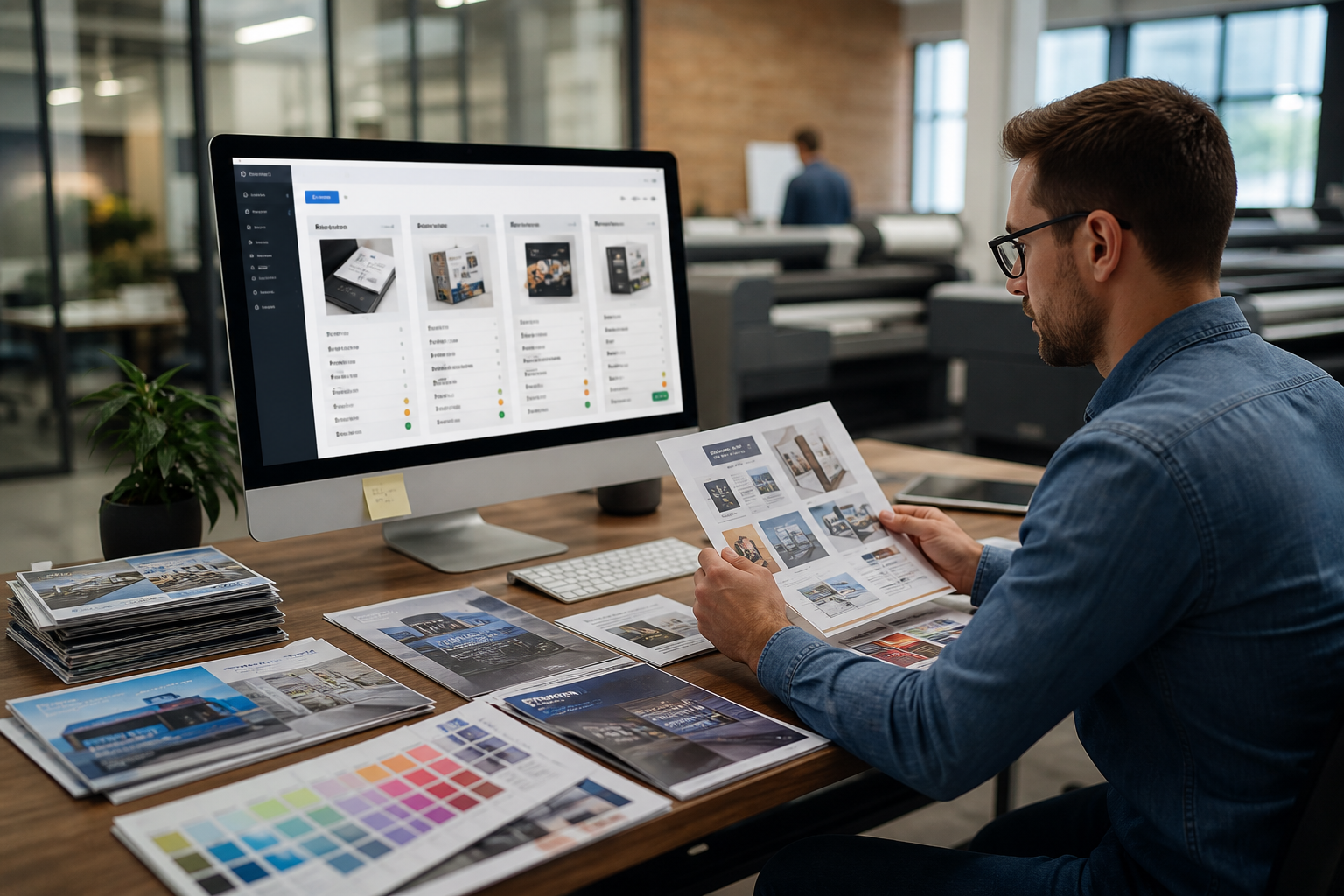
How Promotional Product Suppliers Can Fulfil Branded Merch Orders Without Commission Middlemen
Promotional product suppliers are losing 15-30% to marketplace commissions on every branded merch order. Here's how to fulfil direct and keep the margin.
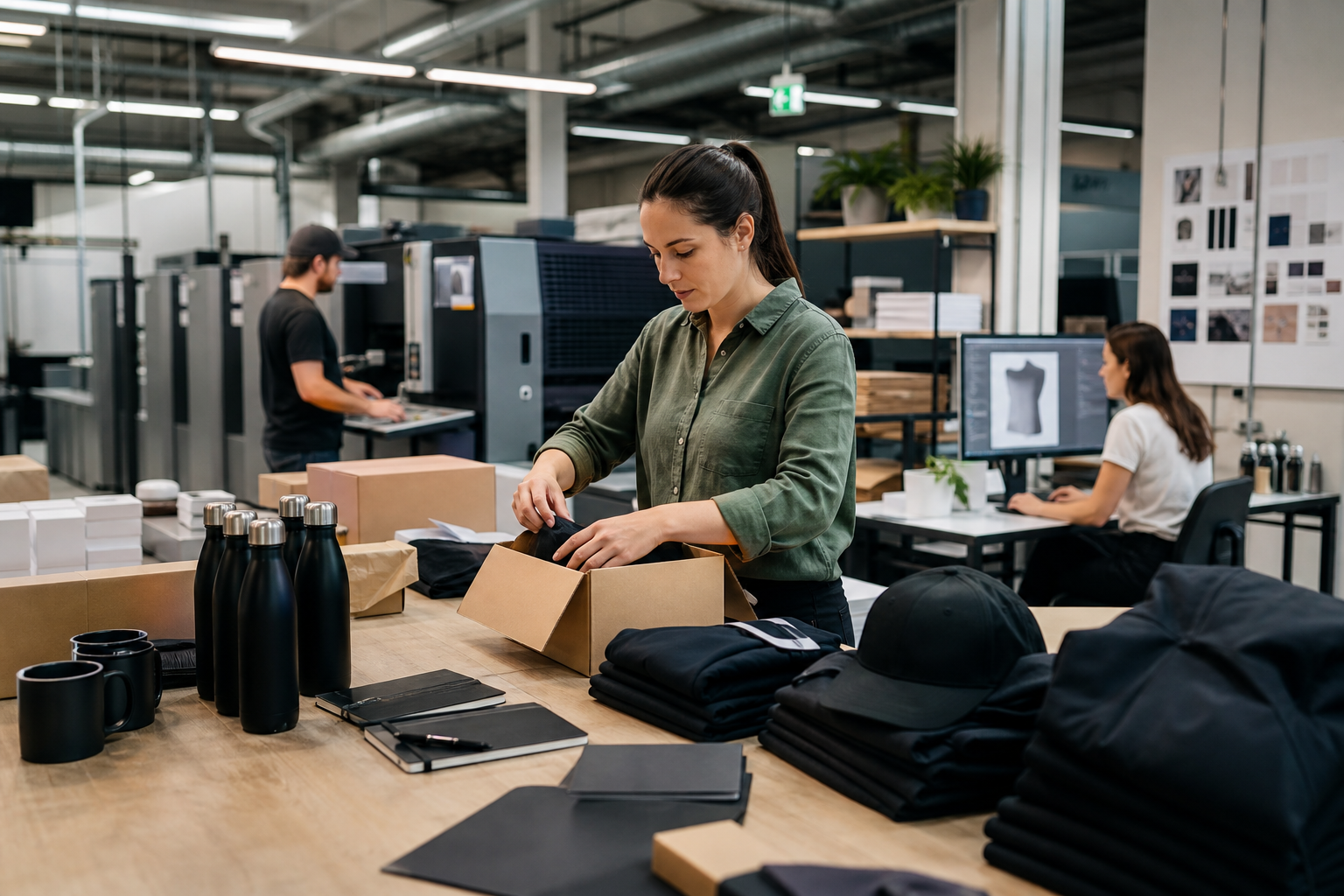
You've just shipped 5,000 branded notebooks, 2,000 screen-printed tote bags and a pallet of pad-printed pens — and a marketplace is about to skim 20% off the top before the money hits your account. If that scenario feels uncomfortably familiar, you're not alone. Promotional product fulfilment has become one of the most commission-heavy corners of the print world, and it doesn't have to stay that way.
The hidden tax on promotional print work
Promo product orders look profitable on paper. A 1,000-unit run of CMYK-printed mugs with a Pantone-matched logo, finished and boxed, can carry a healthy markup. But once you've routed the lead through a distributor portal or a commission-based marketplace, the real picture changes fast.
Most of the big promo platforms operate on one of three models:
- Percentage commission on every order — typically 10% to 25%
- Tiered subscription fees that scale with order volume
- Lead-buy auctions where you pay per enquiry whether you win the job or not
Layer on payment processing, mandatory advertising spend to stay visible, and the unpaid hours spent re-keying artwork into proprietary systems, and the effective cost of a single fulfilled order can erode margin to single digits. For a trade printer running pad-printing, screen-printing, DTG, sublimation or laser engraving in-house, that's not a sustainable position.
Why the promo category attracts middlemen
Promotional products are a perfect storm for intermediaries. Buyers — usually marketing managers, event organisers or agency procurement leads — rarely know the difference between transfer printing and DTF, or which substrate takes a Pantone match cleanly. They want a single point of contact, fast turnaround, and someone else to handle the production headache. That information gap is exactly what commission platforms monetise.
The trouble is, the actual production still happens at your facility. You're absorbing the makeready, the artwork prep, the colour management, the packing — and someone in a call centre is taking a slice for sending the email.
What direct fulfilment actually looks like
Cutting out the middleman doesn't mean rebuilding your sales team or chasing cold leads. It means putting your real capabilities in front of buyers who already know what they want, and letting them talk to you directly.
Here's a practical workflow that's working for promo-focused trade printers right now:
- List each capability as a discrete product — screen-printed cotton totes, pad-printed pens, sublimated mugs, embroidered polos, laser-engraved drinkware. Don't bundle them into one vague "promo printing" listing.
- Specify the substrates, decoration sizes and Pantone capability in each listing. Buyers searching for a single-spot logo on a 280gsm tote shouldn't have to ask.
- Watch RFQs come in for the exact niches you list against — and respond from your own quoting system, in your own voice.
- Open a direct connection when a buyer's brief looks viable. Chat, voice or video — agree the artwork spec, bleed, trim and delivery date without a platform sitting in the middle.
- Invoice directly. Ship directly. Keep 100% of the order value.
Where ZeozGig fits
This is the workflow ZeozGig was built for. Listing a product costs £1. Posting a request costs £1 and is refunded automatically if no one responds. Opening a direct connection with a buyer is a one-off £5 — not a percentage of the order, not a monthly retainer, not a per-lead auction fee. On a 2,000-unit branded merch order, the platform cost is rounding error.
Because ZeozGig grew out of PMIS in the printing industry, the language and structure suit how print actually works — GSM, ink coverage, decoration method, finishing options, lead times. You're not trying to force a print spec into a category designed for handmade jewellery.
Building a promo product listing buyers will actually click
A strong promotional product listing is part spec sheet, part shop window. The detail that wins enquiries is rarely the headline price — it's the confidence the buyer gets that you've done this job before.
Things worth including:
- Decoration methods supported (screen, pad, DTG, DTF, sublimation, embroidery, laser, foil)
- Maximum print area per product type, in mm
- Pantone matching availability and any solid-colour limitations
- Minimum and maximum order quantities — be honest, it filters out time-wasters
- Standard turnaround from artwork approval, plus express options
- Origin of stock (UK-held, EU, Far East) and whether you can dropship
- Sample policy — pre-production samples, plain stock samples, charges
If you also run litho or digital for matching collateral — branded notebooks with printed inserts, presentation boxes for tech kits, swing tags for apparel — list those as related products. Promo buyers love a one-stop production partner, and that's the value middlemen have been selling all along.
The reputation effect
Direct fulfilment also rebuilds something commission platforms quietly erode: your reputation in your own name. When a marketing manager remembers that you delivered the conference gift bags on time, not the platform brand, you get the repeat order direct next year — no fee attached.
Ready to keep your promo margin?
If you're producing branded merchandise and watching commissions chew through your profit, it's worth testing a direct channel. List your screen-printing, pad-printing or sublimation capability on ZeozGig for £1, post a request for stock or finishing capacity for another £1, and connect with buyers for a flat £5 — keeping every penny of the order itself. Head to ZeozGig, set up your first product listing, and let buyers find you without a middleman in the middle.