How Manufacturers Can Sell Surplus Machinery Capacity and Used Kit Without Broker Fees
Manufacturers sit on idle CNC hours and unused machines worth thousands. Here's how to list surplus capacity and used industrial kit without losing 10-30% to brokers.
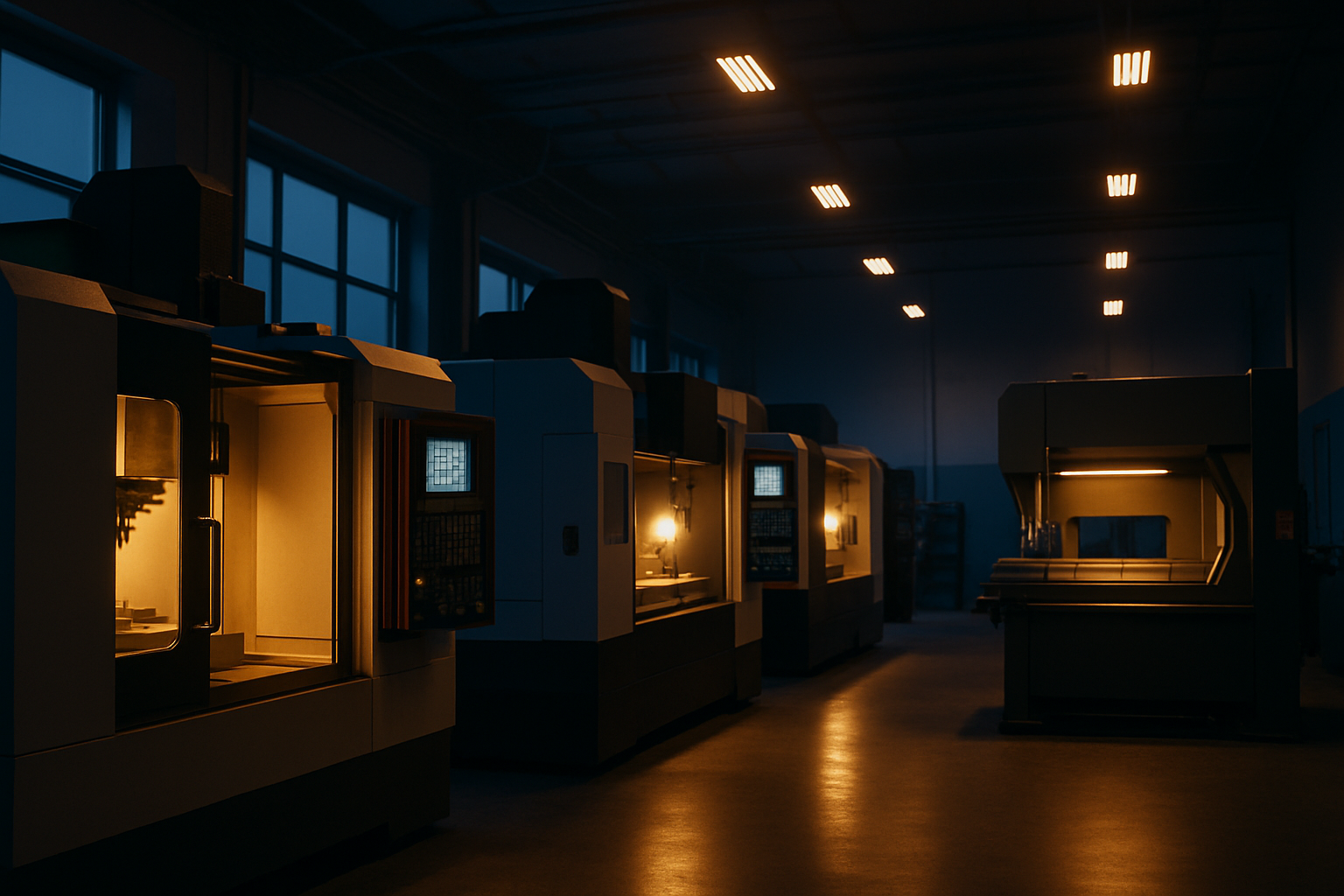
Most manufacturing plants have two quietly expensive problems: machines that sit idle for part of the week, and kit in the corner of the shop floor that's been written down but never written off. Both are cash — and both are usually sold through brokers who take a hefty cut.
This post is about how engineering firms, fabricators, and machine shops can turn that idle capacity and surplus kit into revenue directly, without surrendering 10–30% to a middleman on every deal.
The hidden cost of underused machines and surplus kit
Walk through almost any mid-sized engineering shop and you'll find the same pattern. A five-axis mill running at 60% utilisation. A press brake that's only loaded three shifts a week. A laser cutter the owner upgraded two years ago, still sitting under a dust sheet because no one has had time to deal with it.
The maths is brutal. A CNC machining centre with a £90/hour sell rate that's idle 20 hours a week is leaving roughly £93,000 a year on the table. A used surface grinder gathering rust in the corner might be worth £15,000–£25,000 to the right buyer, but it depreciates every quarter it isn't moved.
The traditional routes don't help much:
- Used-machinery dealers typically pay 40–60% of resale value because they need margin to warehouse and remarket the kit.
- Auction houses charge 10–15% buyer's premium plus a seller commission, and you have no control over timing.
- Subcontract brokers who place your spare capacity often take 15–25% off the top of every job they route to you.
- LinkedIn and word of mouth work, but only if you happen to know the right buyer at the right moment.
None of these are wrong, exactly. They're just expensive ways to solve what is, fundamentally, a discovery problem.
What manufacturers actually need
The job to be done isn't complicated. A manufacturer with surplus capacity or used kit needs three things:
- Visibility — somewhere other manufacturers actually look when they're sourcing.
- Direct contact — the ability to talk machine-to-machine with the buyer's engineer or production manager, not through a sales intermediary.
- Predictable cost — knowing in advance what the route to market will cost, rather than handing over a percentage of every deal.
That's the gap ZeozGig is built to fill for any industry, and it maps unusually well onto industrial machinery.
Listing spare capacity as a product
The interesting move for most shops is to stop thinking of "spare capacity" as a vague thing and start treating it as a listable product. A few examples a buyer would recognise immediately:
- "5-axis Mazak Variaxis i-700 — 30 hours/week available, ITAR-friendly, AS9100 certified, North West UK"
- "Trumpf TruLaser 3030 fibre laser — overnight shifts available, mild steel up to 20mm, stainless to 15mm"
- "Amada HFE press brake — 170 tonne, 3m, available Tue/Thu, tooling library on request"
- "CMM inspection capacity — Zeiss Contura, programming included, 2-day turnaround"
Each of those listings costs £1 to put on ZeozGig and stays in the marketplace until you take it down. There's no monthly fee, no contract, and no percentage taken when a deal lands. When a buyer wants to talk, opening a direct connection costs a one-off £5 — voice calls are 50p, video calls £1. That's it.
Compare that with handing 20% of a £40,000 subcontract package to a broker.
Selling used machine tools and ancillary kit
The same logic applies to physical kit. List the machine once for £1, write a proper spec sheet, and let buyers come to you. Useful things to include in a listing:
- Make, model, year, serial, control system, and hours/cycles where known
- Tooling, fixtures, and any software licences included
- Last service record and any known issues (honesty sells faster)
- Rigging, location, and whether you can help with removal
- Asking price or invitation to quote
Because buyers contact you directly through chat, voice or video, you can do a live walk-around of the machine without three rounds of email tag through a dealer.
Buyers can also post what they're hunting for
The other side of the marketplace matters too. A production manager who needs 200 hours of waterjet cutting next month, or a buyer trying to find a second-hand vertical machining centre under £30,000, can post a request for £1. Sellers respond, the buyer picks who to talk to, and pays £5 to open that connection. If the request gets zero responses, the £1 is refunded automatically — so there's no downside to testing the market.
For a shop sitting on idle capacity, those open requests are a daily feed of warm leads in your sector. No broker layer, no commission on whatever work you win.
A simple way to start this quarter
If you've read this far, the practical next step is small:
- Walk the shop floor and write down every machine that's under 80% utilised.
- Identify any kit you've already replaced or no longer need.
- List each one as a separate product on ZeozGig with a clear spec and honest availability.
- Set aside 10 minutes a day to scan open RFQs in your region and respond to the relevant ones.
For under £20 in listing fees, most shops can have their entire surplus inventory and spare capacity in front of buyers within a week.
Keep what you earn
Idle machines and surplus kit are some of the most expensive assets in manufacturing — not because they cost much to keep, but because the traditional routes to liquidate them are so lossy. A zero-commission marketplace with fixed, predictable fees changes the maths.
Ready to test it? Post your surplus capacity or list a used machine on ZeozGig for £1 and keep 100% of what the next deal pays you.