Selling Pantone-Matched Specials When Most Marketplaces Only List CMYK
Most print marketplaces lump every job into four-colour process. Here's how to sell Pantone-matched specials direct to buyers who'll actually pay for them.
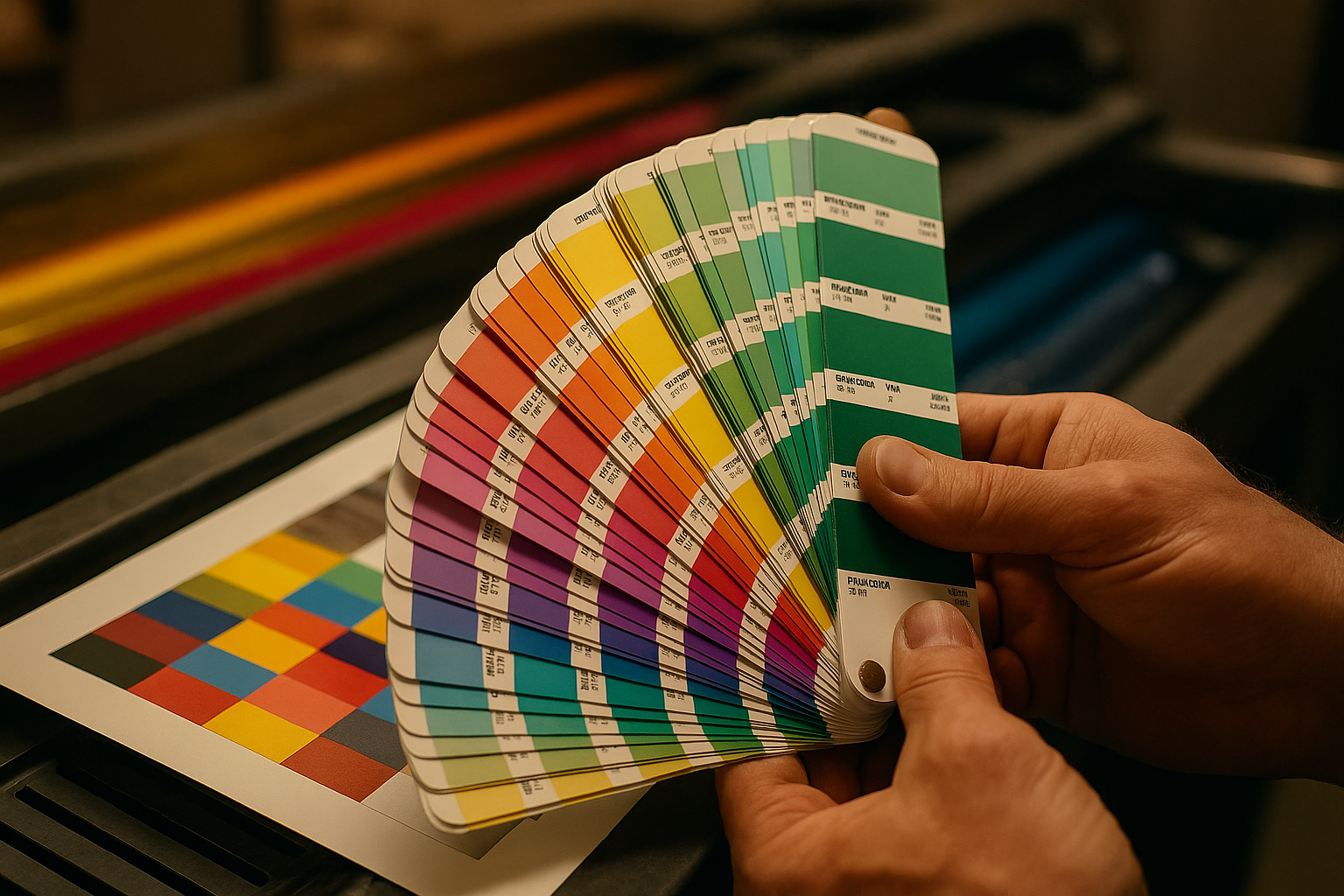
If you've ever tried to sell a five-colour litho job with a PMS 286 spine and a fluorescent hit through a mainstream print marketplace, you'll know the feeling: the dropdown stops at CMYK, the calculator throws an error, and the buyer ends up with a muddy process-build that misses the brand colour by a country mile. The work you're best at is the work these platforms can't price.
Why Pantone-Matched Work Doesn't Fit Calculator Marketplaces
Instant-quote engines are built on volume assumptions. Four process inks, standard stocks, predictable makeready, done. The moment you introduce a spot colour — let alone a Pantone metallic, a fluorescent, a reflex blue that needs a double-hit, or a custom-mixed brand colour signed off against a drawdown — the model breaks.
That's not a flaw the platforms will fix any time soon. Their margins depend on commoditising print. Spot-colour work is the opposite of a commodity: it needs a conversation, a proof, sometimes a press-pass, and a printer who actually owns a spectrophotometer and knows how to read a Delta E reading.
The buyers who actually want this
The customers who care about Pantone accuracy aren't shopping on price-comparison sites. They are:
- Brand owners with strict colour guidelines (think drinks, cosmetics, fashion)
- Design studios producing identity rollouts where the logo must hit PMS
- Packaging buyers where shelf-impact depends on a specific spot
- Agencies running campaigns across litho, digital and large-format who need cross-substrate consistency
- Publishers and gallery clients commissioning art books with specials and varnishes
These buyers are used to picking up the phone. They just need a route to printers who can deliver — without paying a marketplace 10–15% on top for the privilege of being introduced.
Positioning Your Spot-Colour Capability As A Product, Not A Footnote
Most trade printers bury their spot-colour work under generic listings like "litho printing" or "commercial print". If you can mix, match and run Pantones reliably, that deserves its own listing. On ZeozGig you can list it as a distinct product for a one-off $1 — no monthly fees, no commission on whatever it leads to.
Here's what a strong listing for Pantone-matched work actually contains:
- The kit. Press make and model, number of units, coater. A six-unit Komori with inline coater says more than "litho press available".
- The measurement gear. X-Rite spectro, drawdown facility, ability to supply a signed colour standard.
- Ink capability. In-house mixing vs bought-in, fluorescents, metallics, Pantone Plus library, reflex blue double-hit, opaque whites.
- Substrates you've matched on. Uncoated 120gsm, GF Smith Colorplan, boards up to 450gsm, synthetics — colour shifts hugely across stocks and buyers know it.
- Proofing route. Contract proof, wet proof, press-pass option.
- Tolerances. A stated Delta E target tells a procurement lead you're serious.
That level of detail filters out tyre-kickers and pulls in the buyers who've been burned by a CMYK-only supplier.
Talk about the awkward jobs, not the easy ones
Your listing copy should name the jobs calculators can't handle: five- and six-colour work, spot plus process, Pantone-to-CMYK conversion advice, hexachrome, expanded-gamut digital on an HP Indigo with extended ink sets, spot UV over a flood matt laminate, foil-block-plus-Pantone combos. If a buyer searches for any of that, you want to be the listing that reads like it was written by someone who's actually run the job.
Handling RFQs Where Colour Is The Whole Brief
When a buyer posts an RFQ for Pantone-matched work, the back-and-forth matters more than the headline price. You need to ask about reference samples, previous print runs to match to, viewing conditions, and whether the brand owner will attend a pass. None of that fits in a quote form.
This is where direct connection earns its keep. On ZeozGig, opening a chat with a buyer is a flat $5 — not a slice of the eventual invoice. Add a voice call for 50p or a video call for a quid if you want to talk them through a drawdown on camera. Compared with handing a percentage to a middleman on every Pantone-critical job for the life of the relationship, the maths is uncomfortable for the middleman.
A few practical tips when responding to spot-colour RFQs:
- Ask for the PMS reference and the substrate before quoting — same number, different paper, different ink lay.
- Flag any colours that won't hit in CMYK if the buyer is hoping to save by going process.
- Offer a wet proof as a paid line item rather than absorbing it; buyers who value accuracy will pay.
- If you're a trade printer, make clear you'll supply unbranded — brokers and agencies need that reassurance.
What about jobs that never land?
Not every RFQ closes. That's normal. The difference on a zero-commission platform is that an unanswered request refunds the buyer automatically, and your time spent quoting isn't being clawed back through a fee on the job that did land last week. You quote on what interests you, win what fits, and keep 100% of the invoice.
Make The Specials Your Shop Window
The printers who'll do well over the next few years aren't the ones racing Vistaprint to the bottom on 250 business cards. They're the ones who own a capability the calculators can't price — and who put that capability in front of buyers without a marketplace skimming the top.
If Pantone-matched work, spot colours, metallics or expanded-gamut digital are where your press genuinely shines, list them as a product on ZeozGig for $1, or watch the RFQ feed for the colour-critical jobs that the big platforms quietly route to process. Post a request, list a service, open a direct line to the buyer — and keep the margin you earned at the press.