Sourcing Garment and Merch Print: DTG, Screen and Beyond for Brands and Individuals
How brands, event organisers and individuals can source DTG and screen-printed garments through a single RFQ instead of chasing quotes across ten suppliers.
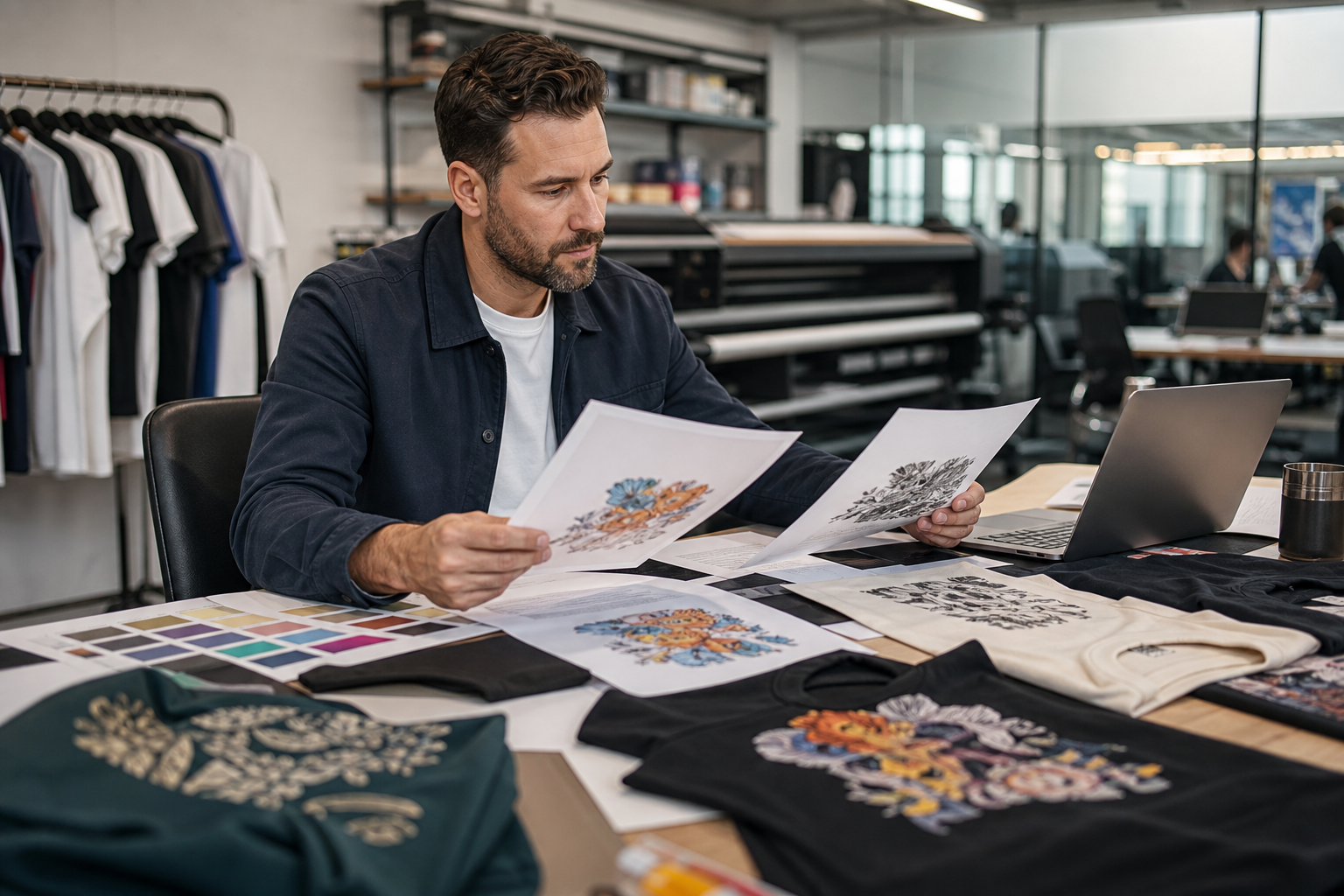
You need shirts printed. Maybe fifteen for a hen do, maybe fifteen hundred for a product launch. Either way, you're staring at a dozen supplier websites, each one asking you to build a quote from scratch, and none of them telling you whether they can actually hit your deadline or match that specific Pantone on a heather grey blend.
Garment and merch printing sits in an awkward spot in the procurement world. The jobs are often small enough that phoning round feels disproportionate, but technical enough that generic web-to-print calculators give you the wrong answer. Below is a practical way to source apparel print — whether you're a marketing manager buying branded polos for a trade stand or an individual commissioning a run of tour tees.
Why Garment Print Is Harder to Source Than Flat Print
With a business card or a flyer, the variables are relatively contained: stock, finish, quantity, artwork. With garments, the variables multiply fast. You're choosing a garment (brand, blank, weight in GSM, colour, fit, sizes), a print process (DTG, screen, DTF, vinyl, sublimation, embroidery), and a print location (front, back, sleeve, inside neck). Each combination changes both the price and the pool of suppliers who can actually do it.
That's why so many buyers end up sending the same brief to five different printers and getting five wildly different quotes back — not because anyone is being dishonest, but because everyone has interpreted the brief through the lens of their own kit.
DTG vs Screen: A Quick Buyer's Refresher
Before you post an RFQ, it's worth knowing roughly which process fits your job. Suppliers will appreciate a brief that doesn't force them to guess.
- DTG (direct-to-garment) — inkjet straight onto the fabric. Brilliant for full-colour artwork, photographic images, and short runs from one piece upward. Works best on high-cotton blanks. Cost per unit stays roughly flat regardless of quantity.
- Screen printing — ink pushed through a mesh screen, one screen per colour. Cost-efficient once you're past roughly 25–50 units, unbeatable at 500+. Handles specialty inks (metallics, puff, high-density) that DTG can't touch. Pantone matching is more reliable.
- DTF (direct-to-film) — a transfer-based hybrid that's taken over a lot of small-run merch work, especially on tricky fabrics like polyester or performance blends.
- Embroidery — for polos, caps, workwear. Priced by stitch count, not colour count.
If you're unsure which is right, that's fine — post the brief and let printers advise. Good ones will.
Writing a Garment RFQ That Actually Gets Comparable Quotes
The single biggest reason quotes come back wildly different is under-specified briefs. Here's what to include so responses arrive on a level playing field:
- Quantity and size breakdown — not just "50 tees" but "10 S, 20 M, 15 L, 5 XL".
- Garment spec — brand and style if you know it (Gildan Softstyle 64000, AS Colour Staple, Stanley/Stella Creator), or a description if you don't ("180 GSM combed cotton, unisex fit, black").
- Print details — number of print locations, approximate print size, number of colours per location, and any Pantone references.
- Artwork status — supplied print-ready, needs setup, or needs designing from scratch.
- Deadline and delivery — in-hand date and postcode.
- Any extras — relabelling, hang tags, individual poly-bagging, folding, size stickers.
Get those six things down and you'll get quotes back that you can actually compare like-for-like.
One Brief, Multiple Printers, No Cold Calling
This is where a marketplace RFQ earns its keep. Instead of pasting the same brief into ten contact forms, you post it once on ZeozGig for $1 and the printers who can genuinely do the work come to you. Screen printers with automatic presses will bid on the 500-unit job. DTG specialists will bid on the 30-unit one. Embroiderers will surface for the polo work. If no one responds, your fee is refunded automatically — you don't pay to shout into the void.
And because there's no commission on the deal itself, the price a printer quotes is the price they're actually charging. Nothing is inflated to cover a marketplace's cut.
For Brands and Agencies: Building a Merch Supply Bench
If you buy merch regularly — event swag, staff kit, influencer seeding boxes, client gifts — the goal isn't just to win one job. It's to build a small stable of trusted garment printers you can go back to. A public RFQ is a low-risk way to trial new suppliers alongside your incumbent. Post the brief, see who responds, open a direct chat with the two or three most promising, and pay a small fixed connection fee to talk properly. No subscription, no retainer, no percentage of the order.
Over time you'll learn which supplier is your go-to for full-colour DTG short runs, which one handles bulk screen work best, and which finisher does the neatest relabelling. That's a procurement bench worth having.
For Individuals: You're Not Locked Out of Trade Pricing
One of the quieter benefits of a two-sided marketplace is that individuals — not just registered businesses — can post RFQs too. A band ordering merch for a tour, a runner organising charity vests, an artist commissioning a limited-edition tee drop: all of them can post a brief and receive quotes from the same printers that serve agencies and brands. No account manager gatekeeping, no minimum order intimidation, no "we only deal with resellers" brush-off. Just a brief, some quotes, and a direct conversation.
Ready to Post Your Garment Brief?
Whether you're sourcing 20 DTG hoodies for a startup team or 2,000 screen-printed festival tees, ZeozGig lets you post one RFQ and pull competitive quotes from garment printers who actually have the kit. Post a request for $1 (refunded if no one responds), open a direct connection with a supplier you like for a fixed $5, and keep 100% of your margin — because there's no commission. If you're a garment printer or finisher, list your services from $1 and let buyers come to you. Post your brief on ZeozGig today.