Why Pantone Specials and Unusual Stocks Trip Up Half the Printers You Ask
Pantone specials and unusual stocks separate real trade printers from the rest. Here's how buyers spot who can actually deliver before pressing go.
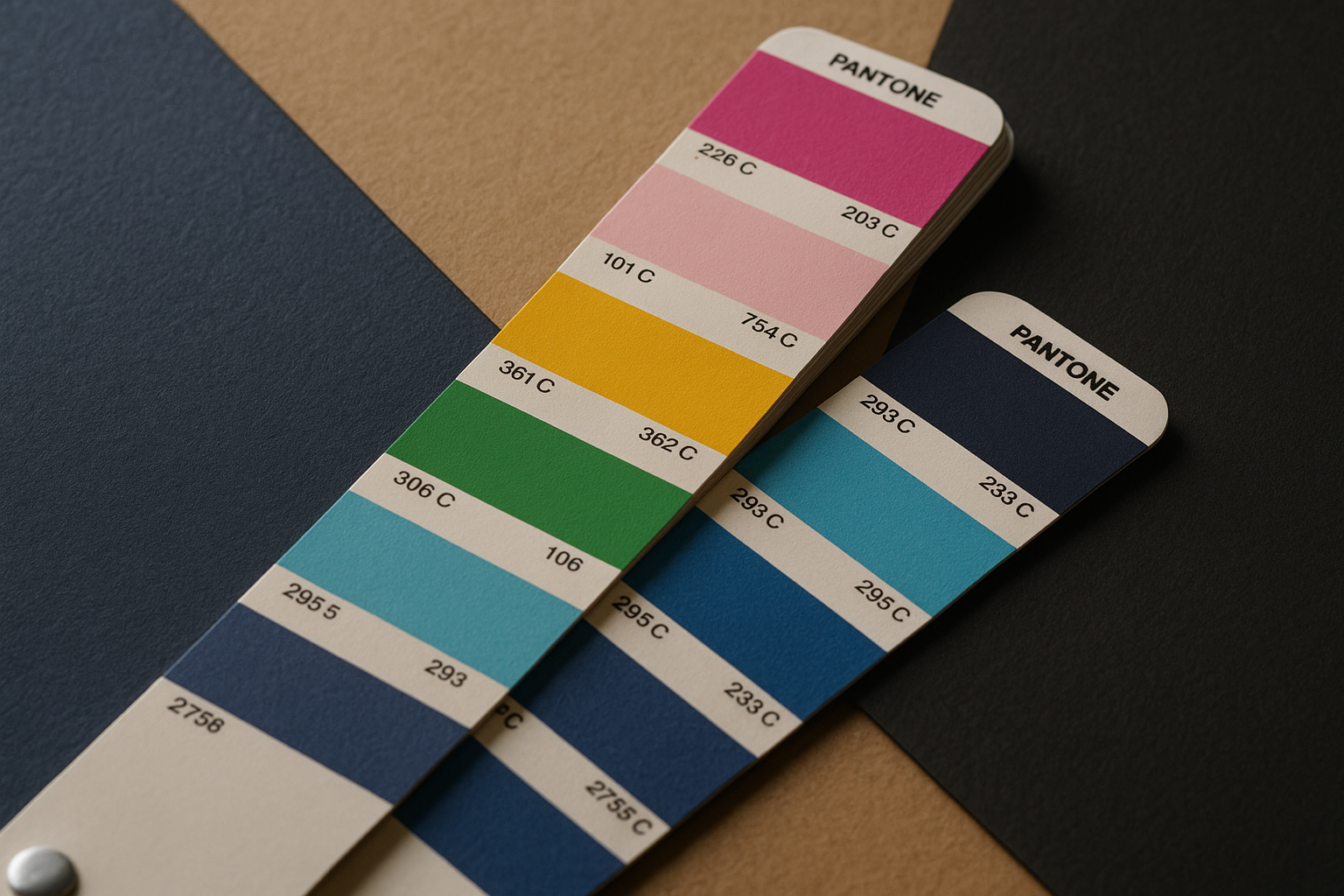
You've got a job that needs a specific Pantone 2945 C running as a fifth colour on a 350gsm uncoated recycled board, and every printer you ring either quietly converts it to CMYK or tells you the stock is "basically the same" as their house sheet. Sound familiar? Sourcing print that steps outside standard four-colour on a common gloss is where most supplier relationships fall apart — and where a lot of buyers get burned.
Why "unusual" is the honest word for most brand work
What counts as unusual? Anything that a web-to-print aggregator can't quote from a dropdown. That includes:
- Spot Pantones running as a fifth or sixth unit, not simulated in process
- Metallics, fluorescents and Pantone 87x neons
- Uncoated, tinted, textured, cotton, kraft or coloured-through stocks
- Heavy boards above 400gsm, or featherweight bibles below 60gsm
- Synthetic substrates — Yupo, Tyvek, polypropylene
- Duplexed sheets, edge painting, coloured foils on dark stocks
None of that is exotic to a proper trade printer. But it's completely outside the comfort zone of a shop set up for volume business cards and leaflets. The problem for buyers is that both types of printer will happily accept the enquiry — and you often don't find out which one you're dealing with until proofs land looking nothing like the brand guidelines.
The three quiet fudges to watch for
When a printer isn't equipped for the job but doesn't want to lose it, they tend to do one of three things:
- Convert your spot colour to CMYK and hope you don't notice the shift on press.
- Substitute the stock for "an equivalent" that's actually their standard house sheet in a similar weight.
- Quote the job, then subcontract it to someone else — adding a mark-up and a communication layer that slows everything down.
None of these are inherently dishonest, but they're rarely disclosed up front. And on brand-critical work — packaging, annual reports, luxury retail — they'll cost you the job.
How to write an RFQ that filters out the wrong printers
The fastest way to find printers who can genuinely deliver is to write a brief that only a capable supplier can answer confidently. Vague briefs attract vague quotes. Specific briefs attract specific specialists.
Include:
- Exact Pantone references (with the C, U or M suffix — it matters)
- Stock brand and weight, not just "uncoated 300gsm" — say GF Smith Colorplan Ebony 350gsm if that's what you mean
- Print process you expect — litho with a fifth unit, digital with white toner, screen for opacity
- Finishing: foiling, embossing, die-cutting, edge paint, duplexing
- Quantity, format, bleed, and delivery date
- A note that CMYK simulation is not acceptable if you're specifying a true spot
A printer who reads that and comes back with confident answers, sample requests and sensible questions is a printer who's done it before. A printer who ignores half of it and quotes on autopilot is telling you exactly what will happen when the file hits their prepress.
Ask for evidence, not reassurance
Anyone can say they "do Pantones." Ask for:
- A printed sample on the same stock you're specifying
- A recent job that used the same finishing combination
- Confirmation of the press configuration (how many units, whether the fifth unit is inline or a second pass)
- A drawdown or ink match sample before the full run
Capable trade printers expect these questions and usually offer the samples before you ask. That's the tell.
Where a marketplace beats phoning round
The reason buyers historically settle for the wrong printer is time. You don't have three days to phone twelve suppliers, describe the job twelve times, and wait for callbacks. So you go with whoever answers first — and hope.
Posting a single RFQ on ZeozGig flips that. You describe the job once, in as much technical detail as you like, and multiple printers respond with quotes and capability notes. Because there's no commission on the deal — just a $1 fee to post and a $5 fixed fee to open a direct connection with a supplier you want to talk to — the quotes you get back reflect the printer's real pricing, not a marked-up marketplace rate. And if nobody responds, the posting fee is refunded automatically.
For a specialist job, that shape of sourcing matters more than for a standard leaflet run. You're not looking for the cheapest of twenty near-identical quotes. You're looking for the two or three suppliers who genuinely understand what you're asking for — and being able to filter by response quality rather than sales patter is where the time saving really lives.
For one-off buyers and small studios
If you're a designer, artist or startup commissioning one packaging run or a limited-edition print, the same rules apply — and the marketplace model matters even more. You don't have a trade network. You can't reasonably cold-call twenty printers to ask about running Pantone 806 on kraft. Posting one detailed brief and letting capable printers self-identify is the shortest path to a supplier who can actually deliver.
The short version
Specialist print isn't harder to buy — it's harder to buy from the wrong printer. Write a brief specific enough that only capable suppliers can answer it, ask for evidence over reassurance, and use a channel that lets several printers respond in parallel rather than one at a time.
---
Got a Pantone special, an unusual stock, or a finishing combination that keeps getting quietly fudged? Post your RFQ on ZeozGig for $1, let capable printers come to you, and connect directly with the ones who clearly know the job — no commission, no mark-up, no middleman. Or if you're the trade printer who actually runs the fifth unit and stocks the specials, list your capability and get found by the buyers who need you.