How to Find Printers Who Can Actually Deliver Pantone Specials and Unusual Stocks
Sourcing Pantone specials and unusual stocks is a headache. Here's how to find printers who can actually deliver — without phoning round for days.
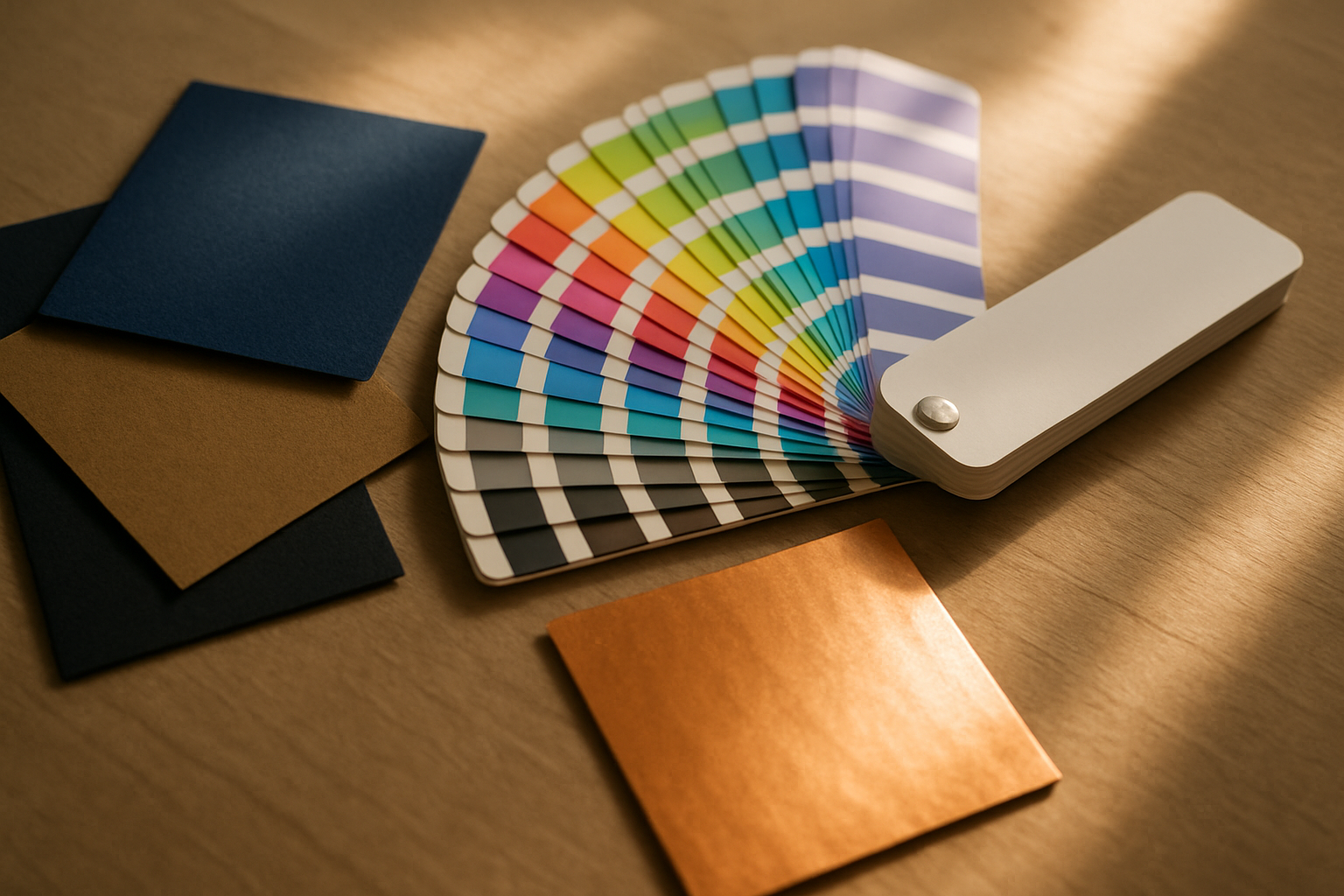
Ever tried sourcing a job that needs a Pantone 877 metallic on a 350gsm uncoated recycled board? You ring three printers, two say "we can match it in CMYK" (you didn't ask), and the third quietly ghosts you. Specialist ink and stock combinations are where generalist suppliers fall apart — and where the wrong choice costs you the client.
This piece is about how print buyers, whether you're a marketing manager commissioning a rebrand or a sole trader printing 200 wedding invites, can actually find printers who handle Pantone specials and awkward stocks without burning a week on the phone.
Why Pantone specials and unusual stocks trip most printers up
Most commercial printers are set up for four-colour process on a handful of house stocks. That's how they keep their pricing sharp. The moment you introduce a fifth or sixth unit for a Pantone spot, a fluorescent, a metallic, or a white underprint on a coloured stock, you're outside their standard workflow.
And stocks are worse. GF Smith Colorplan in a specific weight, a translucent vellum, a textured cotton, a black-core board, a synthetic like Yupo — these aren't sitting on the shelf at your average B2 digital shop. Someone has to order in, test for compatibility, and factor in a longer makeready. That's fine if the printer knows what they're doing. It's a disaster if they're bluffing.
The three things that usually go wrong
- Colour drift — the printer matches your Pantone "close enough" on press but never runs a draw-down against a physical Pantone book.
- Stock substitution — you specified 300gsm Colorplan Bright White, they've quoted on a generic 300gsm silk and hoped you wouldn't notice.
- Finishing incompatibility — the stock you chose won't take the foil, or the ink won't cure on the coated side, and nobody flagged it at quote stage.
All three come from asking the wrong printer in the first place. The fix isn't better project management — it's better sourcing.
What a good Pantone/unusual-stock RFQ looks like
If you want quotes you can actually compare, your request needs to be specific enough that a bluffer will self-select out. Vague RFQs attract vague printers.
Here's what to include:
- Exact Pantone reference (e.g. Pantone 872 C, not "gold") and whether it's coated or uncoated book
- Stock name, weight and finish — brand and range where possible (Colorplan, Keaykolour, Munken, Fedrigoni Sirio)
- Print process preference — litho, digital, or open to either (some Pantones only work litho; some stocks only run digital)
- Sides and coverage — 1/0, 4/4 plus one spot, full bleed or not
- Finishing — foil (which foil?), emboss, die-cut, edge paint, duplexing
- Quantity and delivery date — including whether you'll accept a slightly later date for the right supplier
- Whether you need a wet proof or a draw-down before the full run
A printer who can genuinely handle the job will read that spec and come back with sensible questions. A printer who can't will quote anyway — and that's your red flag.
Casting a wider net without cold calling
This is the bit that used to eat entire afternoons. You'd work through a mental list of suppliers, ring five, get through to two, leave voicemails for three, and by Friday you've got one quote and no confidence.
A marketplace approach flips that. On ZeozGig, you post the RFQ once and printers who actually run that kit — the fifth unit, the specific stocks, the finishing line — respond directly. You're not paying a commission on the job, so the quotes come back at true trade or supplier price. If no printer responds, the £1 posting fee is refunded automatically, so there's zero risk in trying.
And because you connect directly with the supplier (a fixed £5 per-connection fee, not a percentage of the deal), you can have a proper conversation about the Pantone match, the stock availability, and whether they've run this combination before. No middleman filtering, no aggregator mark-up sitting on top of the printer's price.
For business buyers vs individual buyers
If you're a brand buyer or agency, this is how you protect margin on jobs where the client has locked in a specific colour or stock and you can't afford to eat a re-run. You get multiple comparable quotes, and you keep 100% of the mark-up you build in.
If you're an individual — an artist printing a limited run, a couple sorting wedding stationery, a startup founder doing packaging samples — you get access to the same trade printers the big buyers use, without needing a trade account or a phone book of contacts. Post the spec, wait for responses, pick the one whose portfolio matches your job.
Vetting the responses
A quote is a starting point, not a decision. Before you commit, ask any shortlisted printer for:
- A sample of a previous job on the same or similar stock
- Confirmation they'll match to a physical Pantone book, not on-screen
- Their position on wet proofs — included, extra, or waived on repeat work
- Lead time including stock order, not just press time
- What happens if the colour is out of tolerance on delivery
If they can answer all five without hedging, you've probably found your printer.
Post the job, keep the margin
Specialist print sourcing shouldn't mean losing a day to the phone or handing a chunk of the job to a middleman. Post your Pantone-special or unusual-stock RFQ on ZeozGig, let the right printers come to you, and connect directly with the one who can actually deliver. £1 to post, refunded if nobody bites, no commission on the deal — ever.