How Garment Printers Can List DTG And Screen Capabilities For Fashion Brand Sourcing
A practical guide for DTG and screen printers on listing capabilities the way fashion brand buyers actually search — and winning direct sourcing work.
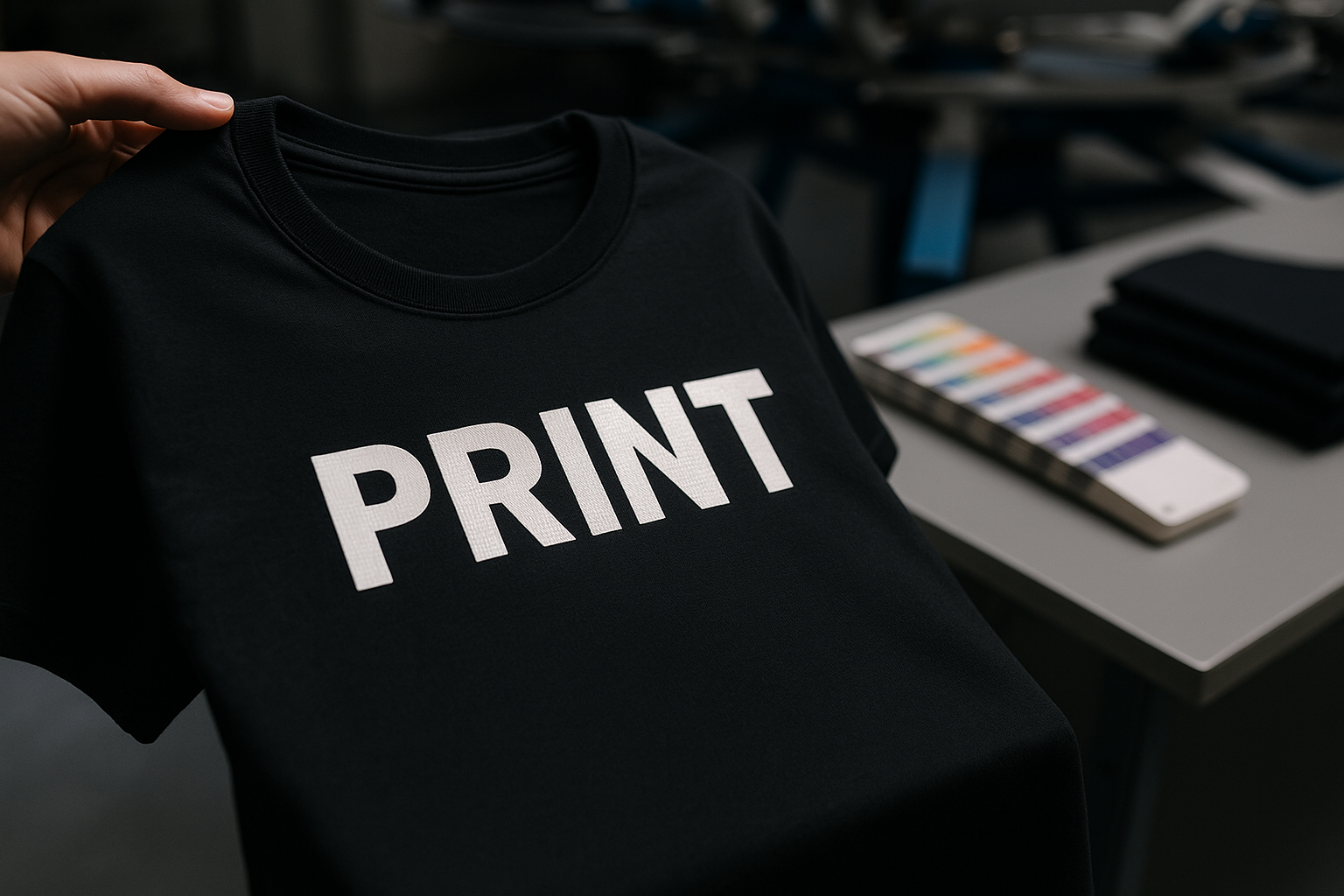
Fashion brand buyers are out there looking for a reliable garment decorator right now — but most of them give up after wading through Etsy hobbyists, Alibaba bulk-only suppliers and decorator directories that haven't been updated since 2019. If you run a serious DTG or screen-printing operation, the problem isn't demand. It's visibility on a platform where a buyer for a streetwear label can actually understand what you do.
Why Fashion Brand Buyers Struggle To Find The Right Decorator
A brand sourcing manager looking for, say, 300 heavyweight 240gsm tees with a four-colour discharge print on the front and a small water-based back hit doesn't want a price calculator. They want a conversation. They need to know whether you can colour-match a brand Pantone on tubular cotton, whether you handle pre-treatment for dark DTG, and whether your minimums fit a capsule drop.
Most garment printers list themselves with vague phrases like "custom t-shirts" or "high-quality apparel printing." That language doesn't match how a fashion buyer searches. Buyers search by technique, substrate, ink chemistry, finishing, and turnaround — and if those words aren't in your listing, you're invisible.
What Brand Buyers Actually Care About
When a fashion or merch buyer evaluates a decorator, they're scanning for specifics:
- Print method: DTG, automatic screen, manual screen, DTF, sublimation, hybrid
- Maximum colours per location and number of print locations
- Ink systems: plastisol, water-based, discharge, soft-hand, high-density, puff, metallic
- Substrate experience: ringspun cotton, tri-blends, fleece, performance polyester, organic
- GSM range and garment sourcing partners (AS Colour, Stanley/Stella, Continental, blanks-only)
- Pantone matching capability and lab-dip / strike-off process
- Minimum order quantity per design and per colourway
- Finishing: relabelling, hem tags, neck print, fold-and-bag, hangtag application, poly-bagging
- Turnaround for sample, bulk and reorder
- Compliance: Oeko-Tex inks, GOTS-certified options, REACH
The listings that win direct work spell all of this out. The ones that don't get scrolled past.
Structuring A Capability Listing That Converts
Think of your ZeozGig product listing less like a website homepage and more like a tech sheet. Brand buyers are skim-readers under deadline pressure. They want to confirm fit in under thirty seconds, then open a direct chat.
A good structure looks like this:
- One-line positioning — e.g. "Automatic screen and DTG decorator for fashion labels, 50–5,000 units, water-based and discharge specialists."
- Equipment list — press make/model, number of heads, max print area, DTG model (Kornit, Brother, Epson), curing setup.
- Inks and techniques — name every system you run, including any speciality (HD puff, foil transfer, glow, reflective).
- Substrate sweet spot — GSM range, blank brands you stock or source, fabrications you avoid.
- Minimums and lead times — be honest. "50 pieces minimum for screen, 1 piece for DTG, 10 working days bulk" beats vague promises.
- Sampling process — strike-offs, pre-production samples, Pantone approval workflow.
- Finishing and fulfilment — relabelling, custom packing, dropshipping, B2B pallet despatch.
If you also list separate products for each speciality — "Discharge print on heavyweight tee, 100-piece runs" as one listing, "Full-colour DTG on organic cotton, no MOQ" as another — you cover more search intent and appear in more buyer feeds.
Use The Language Of The Buyer, Not The Decorator
Fashion buyers don't always know what "flash cure" means, but they do know "soft hand-feel," "vintage wash look," "crack-free stretch," and "premium retail finish." Translate your technical capability into outcomes the brand cares about. A line like "water-based discharge for a vintage, broken-in feel that survives 50+ washes" lands harder than "we run discharge inks."
Where ZeozGig Fits For Garment Decorators
The traditional route to fashion brand work — referrals, trade shows, paid directory listings, or commission-hungry sourcing platforms — eats margin or moves slowly. ZeozGig flips that. You list your DTG and screen capability once for $1 per product, and brands posting RFQs for apparel runs can find you and open a direct connection for a flat $5. No percentage of the order. No subscription. No middleman sitting between you and the buyer on every reorder.
A few practical ways printers are using it:
- Posting RFQs upward for blanks, custom labels, polybags or finishing subcontract — and if no one responds, the $1 is refunded automatically.
- Listing overflow screen capacity for trade buyers and other decorators during quiet weeks.
- Running a separate DTG sample/short-run listing to capture early-stage brands who'll scale into bulk screen orders later.
- Jumping on voice or video with a brand founder for 50p–£1 to walk through artwork before quoting — far cheaper than a no-show studio visit.
Because connections are direct, once a brand has chatted with you they have your details. Reorders happen off-platform, on your terms, with 100% of the revenue staying with you.
Build The Listing Once, Win Work For Years
The decorators who'll dominate fashion sourcing over the next few years aren't necessarily the cheapest or the biggest. They're the ones whose listings are specific enough that a brand buyer reads them and thinks "these are my people." Spend an afternoon writing yours properly — equipment, inks, GSM, MOQs, finishing, real photographs of recent work — and you've built an asset that pulls inbound enquiries for years.
Ready to put your press in front of fashion buyers who are actively sourcing? List your DTG or screen-printing capability on ZeozGig for $1, or post an RFQ for blanks, labels or finishing and only pay if someone actually responds. Keep 100% of every order you win — no commission, no contract, just direct connections with brands who need what you make.