Turning Press Downtime Into Revenue: Listing Spare Capacity As A Service
Idle hours on your Komori or HP Indigo aren't dead time — they're sellable capacity. Here's how to list press downtime and fill it on ZeozGig.
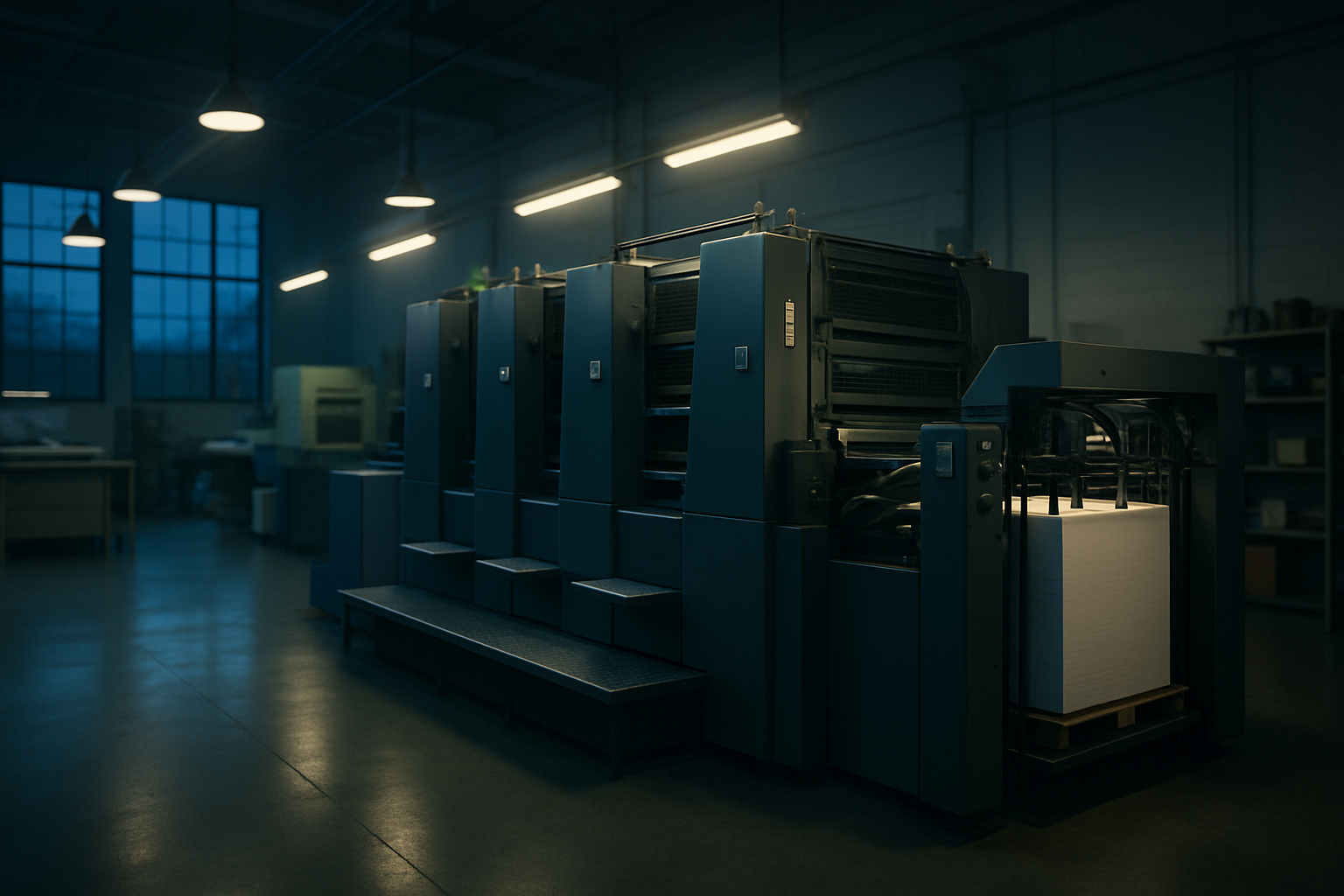
Your B2 press is sitting idle from 2pm Thursday until Monday morning. The plates are washed, the operator is on standby, and every silent hour is burning fixed cost. Sound familiar? For most commercial printers, capacity utilisation is the single biggest lever between profit and pain — and most of us are leaving it to chance.
The Hidden Cost Of An Idle Press
A five-colour litho machine doesn't stop costing you money when it stops running. Finance payments, floor space, insurance, climate control, and salaried operators tick along whether you're printing 50,000 sheets or zero. Industry benchmarks put healthy press utilisation somewhere between 65% and 80% — anything below that and your cost-per-sheet quietly balloons.
The traditional fix has been to chase work harder: more sales calls, broader marketing, lower prices. But there's a smarter route that printers are starting to take seriously — treating spare capacity as a product in its own right, and making it visible to the trade.
Why "available capacity" is a sellable thing
Other printers, brokers and agencies are constantly looking for overflow partners. They've taken on a job that's too big, too fast, or outside their kit list. If they can see — right now — that you've got a Heidelberg XL75 free on Friday with a fresh makeready slot available, you become the obvious phone call. You're no longer competing on price; you're competing on availability.
How To Package Press Time As A Listing
Think of your press time the same way a hotel thinks of rooms. Specificity sells. A listing that just says "litho capacity available" gets ignored. A listing that reads like a spec sheet gets bookmarked.
When you list machine time on a marketplace like ZeozGig, include:
- Exact kit: make, model, max sheet size, number of units (e.g. Komori Lithrone GL-540, B1, five-colour plus coater)
- Substrate range: GSM minimums and maximums, board handling, synthetic capability
- Colour capability: CMYK plus spot Pantones, white ink, fluorescents
- Finishing in-house vs outsourced: folding, perfect binding, die-cutting, lamination
- Typical turnaround windows for overflow work
- Geographic reach: collection, courier, or pallet delivery radius
The more technical the listing, the more qualified the enquiries. Print buyers and trade managers can read a spec sheet in seconds and self-filter — saving you both time.
Pricing transparency (without giving the game away)
You don't need to publish your sheet rates. Most trade-facing listings simply indicate "trade pricing available on enquiry" and let the conversation happen privately. The point of the listing is discoverability, not a public price war.
Matching Downtime To Live RFQs
The other side of capacity utilisation is reactive: watching what work is actually being requested right now. On a zero-commission RFQ board, you can scan posts from print buyers, agencies and other printers looking for specific jobs — 10,000 A5 flyers, 250gsm silk, CMYK both sides, trimmed and boxed, needed Thursday.
If that job lines up with your dead Thursday slot, you quote. No middleman shaving 8–15% off the margin, no platform commission baked into your price. On ZeozGig the economics are straightforward:
- Posting a request costs the buyer £1 (refunded automatically if no one responds)
- Listing your press or service costs £1
- Opening a direct connection to chat, call or video the other party costs £5
- You keep 100% of the job value
Compare that to commission-based print networks where every successful job leaks a percentage off the top — forever. On a £4,000 trade job, that's potentially £400–£600 you never see. Fill three overflow slots a month and the difference pays for a new RIP.
Building repeat trade relationships
The best use of a marketplace isn't a one-off transaction — it's the first introduction. Once you've delivered cleanly for another printer or broker, the relationship moves off-platform into WhatsApp, email, and standing arrangements. That's the model ZeozGig is built around: pay once to connect, then the relationship is yours forever. No recurring tax on your loyalty.
A Simple Weekly Routine
Capacity selling works best when it's a habit, not a panic response to a quiet week. Try this:
- Monday morning: review the production schedule and identify likely gaps in the next 10 days
- Monday afternoon: update or refresh your ZeozGig listings to reflect actual availability
- Daily, 10 minutes: scan new RFQs and respond to anything within your kit and timeframe
- Friday: follow up with anyone you connected with that week — even if the first job didn't land
The printers who win at capacity utilisation aren't necessarily the cheapest or the biggest. They're the ones who are visible at the exact moment a buyer needs them.
Stop Burning Idle Hours
Every week your press sits silent is margin you'll never recover. Listing your spare capacity costs less than a coffee and puts your kit in front of buyers and trade partners who are actively looking right now.
Post a listing for your press, your finishing line, or your wide-format kit on ZeozGig today — or scan the live RFQs and quote on a job that fits your next quiet slot. Fixed fees, zero commission, and the relationship belongs to you. Get started at ZeozGig.