How Print Brokers Can Win Long-Run Litho Brochure and Book Contracts Through Direct RFQs
Practical guide for print brokers on sourcing competitive long-run litho quotes for books and brochures via direct RFQs — without losing margin to commissions.
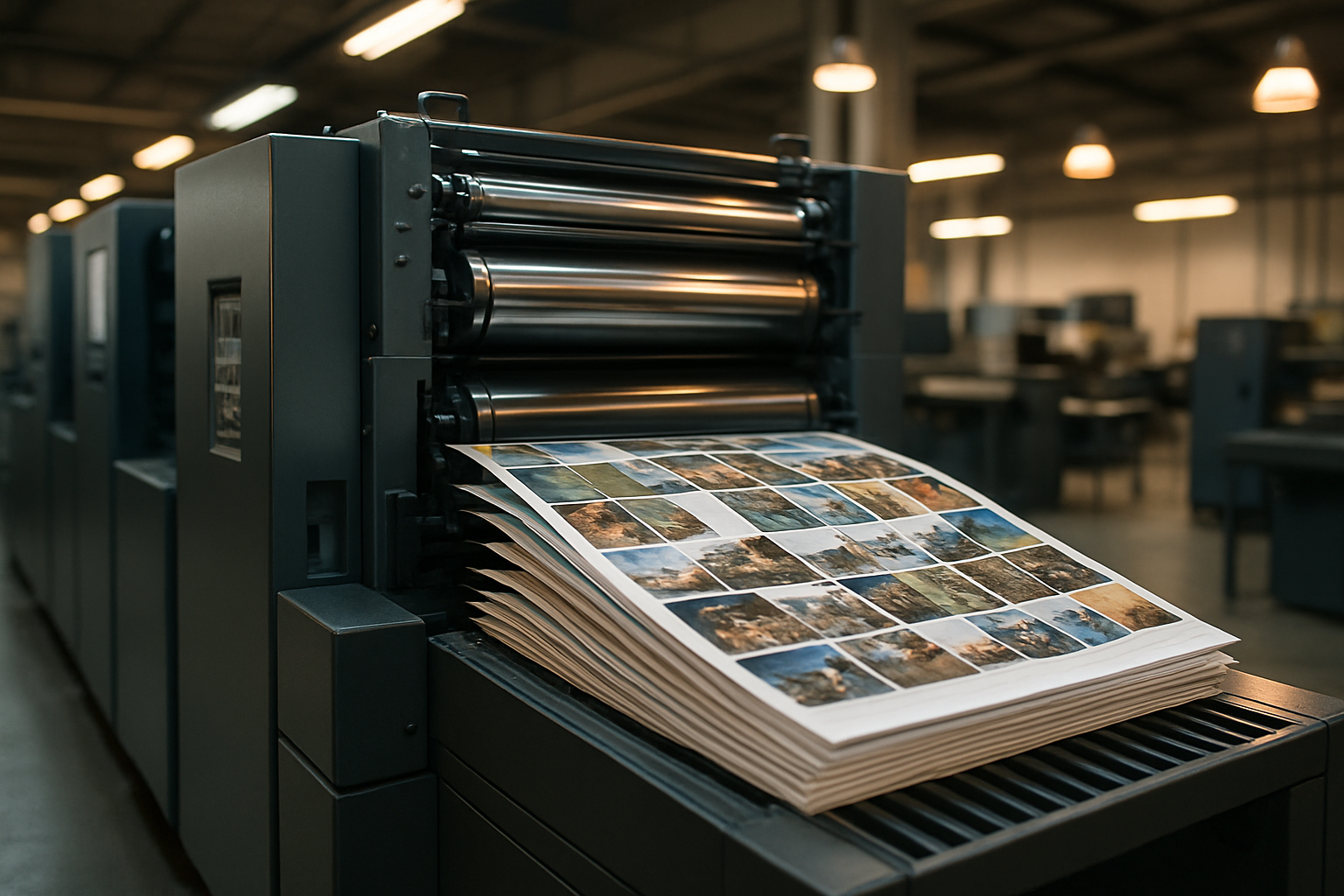
Your client has just dropped a 40,000-run perfect-bound brochure into your inbox, delivery in three weeks, and your usual long-run litho house has gone quiet on email. Sound familiar? When the job is big enough to matter to your margin, sourcing the right trade printer fast — without bleeding commission to a middleman — is the difference between a healthy quarter and a flat one.
Why long-run litho is still the broker's bread and butter
Despite the digital revolution, long-run litho remains the most cost-effective route for book blocks, corporate brochures, catalogues, retail flyers and any job where the breakeven against digital sits somewhere north of 1,500–2,500 copies. The unit economics on a B1 or B2 press, once you're past makeready, are simply unbeatable — and clients with serious print spend know it.
The problem for brokers isn't demand. It's sourcing. A long-run litho job carries real risk:
- Press time has to be booked, often weeks ahead
- Stock (especially uncoated 100gsm book papers or heavier silk for brochures) can have lead times of its own
- Finishing — perfect binding, PUR, section-sewn, saddle-stitch on thick sections — needs to be lined up in parallel
- One missed delivery and your client relationship is on the line
If you're still ringing round the same three trade printers hoping one has a gap, you're leaving both margin and reliability on the table.
The hidden cost of relying on the same two or three trade suppliers
Most brokers have a small stable of long-run litho partners they trust. That's sensible — but it creates two quiet problems.
First, you're not really testing the market. If your go-to printer quotes £8,400 for a 32pp A4 brochure at 30,000 copies on 130gsm silk, how do you know that's competitive this month? Paper prices move, press utilisation moves, and what was sharp in March can be 12% off the pace by September.
Second, you have no Plan B when they're full. Long-run litho houses don't have infinite capacity. When your supplier's B1 press is booked solid for the next three weeks, you're either losing the job or scrambling.
Where direct RFQs change the maths
Rather than chasing individual suppliers, a single well-written RFQ posted to a broker-friendly marketplace pulls quotes from multiple trade printers in parallel. You set the spec once, they bid against it, and you choose. No commission on the eventual job, no percentage skim — your mark-up is yours.
On ZeozGig, posting that RFQ costs £1. If nobody responds, the fee is refunded automatically. You only pay the £5 per-connection fee when you actually want to open a direct chat, voice or video conversation with a quoting supplier — and even then, the deal itself carries zero commission.
Writing an RFQ that pulls serious long-run litho quotes
Trade printers ignore vague RFQs. If you want sharp pricing back within hours, give them everything they need to quote without follow-up questions.
- Format and extent — flat and finished size, pagination (e.g. 64pp self-cover, or 4pp cover + 60pp text)
- Stock — GSM, finish (silk, gloss, uncoated), and whether you're flexible on equivalent stocks
- Colour — 4/4 CMYK, plus any Pantone specials or spot varnishes
- Quantity and overruns — exact run plus tolerance on overruns/underruns
- Finishing — perfect bound, PUR, saddle-stitched, sewn, laminated cover, foiling, die-cutting
- Delivery — split deliveries, palletised, single-drop, postcodes
- Timeline — artwork ready date, required delivery date, any hard in-store dates
- Repeat potential — flag if this is a one-off or part of a quarterly/annual programme
The last point matters more than brokers realise. Trade printers will sharpen pencils for repeat work, and signalling a pipeline — even informally — pulls keener numbers.
What to look for in the responses
When quotes come back, don't just rank on price. Score each respondent on:
- Clarity of the quote (line-itemed vs. one number)
- Stock confirmation and whether they're holding it
- Realistic lead time vs. "we'll fit it in"
- Finishing handled in-house vs. trucked to a third party
- Willingness to send a printed sample of similar work
A quote that's £200 cheaper but vague on finishing handover is rarely worth the risk on a job your client is watching closely.
Protecting your margin on every long-run job
The commercial reality for brokers is simple: every percentage point a marketplace skims off a deal is a percentage point off your mark-up. On a £15,000 brochure run, a 6% commission is £900 — straight out of your pocket on a job where you've done all the client management.
A fixed-fee model flips that. Pay £1 to post the RFQ, £5 to open a connection with a vetted trade printer you like, and keep 100% of the margin between buy price and sell price. Voice call to nail down a tricky stock spec? 50p. Video call to walk through a sample with the client on screen? £1. The economics aren't even close on a serious job.
Building a wider bench, quietly
The other quiet benefit of running long-run litho jobs through direct RFQs is that you build a working knowledge of which trade printers are sharp on which kinds of work. Over a year, you'll have direct, white-label-friendly relationships with two or three long-run book specialists, a couple of brochure houses, and a finishing specialist or two — without ever having cold-called any of them.
That's the bench every broker needs, and it's how you stop being one supplier's bad week away from losing a client.
Ready to pull serious quotes on your next long-run job?
Next time a 20,000+ brochure or book job lands, try posting it as an RFQ on ZeozGig before you ring the usual numbers. £1 to post, refunded if nobody bids, and zero commission on whatever you close. Post your RFQ or list your brokerage as a buyer to start building a wider stable of trade printers today.