How Print Brokers Can Source One-Off Foiling, Embossing and Die-Cutting Without the Usual Headache
A practical guide for print brokers on sourcing specialist finishing for one-off jobs — foiling, embossing, die-cutting — without losing margin or time.
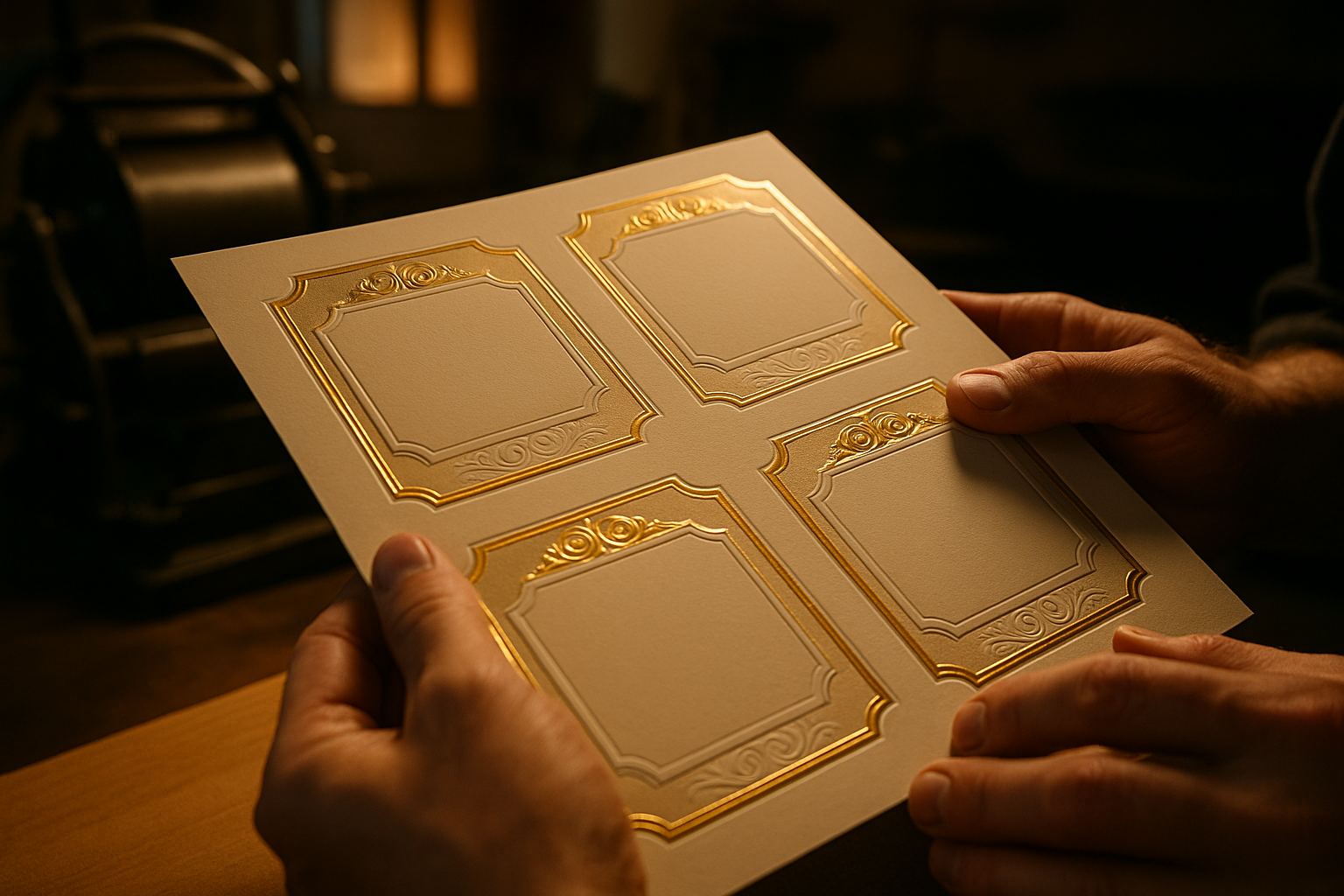
Your client has just signed off a 500-run invitation suite with hot foil on the cover, a blind emboss on the RSVP, and a custom die-cut belly band. Your usual trade printer can handle the litho — but the finishing? That's where the job suddenly stops being simple.
The Specialist Finishing Problem No Broker Escapes
Every print broker eventually hits the same wall. The bread-and-butter work — business cards, brochures, flyers — runs through the same two or three trusted trade printers without drama. Then a client wants something with personality: a soft-touch laminate with spot UV, a kiss-cut sticker pack, a Pantone metallic across an uncoated 350gsm board, or a foiled and embossed presentation folder with a bespoke die.
Suddenly you're ringing round. Your main trade printer subs it out (and adds their own mark-up before you've even seen a price). The specialist finisher you used last year has changed their minimum order. The new one you found on Google wants a 30% deposit before they'll even discuss makeready costs. Meanwhile your client is waiting on a quote, and every hour you spend on the phone is an hour you're not selling.
Why One-Offs Hurt Margin the Most
Specialist finishing on a one-off is uniquely painful because:
- Setup costs dominate. Die forme tooling, foil blocks, embossing dies — these are fixed costs spread over a small run, so the per-unit price balloons.
- You can't easily benchmark. Unlike a 5,000-run brochure where you know roughly what litho should cost, one-off finishing prices vary wildly between suppliers.
- Lead times are unpredictable. A finisher who's quiet this week might be three weeks out next week.
- Subbing through your usual trade printer adds a layer of margin — theirs, not yours.
If you accept the first quote that lands, you either overcharge your client (and risk losing them) or absorb the cost (and watch your margin disappear).
A Faster Way to Pull Specialist Finishing Quotes
The smart move on a one-off specialist job is to go direct to the finishers themselves — not through an intermediary trade printer — and to put the spec in front of several at once. That's where an RFQ-based marketplace like ZeozGig earns its keep for brokers.
Instead of dialling round, you post a single Request for Quote describing the job: stock, GSM, finished size, foil colour and coverage, emboss depth, die shape, quantity, delivery date and drop point. Trade finishers who can actually do the work respond with prices. You compare. You pick. You keep the margin.
What to Put in the RFQ
A tight, specific brief gets tight, specific quotes back. For specialist finishing, include:
- Job type and quantity — e.g. "500 A5 invitations, single-sided foil block + blind emboss".
- Substrate — stock name, GSM, coated/uncoated, any pre-printed CMYK or Pantone work already done.
- Finishing detail — foil colour (e.g. Crown Roll gold 220), emboss type (blind, registered, sculpted), die specification or a sketch.
- Tooling status — do you already have a die/foil block, or does the finisher need to make one?
- Delivery — date required, address, packed flat or boxed.
- Artwork status — supplied print-ready PDF with die line, or do you need pre-press support?
The more you tell suppliers up front, the fewer back-and-forth messages you'll have, and the more accurate the quotes will be.
Why Direct Beats Sub-Contracting Through a Trade Printer
When your usual trade printer subs the finishing out, you pay for their relationship — not yours. Going direct to a specialist finisher means:
- You see the true finishing price, not a marked-up one.
- You can negotiate makeready and overruns directly.
- You build a relationship for next time, so the second job is faster.
- You control the timeline because you're talking to the person doing the work.
On ZeozGig there's no commission on the deal you strike. Post a request for £1, open a direct chat with a promising finisher for a fixed £5, and the price you agree is the price you pay. If you want to jump on a voice call to talk through a tricky die spec, that's another 50p. A video call to walk through a sample? £1. If your RFQ gets no responses at all, the posting fee is refunded automatically — so there's no downside to testing the market on an unusual job.
Building a Bench for Future One-Offs
Every one-off is also a recruitment opportunity. The foiler who delivers a clean job this week is the foiler you'll go straight to next time — without an RFQ, without a search, without a phone call. Over a year of broker work, three or four well-chosen specialist suppliers can transform how quickly you turn unusual enquiries into signed POs.
Keep notes on each supplier: minimum order, tooling charges, typical lead times, the kit they run, the jobs they refused. That bench is your moat against the web-to-print giants who can't quote a bespoke foil and emboss in any meaningful way.
Stop Burning Hours, Start Quoting Faster
Specialist finishing will always need more thought than a straight digital run. But it doesn't need to eat your week. A well-written RFQ, sent to the right pool of trade finishers, can turn two days of ringing round into an afternoon of comparing quotes.
If you've got a foiling, embossing or die-cut job sitting on your desk waiting for prices, post it as an RFQ on ZeozGig today. One quid in, multiple trade finisher quotes back, zero commission on the deal — and your margin stays where it belongs. Or if you're a trade finisher reading this, list your services on the marketplace for £1 and let the brokers come to you.