Promotional Product Fulfilment: How Print Suppliers Can Ditch Commission-Heavy Middlemen
Promotional product fulfilment eats margin when middlemen skim every order. Here's how print suppliers can connect direct to buyers and keep 100%.
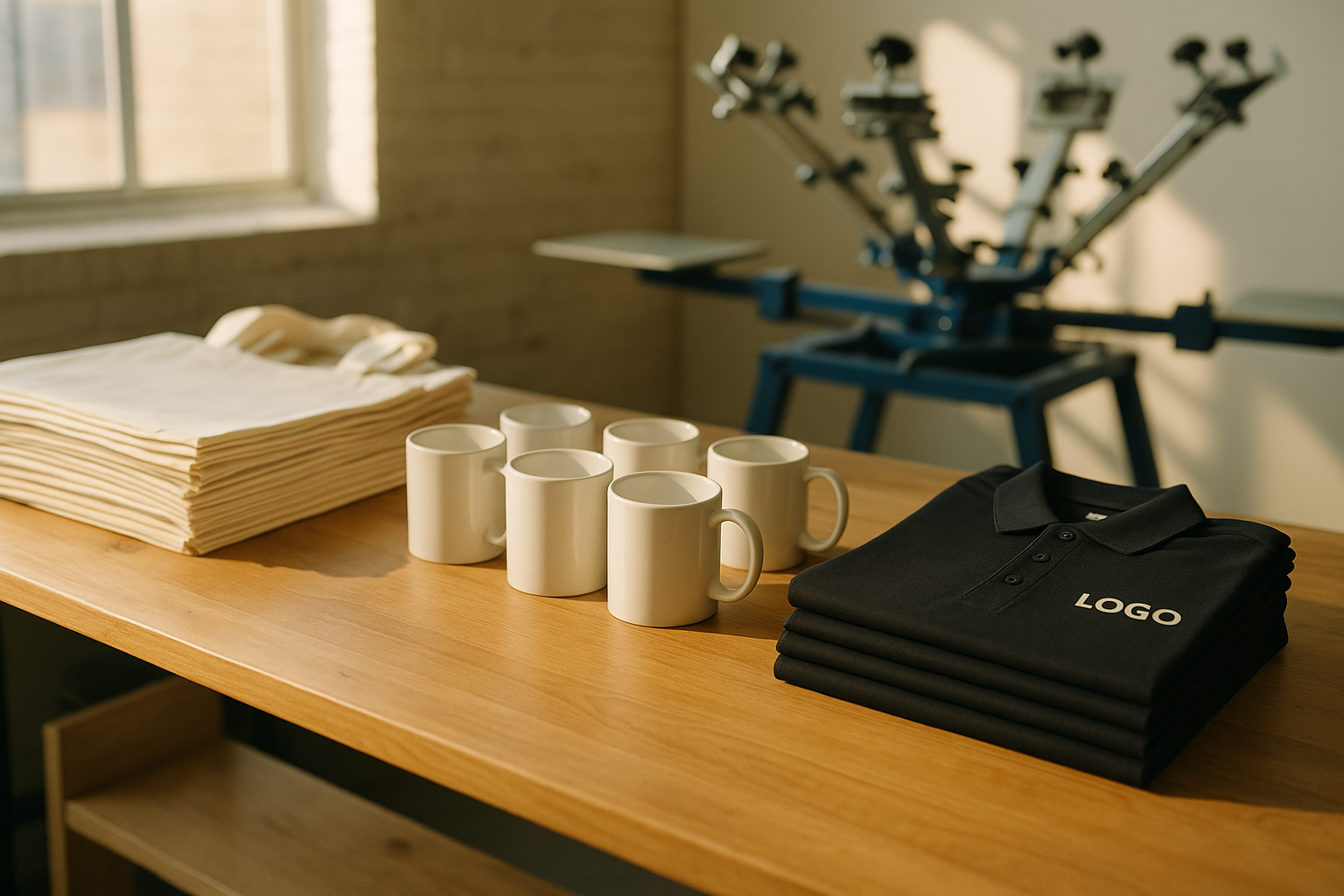
If you're fulfilling branded merchandise — printed mugs, tote bags, notebooks, pens, drinkware, apparel — you've probably watched a healthy quote turn into a thin margin the moment a distributor or platform takes their slice. The maths gets brutal fast when 15–25% disappears before you've even switched the press on.
The Middleman Tax On Promotional Print
Promotional products is a strange corner of the industry. It sits between commercial print, garment decoration and gift supply, which means it's historically been dominated by distributor networks and aggregator platforms that connect end-buyers to suppliers — and take a commission from every order, forever.
That model made sense when finding a supplier meant flipping through a printed catalogue. It makes far less sense now, when a marketing coordinator in Manchester can source a screen printer in Leeds directly if the right platform exists. The problem isn't that middlemen add zero value — it's that they charge percentage-based rent on every single reorder, in perpetuity, even after they've stopped doing any actual work.
Where The Margin Actually Goes
Look at a typical 500-unit branded tote bag order at £3.20 each — £1,600 revenue. Now subtract:
- 20% distributor commission: £320
- Platform listing / featured placement fees: £40–£80
- Payment processing on the gross (not the net): another 2–3%
- Time chasing artwork, sign-off and Pantone approvals through a third-party portal
By the time the job's out the door, you've lost the equivalent of a full day's press time to people who never touched the ink.
Why Direct Connections Change The Economics
The fix isn't complicated: talk to buyers directly. What's changed is that platforms now exist to make that introduction without demanding a cut of the resulting relationship. On ZeozGig, connecting to a buyer costs a fixed £5 one-off fee. That's it. Not per order. Not per reorder. Not a percentage of anything.
So when a marketing agency posts an RFQ for 2,000 embroidered polos, you pay £5 to open the conversation. If they come back six months later for 5,000 branded water bottles, you don't pay again — you're already connected. Compare that to a 20% cut on a £6,000 reorder and the difference is obvious.
What This Looks Like In Practice
A typical promo product supplier using a direct B2B platform tends to work like this:
- List your core capabilities — pad printing, screen printing, DTG, embroidery, laser engraving, dye-sublimation — at £1 per listing.
- Filter incoming RFQs by region, quantity, decoration method and turnaround.
- Open direct chat with buyers whose brief actually fits your kit.
- Handle artwork, proofing and Pantone matching directly, without a portal in the middle mangling your PDFs.
- Invoice the client directly — no split payments, no waiting on distributor payout terms.
Fitting Promo Into A Wider Print Business
Most promotional suppliers aren't standalone — they're commercial printers, garment decorators or signage shops who added merch as a natural extension. If you're already running an Indigo for short-run digital or a Roland for wide-format, layering in branded merch fulfilment makes obvious sense. You've got the artwork skills, the colour management, the finishing knowledge.
The barrier has always been sales. Getting in front of buyers who need 1,000 branded notebooks with matched spot colours meant either paying to be listed on aggregator sites or building a slow, expensive direct sales operation. Direct RFQ platforms collapse that middle ground.
The Buyer's Side Of The Equation
Worth remembering: buyers hate middlemen too. Marketing managers ordering branded merch for a conference next month want fast answers, direct proofing conversations, and a supplier who understands that "Pantone 286 C on cotton" isn't the same as "Pantone 286 C on polyester". They don't want to relay every question through an account manager who copy-pastes it to the actual printer.
When buyers can post a request once — for £1, refunded automatically if nobody responds — and get quotes from suppliers who can actually answer technical questions, the whole procurement cycle speeds up. That benefits both sides.
Practical Steps To Move Fulfilment Off Commission Platforms
If you're ready to shift more of your promo volume onto direct channels, here's a sensible sequence:
- Audit your top 20% of promo clients. These are the ones worth moving to direct billing first. Losing 20% commission on them recovers real money immediately.
- List your decoration methods separately. Screen print, DTG, embroidery and laser engraving all attract different buyers. Separate listings surface better in search.
- Include kit specifics. Max print area, garment brands stocked, minimum order quantities, standard turnaround. Buyers filter on these.
- Respond fast to RFQs. The suppliers who quote within 2 hours consistently win over those who take 24.
- Use voice or video for complex briefs. A £1 video call clarifying Pantone tolerances beats twelve emails and a wrong sample.
Keep The Margin You Earned
Promotional product fulfilment is a decent business when you're not paying rent on every order to people who introduced you to a buyer eighteen months ago. The direct-connection model isn't about eliminating salespeople or distributors who genuinely add value — plenty do. It's about making sure suppliers have a real alternative when they don't.
Ready to try it? Post an RFQ if you're sourcing branded merch, or list your promo capabilities for £1 and start receiving requests from buyers who want to talk to the printer directly — not to a middleman with a mark-up. Keep 100% of what you earn on every reorder, forever.