Promotional Product Fulfilment Without Commission Middlemen Eating Your Margin
How promotional product printers and suppliers can fulfil branded merch orders directly, keep full margin, and skip the commission-heavy aggregator platforms.
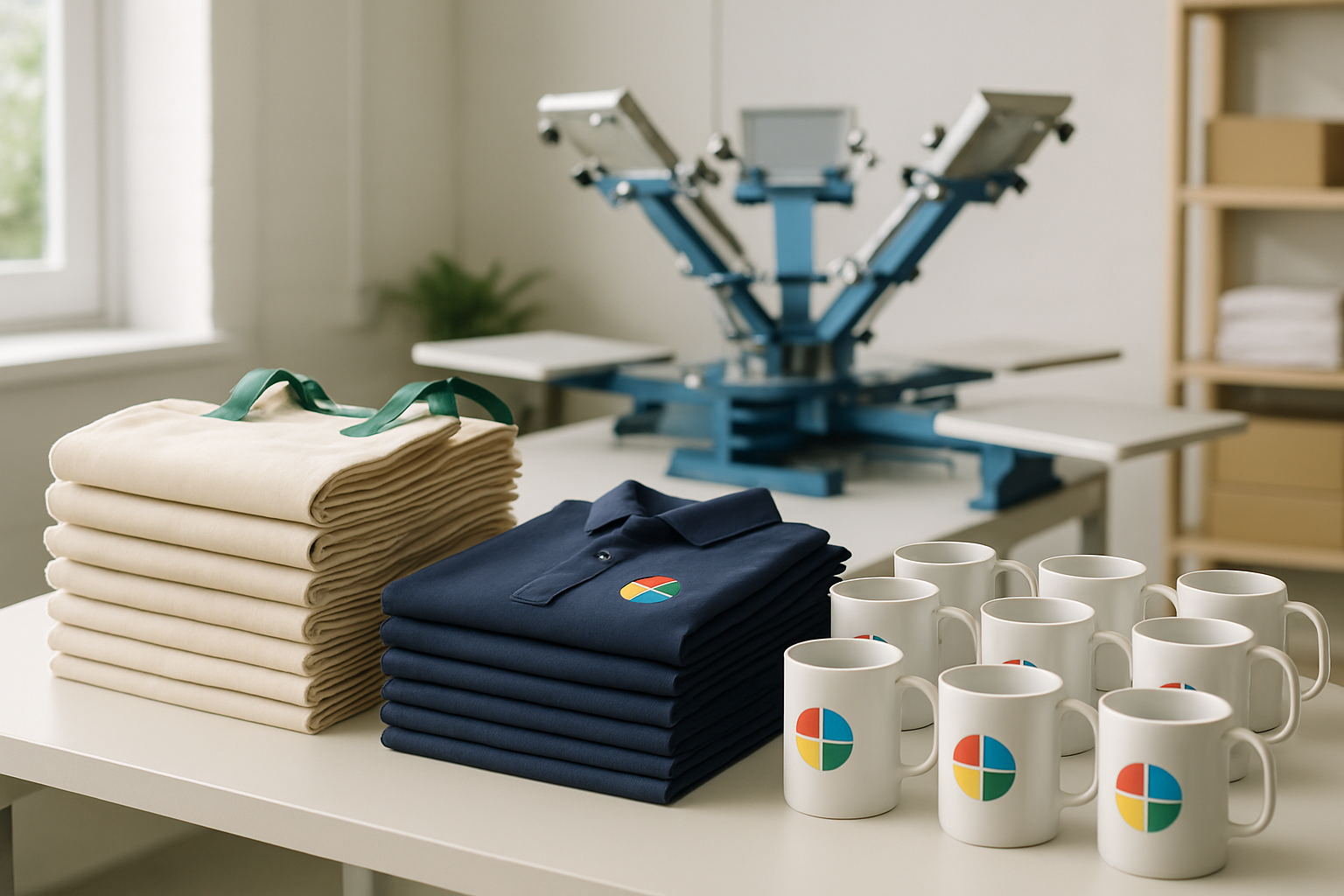
You quoted 5,000 branded tote bags last week, won the job, produced it beautifully — and watched a marketplace skim 15% off the top before the money even hit your account. If that scenario sounds familiar, it's worth asking why promotional product fulfilment, of all categories, is still routed through commission-heavy middlemen.
The promo merch margin problem
Promotional product work is volume-driven and margin-tight. A run of 1,000 screen-printed mugs, 2,500 embroidered polos or 10,000 litho-printed notebooks already involves blanks, decoration, finishing, packing and shipping — each one chipping away at your gross. When a marketplace then takes 10–20% as commission, you're effectively working the makeready and first few hundred units just to pay the platform.
And unlike a one-off commercial print job, promo work tends to repeat. The same agency that orders branded water bottles in March will order conference lanyards in June and Christmas merch in October. Paying commission on every reorder, forever, is the most expensive way imaginable to acquire what should be a long-term direct relationship.
Why aggregators love this category
Promo is easy to template. SKUs are standardised (Gildan blanks, BIC pens, ceramic 11oz mugs), decoration methods are well-known (screen, pad, DTG, sublimation, laser engraving, debossing), and buyers are often time-poor marketers who'll click the first plausible quote. That's catnip for an aggregator — they wedge themselves between the marketer and the actual decorator, take a cut, and own the customer relationship you should own.
What direct fulfilment actually looks like
Fulfilling promo orders direct doesn't mean cold-calling marketing directors. It means working in places where buyers post real briefs and you respond without giving up margin. A typical direct promo job flows like this:
- A buyer (agency, in-house marketer, event organiser, reseller) posts an RFQ with quantity, deadline, decoration method and Pantone references.
- Suppliers with the right kit and capacity respond with a price, a lead time and any technical notes (e.g. minimum order, ink coverage limits, available blank colours).
- The buyer opens a direct chat with the most promising one or two suppliers, confirms artwork, bleed, trim and a digital proof, then places the order.
- The supplier produces, finishes, packs and ships. The buyer pays the supplier in full. Nobody in the middle takes a percentage.
On ZeozGig the only money that changes hands with the platform is a fixed per-action fee — $1 to post a request, $5 to open a direct connection, $0.50 for a voice call. No commission on the job. No commission on the reorder. No commission on the next five reorders either.
The kinds of promo work that suit direct sourcing
Not every promo job needs a marketplace at all, but the ones that benefit most from direct RFQs tend to share certain traits:
- Mid-volume runs (500–25,000 units) where price-per-unit is meaningful but volumes aren't yet at full container-import scale.
- Multi-decoration jobs — a tote with screen-printed front, embroidered strap and a woven label, for example.
- Pantone-matched brand colours that auto-quote engines can't honestly price.
- Tight deadlines tied to events, product launches or conference dates, where a real human confirming capacity beats a generic SLA.
- Recurring programmes — onboarding kits, dealer merchandise, employee swag — where the buyer wants a long-term supplier, not a transaction.
Listing your promo capabilities so buyers find you
If you decorate blanks for a living, your marketplace listing should read like a spec sheet, not a brochure. Buyers searching for promo capacity are scanning for specifics. Useful listing details include:
- Decoration methods you offer in-house (screen, DTG, embroidery, pad print, sublimation, laser engraving, foiling, debossing).
- Maximum print area and number of colours per pass.
- Typical turnaround for 500, 2,500 and 10,000 units.
- Whether you supply blanks or print on customer-supplied stock.
- Pantone matching capability and any limitations on substrate.
- Finishing and fulfilment options — individual poly-bagging, kitting, pick-and-pack, drop-shipping to multiple addresses.
The more specifically you describe what you do, the more qualified the RFQs you'll receive. A buyer looking for a 4-colour screen print on 280gsm canvas totes doesn't want to wade through ten generic "branded merchandise" listings.
Treating one job as the start of a relationship
The single biggest advantage of direct fulfilment isn't the saved commission on job one — it's that job two onwards happens entirely off-platform. Once you've connected, exchanged artwork files, agreed approved Pantones and built a working relationship with a buyer, every reorder is a direct phone call or email. No re-bidding. No platform between you. No fees at all on the repeat work.
That's a structurally different business model from paying a percentage on every order forever, and it compounds quickly when promo buyers, by nature, reorder constantly.
Cutting the middleman, keeping the work
Promotional product fulfilment was one of the first print categories to get hoovered up by commission marketplaces, and it's one of the most overdue for a reset. The decorators do the work. The buyers want a reliable supplier. The middleman in the middle was always optional.
If you decorate apparel, print promo, embroider, engrave or kit branded merchandise, list your capabilities on ZeozGig for $1 and start responding to promo RFQs without losing 15% off every job. If you're a buyer sourcing branded merch, post your request — if nobody responds, your fee is refunded automatically, and if they do, you talk to the actual supplier, not a reseller. Keep 100% of what you earn, or pay 100% of what the job's actually worth. Either way, the middleman doesn't need to be there.