Why Regional Signage And Large-Format RFQs Belong On A Direct Marketplace, Not A National Aggregator
Regional signage and wide-format RFQs get mishandled by national aggregators. Here's why direct, local sourcing wins on speed, fit and margin.
You've seen the brief: "3 x illuminated fascia signs, install in Leeds, survey needed by Friday." Then you watch it bounce around a national aggregator that treats it like a job for a stationery printer 200 miles away. Signage and large-format work doesn't behave like litho — and the platforms most buyers default to weren't built for it.
Why Signage RFQs Are Different
A wide-format or signage job isn't really a print job. It's a project. There's a site survey, substrate selection, weatherproofing, fire ratings, install access, sometimes scaffolding or traffic management, and almost always a deadline tied to a shop opening, an exhibition stand, or a vehicle off the road for a wrap.
National aggregators and instant-quote engines were built around predictable SKUs — 500 business cards, A4 flyers on 170gsm silk, saddle-stitched booklets. They struggle the moment a job involves:
- A physical site visit before pricing can be confirmed
- Multiple substrates (Dibond, Foamex, acrylic, 3M IJ180, mesh PVC)
- On-site installation by a CSCS-carded fitter
- Compliance with landlord, council or highways approvals
- Mixed production: print, route-cut, fabricate, then install
An instant calculator can't quote that honestly. A buyer who tries to force it through one ends up with a number that bears no relationship to the finished job.
The Regional Factor National Platforms Ignore
Large-format is geographic in a way that other print isn't. A 6m banner can be couriered, but a 4-bay illuminated sign in Aberdeen wants a fabricator who can drive there, not one in Kent quoting on a national board.
Regional buyers know this instinctively. They want:
- A producer within sensible travel distance of the install site
- Someone who's worked with the local council's signage planning rules
- A team that can survey, produce and fit — or coordinate cleanly with a local installer
- Honest lead times that account for substrate availability, not lowest-common-denominator promises
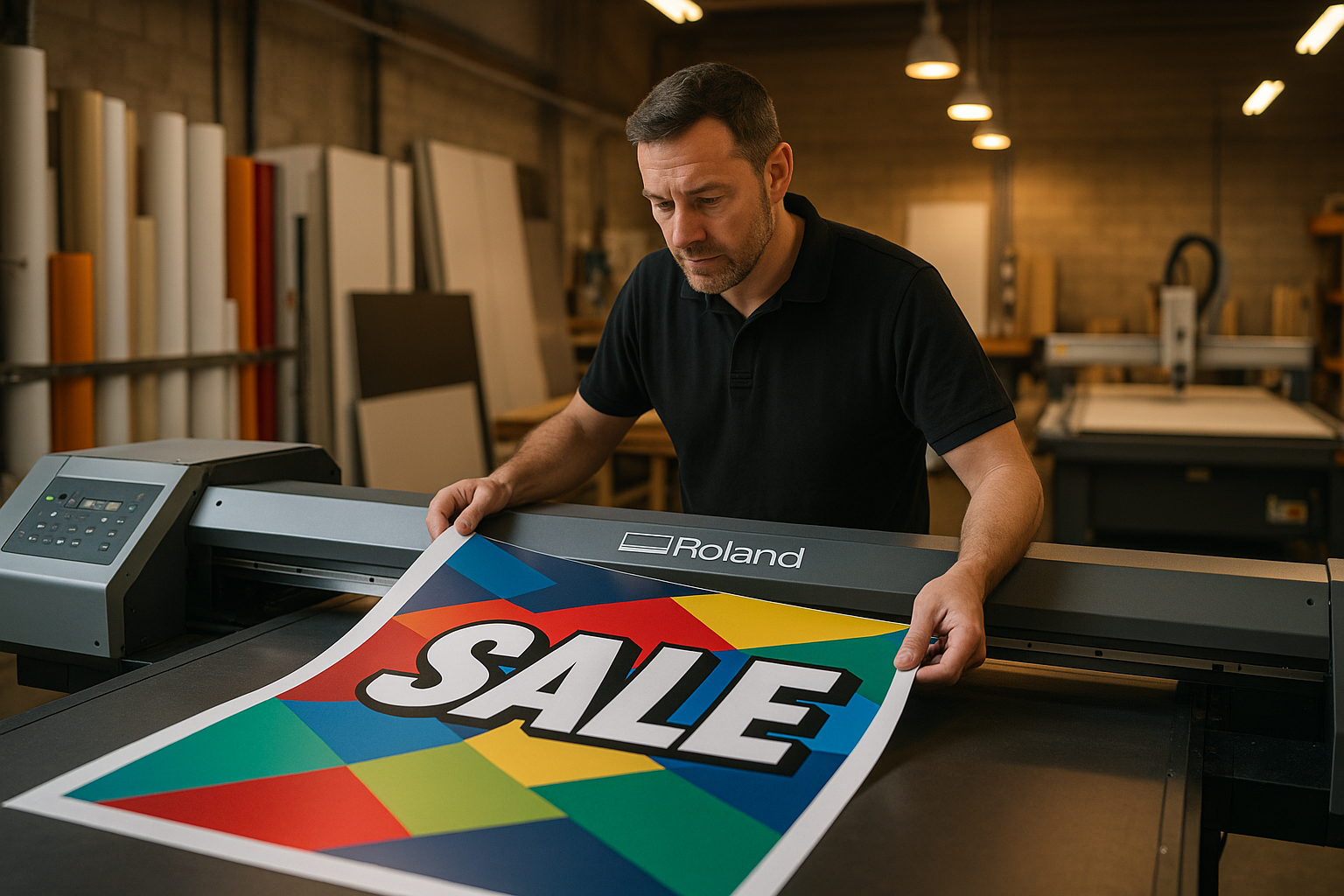
National aggregators flatten all of that. The supplier with the best SEO budget wins the lead, not the one 12 miles down the M62 with a Roland TrueVIS, a CNC router and a van full of fixings.
What Gets Lost In Translation
When a regional RFQ gets piped through a generic marketplace, the brief tends to lose the bits that matter most: access notes, mounting surface, viewing distance, ambient lighting for illuminated work, whether the existing tray is being reused. Those are the details that change a quote by thousands of pounds. A direct conversation with the buyer surfaces them in five minutes. A web form rarely does.
How Direct RFQs Fix This
This is where a zero-commission, direct-connect model actually earns its keep for signage and wide-format specialists. On ZeozGig, a buyer posts the RFQ for £1. Suppliers who match the brief respond. The buyer opens a direct connection with the ones they like for a one-off £5 — and from there it's chat, voice, or video. No percentage skim on the finished job. No bidding war engineered by an algorithm.
For a £14,000 fascia and wayfinding package, the difference between paying a flat connection fee and surrendering 10–15% commission to a marketplace is the difference between a healthy month and a thin one.
What Suppliers Should List
If you're a sign-maker or wide-format house, your listing is your shopfront. Make it specific:
- Kit on the floor: Mimaki JFX, HP Latex 700, Zünd cutter, Roland TrueVIS, edge-banders, CNC routers
- Substrates you stock and can turn around same-week
- Maximum print width and bed size
- Install radius from your base ("M62 corridor, Leeds to Liverpool")
- Certifications: CHAS, CSCS cards held, working-at-height, electrical sign-off for illuminated work
- Sectors you've served: retail rollouts, exhibition, fleet livery, hospitality
The more specific you are, the more the right buyer can self-qualify before they spend that £5 to connect — and the less time you waste on enquiries that were never yours to win.
What Buyers Should Put In The Brief
If you're sourcing signage, help your suppliers help you. Include:
- Location of install (postcode is fine)
- Quantity, dimensions, and substrate if known
- Whether install is in scope or print-and-deliver only
- Deadline and any access constraints (out-of-hours, scaffold required, etc.)
- Whether a site survey is expected before final quote
A brief like that gets serious responses from serious suppliers. And if it somehow gets zero responses, the £1 posting fee is refunded automatically — so there's no downside to testing the market.
The Bigger Picture
Signage and large-format have always been a relationship business. The national aggregator model tried to commoditise it and ended up serving neither side well — buyers got mismatched quotes, suppliers got squeezed margins, and the work itself often suffered. A direct, regional, fixed-fee model just gets out of the way and lets the right people talk to each other.
Ready To Try It?
If you're a buyer with a regional signage or wide-format brief, post the RFQ on ZeozGig for £1 and see who in your area responds. If you're a sign-maker, wrap specialist or wide-format trade printer, list your capabilities and let the work come to you — without giving a slice of every job to a marketplace that didn't earn it.