Why Commercial Printers Should Stop Chasing Leads On Commission-Heavy Marketplaces
Commission-heavy print marketplaces quietly eat your margin on every job. Here's why commercial printers should rethink lead sources and switch to direct, fixed-fee sourcing.
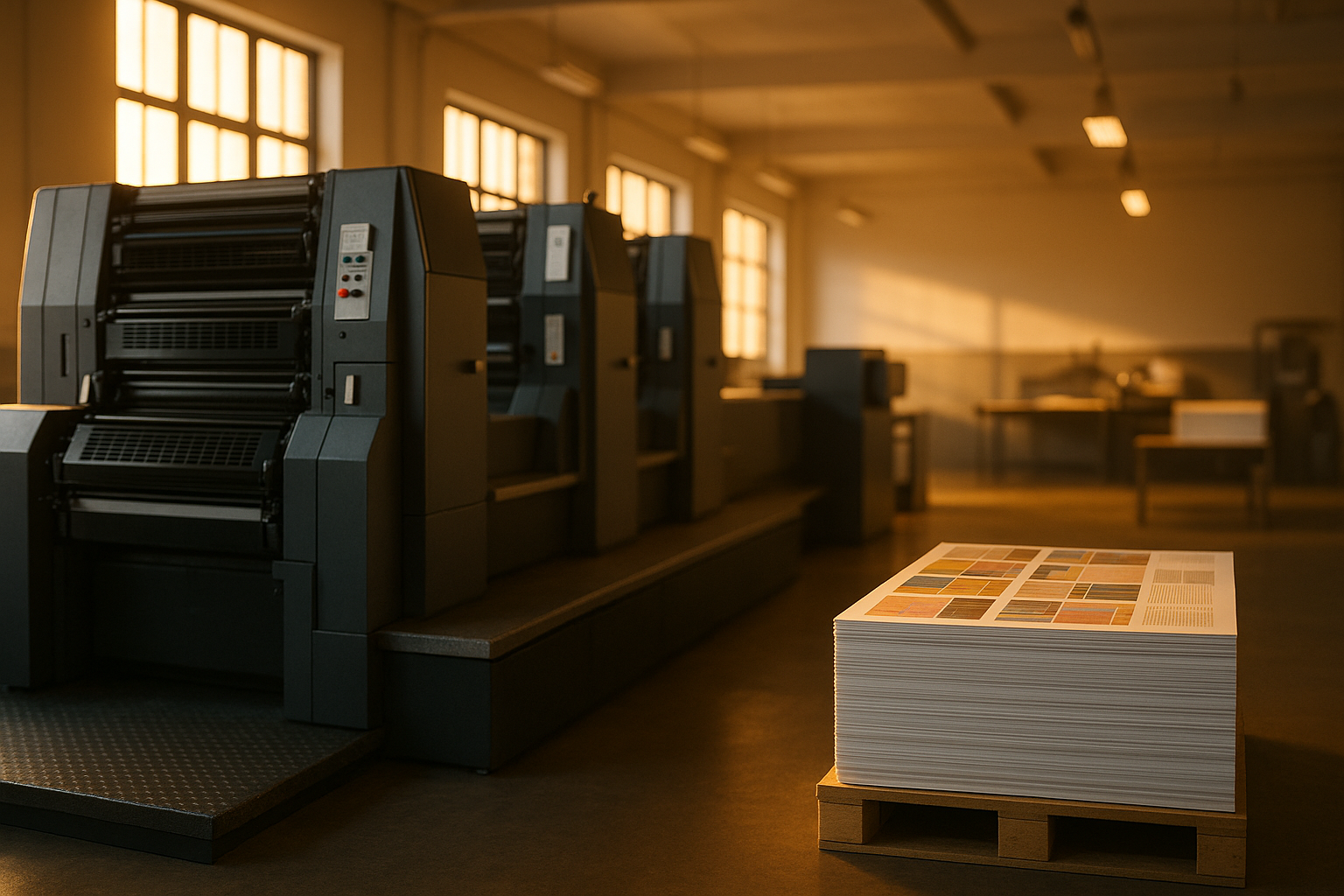
You've won the job, finished the makeready, and shipped the pallets — only to realise that after the marketplace's cut, the artwork rework, and the 60-day payment terms, you're working for biscuits. Sound familiar?
For a lot of commercial printers, the lead-generation treadmill has become more expensive than the lead itself. Below is an honest look at why chasing work through commission-heavy marketplaces is quietly draining presses across the industry — and what a healthier sourcing mix looks like.
The Real Cost Of A "Free" Marketplace Lead
Most print marketplaces brand themselves as free to join. That's technically true. What's not advertised is the 10–20% commission skimmed off every accepted quote, the price-anchoring that forces you to bid against the cheapest digital shop in the country, and the platform's ownership of your customer relationship.
Run the numbers on a typical 5,000-run litho job:
- Sell price: £1,800
- Paper, plates, ink, finishing: £950
- Marketplace commission at 15%: £270
- Payment processing + delayed settlement: ~£40
- Effective gross margin: roughly £540 — before you've paid for the minder, the MIS licence, or the rent
Now imagine that same buyer coming back three more times that year. The marketplace earns over £1,000 from a relationship you delivered. And the moment you try to take the buyer off-platform, you risk being delisted.
The Hidden Tax On Repeat Business
Commission models are designed around one assumption: that you'll never own the customer. Every reorder, every reprint, every Pantone-matched special goes back through the same toll booth. For a print business that lives or dies on repeat work, that's not a marketing cost — it's a structural tax on loyalty.
Why The Marketplace Model Doesn't Fit Print
Print isn't a SKU. A 350gsm silk business card with spot UV and a bleed allowance isn't the same product as a digitally printed flat card, even if a quote engine treats them identically. Commission-heavy platforms force complex jobs into commodity boxes because that's the only way their algorithms can compare apples to apples.
The casualties are predictable:
- Trade printers get lumped in with one-piece online giants.
- Wide-format specialists lose tenders to anyone with a cheap roll-fed Roland and no colour management.
- Packaging converters can't communicate the difference between a folded carton mockup and a production-ready die-line.
- Finishing houses can't sell foiling or embossing as standalone value-adds.
- Litho houses with a Komori or Heidelberg on the floor compete head-to-head with toner-only digital shops.
If the platform can't represent why your quote is higher, you'll keep losing to printers who shouldn't even be in the running.
A Healthier Lead Mix For Commercial Printers
The answer isn't to abandon online lead generation — it's to rebalance it. A modern commercial print sales pipeline usually looks something like this:
- 40% repeat and referral work from owned relationships
- 20% outbound to local agencies, in-plant teams and procurement leads
- 20% direct RFQ platforms with fixed, transparent fees
- 10% trade work from other printers (overflow, finishing, specials)
- 10% longer-term marketing (SEO, case studies, trade press)
Notice what's missing? Commission-only marketplaces. They can still feature, but only as a top-up — never as the backbone.
Fixed Fees Change The Maths
This is where platforms built on a different model start to make sense. ZeozGig, for example, charges per action rather than per deal: £1-equivalent fixed fees to post a request or list a product, a one-time £5 connection fee to open a direct chat with a buyer, and small per-call charges if you want voice or video. There's no percentage on the job itself.
Work the same £1,800 litho job through that lens and the platform cost is a rounding error. Win three reorders and you've paid… nothing more, because you already own the relationship via direct chat. If you post an RFQ as a buyer (say, you're sourcing white-ink digital for a one-off promo) and nobody bids, the fee is refunded automatically.
What To Do This Quarter
If you're a commercial printer, packaging converter or trade finisher reading this between makereadys, here's a sensible plan:
- Audit your last 20 jobs. Calculate the true margin after every platform fee, commission and payment delay.
- Identify your top three repeat buyers. Make sure you have their direct line — not a platform-mediated inbox.
- List your specialist kit somewhere permanent. If you're running an HP Indigo 7900, a Komori six-colour with coater, or a Mimaki UV flatbed, buyers searching for that capability should be able to find you without an algorithm in the way.
- Reserve a fixed monthly budget for fixed-fee lead generation. Even £50 a month gets you a lot of posted RFQs and direct connections on a per-action platform.
- Stop bidding on jobs where the commission would wipe out your finishing margin. It's not snobbery — it's survival.
Own The Relationship, Keep The Margin
The printers who'll still be running presses in ten years aren't necessarily the cheapest. They're the ones who own their customer relationships, price for the value of their kit, and refuse to rent their margin back from a marketplace every month.
If you'd like to test that thesis without signing a contract, head to ZeozGig. List your press, your finishing line, or your trade services for a one-off fixed fee — or post an RFQ for the overflow work you can't take this week. No commission, no monthly bill, and if your request gets no responses, your fee comes straight back. Keep 100% of what you earn, and stop paying a toll on every job.