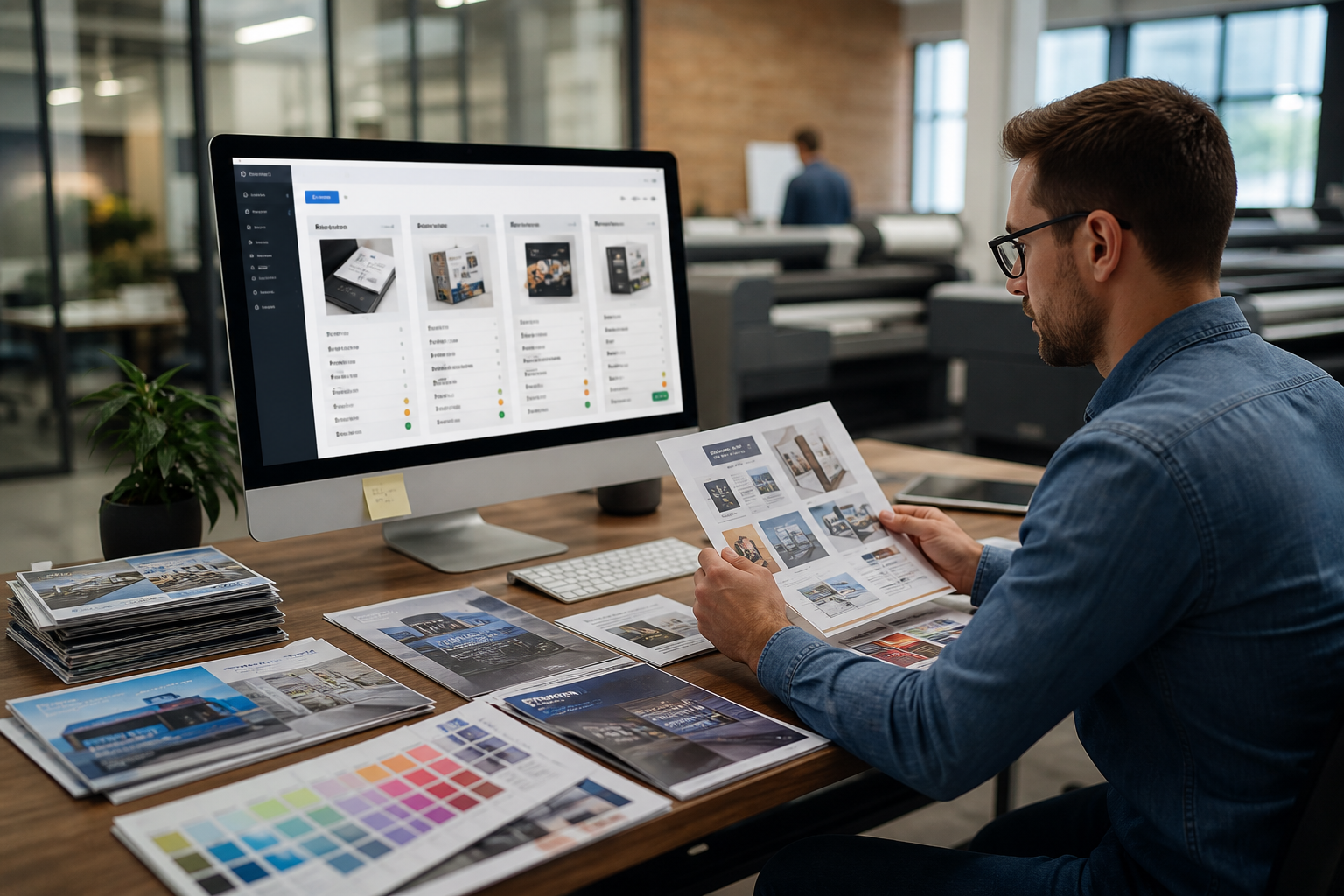
How To List A Komori, HP Indigo Or Roland Press So Trade Buyers Actually Find It
A practical guide for trade printers on listing speciality presses like Komori, HP Indigo and Roland so the right B2B buyers find your capacity quickly.
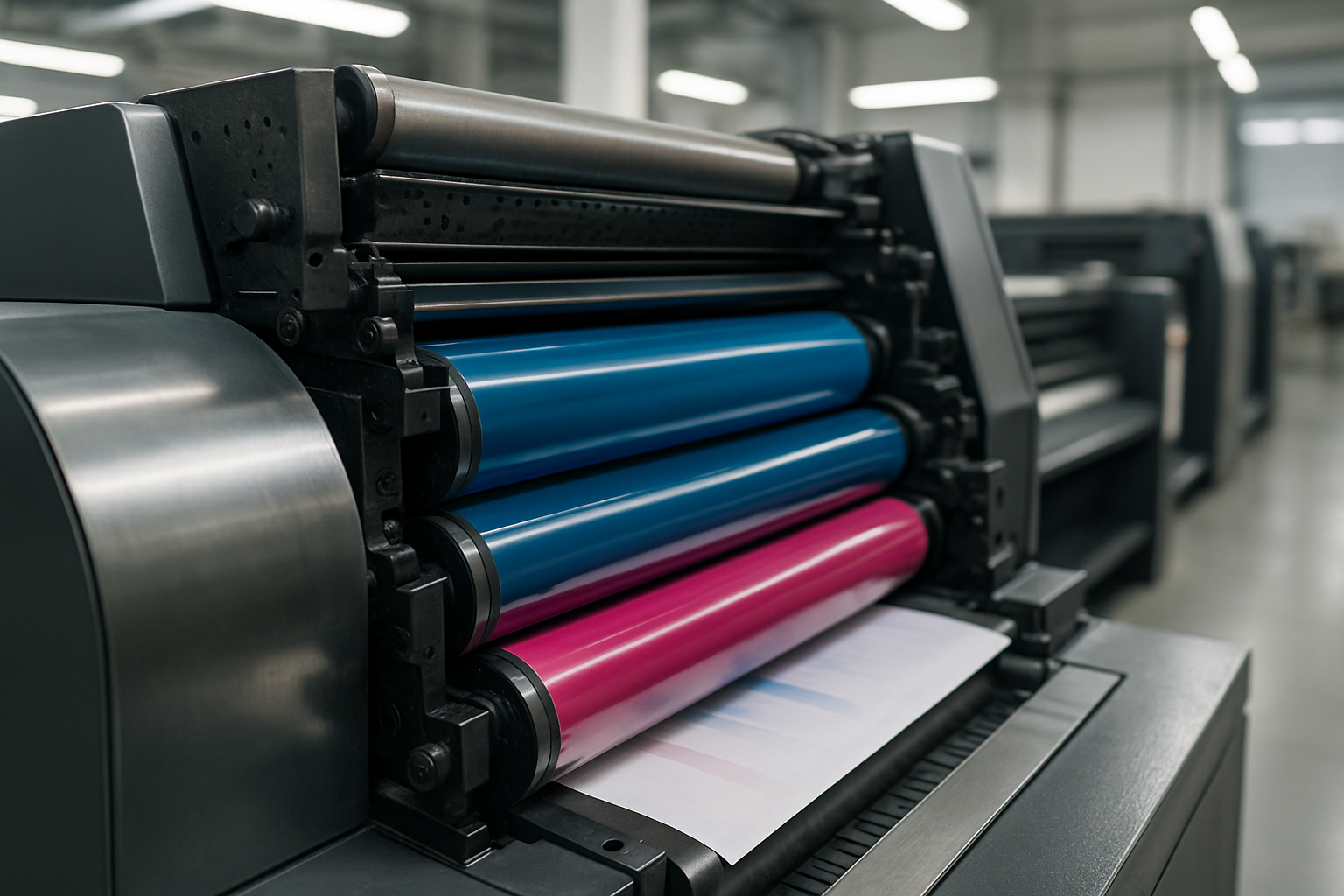
You've got a Komori six-colour humming in the press hall, an HP Indigo 7900 sat ready for short-run digital, or a Roland TrueVIS chewing through wide-format — but the buyers who actually need that kit can't find you online. They're stuck wading through generic "printer near me" listings that lump a single-press copyshop in with a £2m litho house.
This is a kit-discovery problem, not a marketing problem. And the way you write your listing — the language, the specs, the substrates — decides whether a trade buyer or print broker shortlists you in thirty seconds, or scrolls past.
Why Generic Print Listings Fail Speciality Presses
Most online print directories were built for end-clients searching "business cards" or "flyers near me". They don't have fields for press make, sheet size, max GSM, or whether you can hit a Pantone 877 metallic on uncoated stock. So your £1.2m Komori GL-640 ends up indexed exactly the same as a Konica in someone's spare room.
That's fine if you only want walk-in retail work. It's terrible if you want trade overflow, broker work, or agency production that pays properly. Trade buyers don't search for "printer" — they search for capability. Sheet-fed B1. Indigo ElectroInk white. 1440 dpi eco-solvent on 3M IJ180. Specifics.
What trade buyers are actually filtering on
When a print broker or procurement lead is shortlisting suppliers, they're typically scanning for:
- Exact press model (HP Indigo 7900 vs 12000 vs 100K — these are different products)
- Max sheet size and substrate range (B2, B1, SRA3+, roll widths)
- Special inks and finishes (white, fluorescent, metallic, Pantone-matched, varnish stations)
- Run-length sweet spot (50–500 sheets digital? 1,000–10,000 litho?)
- Turnaround capability (24-hour, 48-hour, standard)
- Finishing in-house vs outsourced (folding, perfect binding, foiling, die-cutting)
If any of those are missing from your listing, you've just been filtered out of someone else's shortlist without ever knowing about it.
How To Write A Speciality Press Listing That Gets Found
Think of your ZeozGig product or service listing the way you'd think about an MIS spec card — precise, scannable, and written in the buyer's vocabulary. Here's a structure that works:
- Lead with the press model in the title. "HP Indigo 7900 — Short-Run Digital, 5-Colour + White, Up To 340gsm SRA3+" beats "Quality Digital Printing" every time.
- State the sweet spot, not the maximum. Buyers want to know where you're cheapest and fastest, not just what you can technically do.
- List substrates by name. GF Smith Colorplan, Fedrigoni Sirio, 3M vinyls, Avery Dennison wraps — these are search terms brokers actually use.
- Spell out the colour management. G7 calibration, Fogra 51, ISO 12647-2, Pantone Bridge matching — say it if you do it.
- Mention finishing partners or in-house kit. A Heidelberg Stahlfolder, Horizon perfect binder, Kongsberg cutting table — these signal seriousness.
- Be honest about what you don't do. Saying "we don't do envelopes" filters out the wrong enquiries and saves everyone time.
Press-by-press: what to emphasise
Komori (and other B1/B2 litho): Lead on sheet size, number of units, coater, makeready time, and run-length economics. Trade buyers want to know if you can take their 5,000-sheet overflow on a Tuesday morning without disrupting your own schedule.
HP Indigo: Emphasise ElectroInk specials (white, silver, fluorescent), substrate range including synthetics, and variable data capability. Photo-book producers, packaging mock-up houses and agency creatives all search Indigo by name.
Roland (and Mimaki, Epson): Lead on roll width, ink type (eco-solvent, latex, UV), and application — vehicle wraps, retail POS, exhibition graphics, soft-signage textiles. Wide-format buyers care enormously about media compatibility.
Why A Permanent Listing Beats Chasing Every RFQ
The problem with relying purely on bidding for RFQs is that you're competing on price every single time. A well-written permanent product listing does the opposite — it lets buyers find you when they have a job that matches your kit, and they come to you already half-sold on the fit.
On ZeozGig, listing a press or service is a one-off £1. There's no monthly subscription, no commission on the work you win, and no platform clipping a percentage of your invoice. If a print broker finds your Indigo listing and wants to discuss a job, they pay a small fixed fee to open a direct connection — and from that point, you're talking buyer-to-supplier with no middleman in the conversation.
That matters when you're quoting a £40,000 packaging run. A 10% marketplace commission on that job is £4,000 gone. On ZeozGig, the connection fee is a fiver.
A few practical tips before you publish
- Photograph the press itself, not just sample work — buyers want to see the kit
- Include a downloadable spec sheet or capability deck if you have one
- Update the listing whenever you add finishing kit or new substrates
- Respond fast to first enquiries — visible response times build credibility
Get Your Kit In Front Of The Right Buyers
If your Komori, Indigo or Roland is sat under-utilised because the wrong people are finding you online, the fix isn't more SEO spend — it's a sharper listing in the right place. List your press on ZeozGig for £1, write it the way a trade buyer would search, and let the work come to you. No commission, no contract, no monthly fee — just your kit, in front of the buyers who actually need it.