How Print Brokers Can Source Long-Run Litho Book and Brochure Work via Direct RFQs
How print brokers can pull competitive trade quotes for book, brochure and high-volume litho jobs without cold calls, commissions or margin erosion.
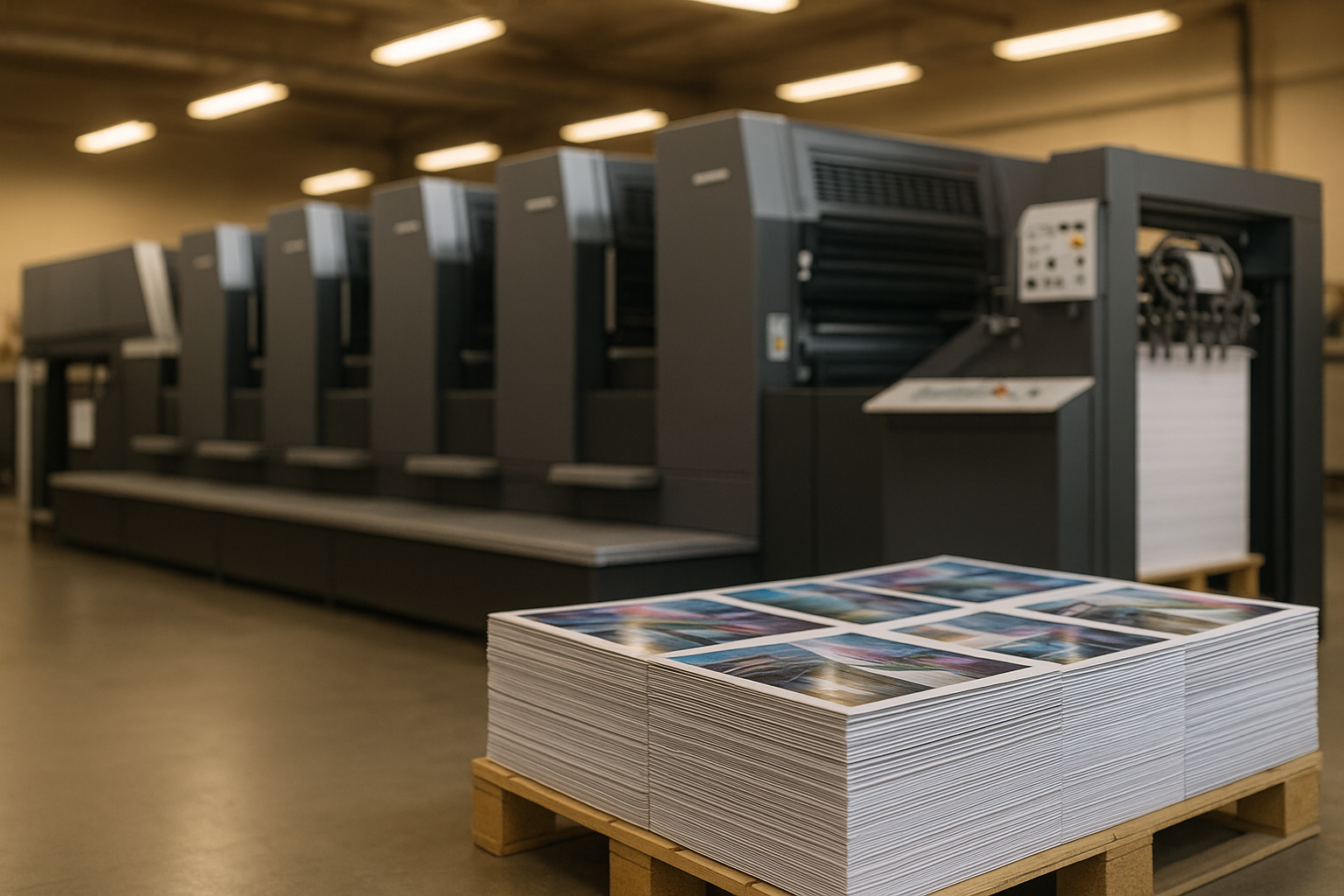
You've got a 20,000-copy brochure enquiry sitting in your inbox, or a 5,000-run perfect-bound book, and you need three sharp litho quotes by tomorrow morning. The job's too big for digital, your usual trade printer is quoting slow, and every hour you spend chasing alternatives is an hour you're not selling.
Long-run litho work is where brokers either make proper margin or get badly burned. The numbers are bigger, the makeready costs are bigger, the paper spend is bigger, and a single quoting mistake can wipe out the whole job's profit. Here's how to source it properly using direct RFQs to trade printers — without giving up commission to a middleman platform.
Why Long-Run Litho Is a Different Beast for Brokers
Digital work is forgiving. You can ring round three trade digital houses, get quick numbers back, and the margin between them is usually tight enough that you're safe. Litho is the opposite. On a 16pp A4 brochure at 20,000 copies, the gap between the keenest trade litho quote and the most expensive can be 25–40%. That gap is your margin — or your competitor's win.
The variables that move the price are also more brutal:
- Sheet size and press configuration (B1 vs B2, 5-colour vs 4-colour + coater)
- Paper buying power — some trade printers hold contract paper deals you can't access alone
- Makeready efficiency and how they gang sections
- Finishing in-house vs subbed out (perfect binding, saddle-stitching, PUR)
- Overruns policy and how they handle spoilage on long runs
If you only ask one or two trade printers, you genuinely have no idea whether you're competitive. You're guessing.
Writing an RFQ That Pulls Sharp Litho Numbers
Trade printers quote faster, and quote keener, when the brief is unambiguous. Vague RFQs get padded quotes because the estimator is covering risk. Tight RFQs get aggressive numbers because they can see the job and want to win it.
For a book or brochure RFQ, give them everything in one go:
- Format and extent — finished size, page count, cover spec separate from text spec
- Quantities — and ideally 2–3 run-on bands (e.g. 10k / 15k / 20k) so you can sell the upsell
- Stock — GSM, brand if specified, coated/uncoated, FSC requirement
- Colour — 4/4 CMYK throughout, or sections in mono, or any Pantone specials on cover
- Finishing — matt/gloss lamination, spot UV, perfect binding (PUR or hot-melt), saddle-stitching, foil
- Delivery — single drop or split, palletised, timed delivery if relevant
- Deadline — both quote deadline and required delivery date
A tight brief saves the estimator 20 minutes and saves you a day of back-and-forth.
The Trap of Sending the Same Brief to the Wrong Printers
Not every trade litho house wants a 5,000 perfect-bound book. Some are happiest on 50,000+ web work. Some are sheet-fed B2 specialists who'll quote keenly on brochures up to 32pp but get expensive on books. Targeting matters as much as briefing.
Using ZeozGig to Run the RFQ Without Chasing
This is where a direct RFQ marketplace earns its keep. On ZeozGig you post the brochure or book spec once, for £1, and trade printers across litho, finishing and bindery come to you with quotes. No commission on the job. No percentage clipped off your margin. If nobody responds, the £1 is refunded automatically — so there's zero risk in testing the market on an unusual spec.
What that gives a broker in practice:
- Three to six competitive trade quotes on a single brief without ringing round
- Discovery of new trade printers you didn't know quoted in your sector or region
- Direct chat, voice or video with the estimator for a one-off £5 connection fee — useful when you need to talk through ganging, stock substitutes or split deliveries
- 100% of the margin stays yours — the buy/sell gap is your business, not the platform's
- No subscription, no contract — you only pay when you actually post or connect
Compare that to lead-gen platforms or directory sites that take a cut of every job, or web-to-print aggregators that effectively put your client one click away from going direct.
Protecting the Client Relationship
A quiet but important point: when you source via direct RFQ, the trade printer is quoting you, not your client. You stay white-label. The delivery note, the invoice, the relationship — all yours. That's structurally different from referral platforms that introduce a buyer and a seller and then sit between them forever.
Building a Repeatable Workflow for Long-Run Work
Once you've run two or three book or brochure RFQs this way, you'll start to see patterns: which trade litho houses are sharp on 16pp self-cover, which are best on perfect-bound, which always come back fastest. Save those as your go-to list, but keep posting open RFQs on bigger or unusual jobs to keep the market honest.
A sensible rhythm:
- Repeat work under £3k buy price — go direct to your trusted trade printer
- Anything £3k+ or unusual spec — open RFQ to test the market
- Any job with finishing you don't normally broker — open RFQ to find the specialist
That's how you protect margin on the big jobs without burning hours on the small ones.
Ready to Pull Sharper Litho Quotes?
If you've got a book, brochure or long-run litho enquiry sitting on your desk right now, post it as an RFQ on ZeozGig for £1 and let trade printers come to you. No commission, no contract, no percentage of your margin — and a refund if nobody bites. List your brokerage as a service too, and let print buyers find you the same way. Keep 100% of what you earn.