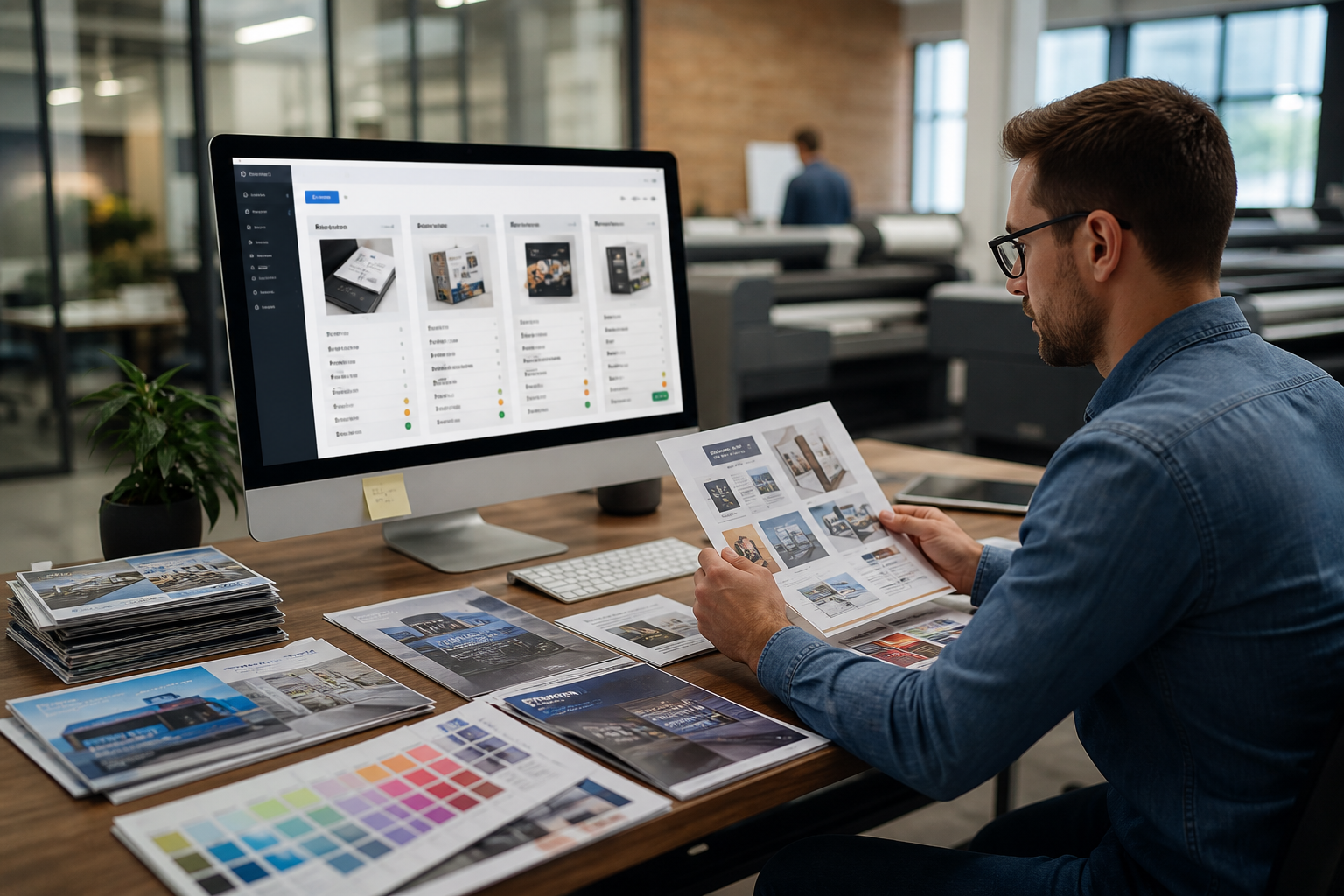
Designer-To-Printer Direct: Cutting Fiverr And 99designs Out Of The Production Loop
Why freelance designers and trade printers are quietly bypassing creative gig platforms for production work — and how to build direct relationships that pay both sides better.

You've spent three weeks nailing a brand identity for a client. The logo is signed off, the colour palette is locked, and now they want 5,000 business cards, a run of folded brochures and some pull-up banners. Do you really want a gig platform skimming 20% off the production quote you just brokered?
For thousands of freelance designers and small studios, the answer is finally becoming a firm no. And on the other side of that equation, trade printers are just as keen to talk to designers directly — without a platform sitting in the middle, taking a cut and controlling the conversation.
The awkward middle layer nobody actually needs
Creative marketplaces like Fiverr and 99designs were built to connect end-clients with designers. That's a legitimate service. The problem is what happens after the design work is approved. When the designer needs to commission physical production — litho business cards, digitally printed brochures, wide-format banners, foiled invites — the platform is still in the loop, still taking commission on work it had nothing to do with sourcing.
That commission has to come from somewhere. Usually it comes out of the printer's margin, the designer's markup, or the client's pocket — often all three. Nobody wins except the platform.
What designers actually need from a print partner
When a designer briefs a printer, they're not looking for a five-star rating and a chat widget. They're looking for:
- A press operator who understands bleed, trim and slug without needing it explained
- Honest advice on GSM, stock finish and coating for the job at hand
- Pantone matching where it matters, not just CMYK approximations
- Realistic makeready and turnaround times
- Someone who'll flag a low-res logo or a rich-black issue before it hits the plate
None of that is best delivered through a locked-down platform messaging system with a 24-hour response SLA. It's delivered by a phone call, a shared PDF proof, and a relationship built over several jobs.
Why trade printers want direct designer relationships
From the printer's side, designers are among the best customers in the industry. They understand file prep. They send print-ready artwork. They already know what they want in terms of finish and stock. They come back repeatedly, because every client project needs collateral.
A designer who knows and trusts your press is worth more than a dozen one-off end-clients found through paid ads. Yet on commission-based platforms, that relationship is deliberately obscured. Contact details are stripped from messages. Off-platform communication is punished. The platform wants to own the customer — even when the customer would much rather own the relationship themselves.
The numbers behind the frustration
Let's say a designer sources a £2,000 print job through a commission-heavy platform charging 15% on the transaction. That's £300 gone before the ink dries. Over a year of steady work — say twenty similar jobs — that's £6,000 lifted out of the ecosystem.
On a fixed-fee model, the same twenty jobs might cost the designer or printer a handful of pounds each to initiate the connection, and nothing thereafter. The maths isn't subtle.
Building direct connections without the middleman tax
This is where a zero-commission model changes the shape of the whole transaction. On ZeozGig, a designer posting an RFQ for a specific job pays £1 to post it. Printers who want to quote reach out. If nobody responds, the fee is automatically refunded — so there's no risk in posting a niche or unusual brief.
Once a designer finds a printer they want to work with, opening a direct connection is a one-time £5 fee. After that, they have direct contact — chat, voice, video — with no percentage of any future work taken by the platform. That first job might be £500. The next might be £5,000. ZeozGig doesn't care and doesn't charge extra. The relationship belongs to the two businesses, not the marketplace.
A practical workflow for designers moving off gig platforms
Here's how a working designer can transition production sourcing away from commission platforms:
- List your recurring print needs — business cards, brochures, folded leaflets, signage, packaging prototypes
- Post a specific RFQ for the next real job you have, with stock, quantity, finishing and delivery details
- Shortlist two or three printers based on their quotes and how they communicate
- Open direct connections with the ones you'd genuinely trust with a client's brand
- Keep those contacts — the next brochure job goes straight to them, no platform in between
Within a few months, most designers find they've built a small stable of trusted print partners covering digital, litho, wide-format and speciality finishing. The gig platform stops being a print-sourcing tool and reverts to what it was actually designed for — finding clients who need design work.
What printers should be doing right now
If you run a print shop and you want more designer work coming through the door, make yourself easy to find. List your kit — the Indigo, the B2 litho press, the Roland eco-solvent, the die-cutter — as a permanent marketplace entry. Designers searching for a specific capability will find you without a middleman deciding whether to show your listing based on how much commission you pay.
Respond to RFQs quickly. Talk like a human. Offer to jump on a video call to walk through a proof. These small things build the direct relationships that commission platforms have spent a decade trying to prevent.
Ready to cut out the middle layer?
If you're a designer tired of watching production margin disappear into platform fees, post your next RFQ on ZeozGig for £1 — refunded if nobody quotes. If you're a printer who wants designers finding you directly, list your capabilities for £1 and start taking calls from buyers who actually need your press. No commission, no contracts, no monthly fees. Just direct business between people who make things and people who design them.