Why Marketing Agencies Should Brief Finishers Directly Instead of Adding Another Printer to the Chain
Marketing agencies lose margin and control when finishing is sub-let through a printer. Here's why briefing finishers directly changes the game.
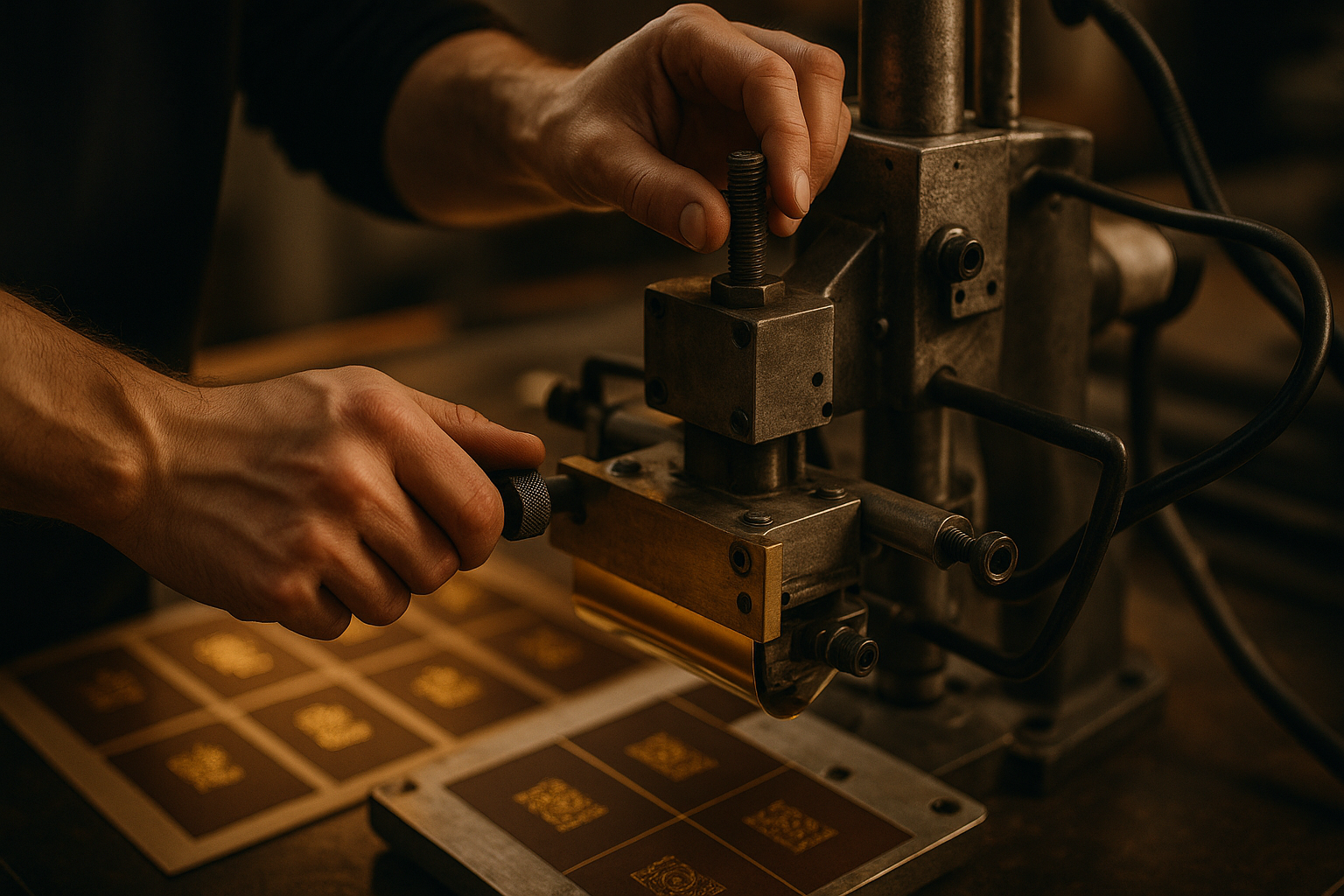
Your printer quoted the litho run at a fair price, but the foiling and die-cutting have doubled the invoice — and you've no idea who actually did the work. If you're a marketing agency or in-house creative team buying print, that hidden middle layer is quietly eating into your margins and your control over the finished piece.
The hidden cost of routing finishing through your printer
It's the default workflow for most agencies: brief a printer, let them handle everything, sign off the proof, wait for delivery. The problem is that unless your printer owns the foiling press, the die-cutter, the laminator or the specialist bindery kit, they're sub-letting that work to a trade finisher — and adding a mark-up on top.
That mark-up isn't necessarily unreasonable. The printer is coordinating, taking on risk, transporting sheets between sites. But when you're quoting a client and every pound matters, a 20–35% uplift on the finishing line is a real number. Multiply that across a year of packaging launches, event collateral and premium brochures and it's a serious leak.
What's actually happening behind the scenes
On a typical foiled and die-cut job, the journey often looks like this:
- Sheets are printed litho or digital at printer A.
- Printer A ships flat sheets to finisher B for foiling.
- Finisher B (or a third site) handles die-cutting and creasing.
- Sheets return to printer A for gluing, packing and delivery.
Each handover is a delay, a potential quality risk, and — critically — a point where mark-up gets stacked. You're paying for coordination you could arguably do yourself, and you're one step removed from the people who actually make the finishing decisions on your job.
Why direct-to-finisher briefing changes the economics
When you brief a finisher directly, three things shift. The price drops because there's no intermediary mark-up. The technical conversation gets sharper because you're speaking to the person running the machine. And you keep the printer relationship for what it's genuinely good at — the litho or digital sheetwork.
This matters most on jobs where finishing is the star of the show:
- Premium packaging with foil blocking, embossing or spot UV
- Die-cut invitations, folders or promotional pieces
- Wide-format work needing specialist lamination or mounting
- Case-bound books and short-run hardbacks
- Garment print and DTG runs with unusual placement or finishing
- Wine labels, cosmetics cartons and premium consumer packaging
In each of these, the finisher's expertise is what makes the piece work. Talking to them directly means you get proper advice on foil compatibility with your stock, minimum bridge widths on a die, or whether that 350gsm board will crease cleanly without cracking.
The margin argument (for agencies and brokers)
If you're an agency reselling print to a client, every pound saved on procurement is a pound of margin — or a pound you can reinvest in a better finish. Going direct to a finisher on the specialist portion of a job routinely saves 15–30% versus letting a printer sub-let the work. On a £4,000 packaging run, that's real money you can either bank or spend on upgrading to a heavier board.
How a marketplace makes direct finisher briefing practical
The honest reason most agencies don't go direct is that building a list of trusted finishers is hard. You'd have to know who does foiling under A2, who handles laser die-cutting for short runs, who's got capacity next week, and who won't quietly panic when you send them a Pantone metallic spec.
This is exactly the gap ZeozGig is built for. Post one RFQ describing the finishing job — stock, dimensions, quantity, foil colour, die shape, deadline — and finishers respond directly with quotes. You compare, shortlist, and open a direct connection with the ones worth talking to. No commission. No percentage of the deal. Just a small fixed fee to open the chat, voice or video connection.
A sensible workflow to try
Here's a practical way to split a job the next time finishing looks expensive on a printer's quote:
- Get the base print quote (litho or digital sheets) from your usual printer, on the understanding you'll handle finishing separately.
- Post an RFQ on ZeozGig describing only the finishing brief — spec, sheet size, quantity, delivery window.
- Compare the trade finisher quotes against what your printer was going to charge for the same step.
- Open a direct connection with the strongest one or two, confirm technicals over chat or a quick video call, and book the work.
- Coordinate the sheet handover yourself, or ask the finisher to collect — many will.
On the first job it feels like extra work. By the third, it's faster than waiting for your printer to come back with a bundled quote, and you've built a direct line to a finisher you can call again.
When routing through a printer still makes sense
Direct isn't always right. If the finishing is straightforward — matt lam, simple trim, standard perfect binding — the printer's mark-up is small and the coordination they provide is worth it. Direct-to-finisher pays off when the finishing is specialist, the volume is meaningful, or you want a technical conversation you can't have through a middleman.
The point isn't to cut your printer out. It's to stop assuming the printer is always the right procurement route for every part of every job.
Ready to brief a finisher directly?
Post your next specialist finishing RFQ on ZeozGig and let trade finishers quote you directly. It's £1 to post, £5 to open a direct connection with a supplier you want to work with, and if your request gets zero responses the posting fee is refunded automatically. No commission, no contracts — you keep 100% of the margin you save. List a service if you're a finisher looking for direct work, or post your first RFQ and see who comes back.