Listing Your Komori, HP Indigo Or Roland Press So The Right Buyers Actually Find You
How to list speciality presses like Komori, HP Indigo and Roland on a marketplace so trade buyers and brokers actually find your real capacity.
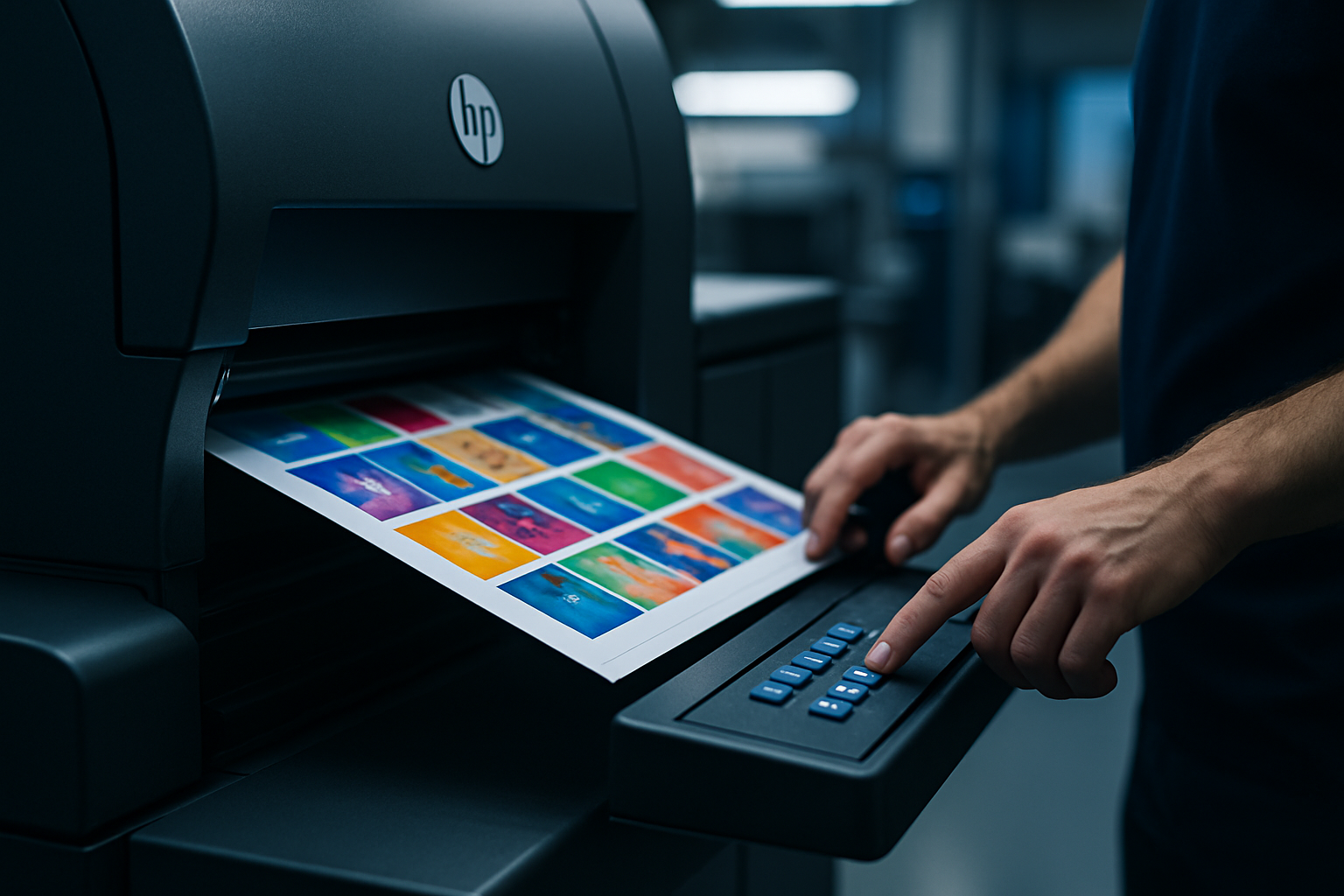
You've got serious kit on the shop floor — a Komori six-colour with coater, an HP Indigo 7900, or a Roland VersaUV — but the enquiries landing in your inbox are still mostly 500 business cards and a roller banner. The buyers who actually need your equipment don't know you exist.
That's almost never a quality problem. It's a discovery problem. Trade buyers, brokers and agency production managers search by capability, not by company name. If your listing doesn't speak their language, you're invisible to them — no matter how much you paid for the press.
Why generic "commercial printer" listings get ignored
Most print directories and marketplaces still ask you to pick a category like "Litho Printing" or "Digital Printing" from a dropdown. That's useless to a packaging buyer hunting for someone who can run 400gsm SBS board with inline coating, or to an agency producer who needs a true seven-colour Indigo for brand-accurate Pantone simulation.
The buyer searching for your kit is specific. They already know:
- The substrate and GSM they need to run
- The colour requirements (extended gamut, white ink, fifth/sixth station)
- The sheet size or web width
- The finishing path (inline aqueous, UV, foiling, die-cutting)
- The volume band that makes litho vs digital the right call
If your listing only says "commercial printer, est. 1987", none of those search terms match. You lose the job before the buyer ever sees your name.
Write listings the way trade buyers actually search
Think of each press as its own product listing, not a footnote on your About page. A broker sourcing overflow for a label run isn't browsing — they're scanning for keywords that match a spec sheet on their desk.
Lead with the machine, then the capability
A listing titled "HP Indigo 7900 — 7-colour digital, up to 350gsm, white ink available" will surface in front of the right buyer far more often than "Digital printing services". The model name itself is a search term. Brokers Google it. Agency producers paste it into platform searches.
Spell out the realistic spec
Don't just list the manufacturer's max sheet size — tell buyers what you actually run comfortably. For example:
- Press: Komori Lithrone GL-640 + coater
- Max sheet: 720 × 1030mm, run sweet spot 640 × 940mm
- Stocks: 80–400gsm, including uncoated, silk, gloss, SBS board
- Colour: CMYK + 2 spot stations, Pantone matching to ±2 ΔE
- Finishing inline: Aqueous coating, IR drying
- Typical run length: 1,000–50,000 sheets
- Makeready: 20–30 minutes between jobs
That's the kind of detail a trade buyer reads and immediately knows whether to send the RFQ.
Include the jobs you want more of
If you've got spare capacity on the Roland TrueVIS for backlit film, say so. If your Indigo loves short-run cosmetic cartons on GC1 board, say so. Buyers searching for that exact application will find you instead of the generic "large format printer" three pages deep.
Use the RFQ side of the marketplace as a radar
Listing your kit is half the job. The other half is watching the request feed. On ZeozGig, posting a product or service listing costs $1 and stays live — but the RFQs come in from buyers actively spending money today. A broker posting "need 5,000 24pp A4 saddle-stitched brochures, 130gsm silk, CMYK + spot UV" is telling you exactly what their press requirements are.
If your kit fits, you open a direct connection for $5 — flat fee, no commission on the £4,000 job that follows. That's the whole point: the platform takes a fixed fee to introduce you, and the margin on the work stays with you.
What separates a listing that wins work from one that doesn't
After watching hundreds of trade printers list speciality kit, a few patterns are obvious:
- Listings with model numbers get more direct enquiries than listings without
- Listings that name substrates and GSM ranges convert better than vague "all stocks" claims
- Listings that mention finishing capability (inline or in-house) win bundled jobs other printers lose
- Listings with realistic turnaround windows build trust faster than "next day on everything"
- Listings updated when capacity changes stay near the top of buyer searches
The Indigo down the road from you might be technically identical to yours. The difference in enquiries comes down to who described their press in language a buyer can actually search for.
Stop paying commission to be found
The older print marketplaces solved discovery, but they did it by taking 10–20% of every job that flowed through them. On a £20,000 packaging run, that's £2,000–£4,000 walking out the door for what is essentially an introduction. ZeozGig was built by the team behind PMIS specifically to break that model: $1 to list a press, $5 to connect with a buyer, and if you post an RFQ that gets zero responses, the fee is refunded automatically. No subscription, no contract, no percentage cut.
Ready to put your press in front of buyers who need it?
List your Komori, Indigo, Roland, Mimaki or any speciality press on ZeozGig for $1 and let trade buyers, brokers and agencies find you by capability instead of luck. Or browse the open RFQ feed and see whose spec sheet matches your machine today — at ZeozGig.com.